Canada’s Accessibility Plan sets a clear expectation. Barriers to access should be identified, removed, and prevented across transportation, services, and care. On paper, that feels simple. In real life, it’s not. Nearly 1 Canadien sur 4 lives with a disability, according to Statistics Canada. That reality creates pressure for organizations trying to do the right thing with limited time, staff, and funding.
You may already feel the gap.
- Clients miss appointments because transportation breaks down.
- Outreach teams can’t reach rural or remote communities.
- Programs struggle to show impact because access comes too late.
When that gap stays open, the risks grow. People fall through the cracks. Community trust weakens. Funding decisions become harder to justify. The desired state is clear. Care and mobility that meet people where they are, with dignity and reliability. Closing that gap brings confidence, stability, and better outcomes for the people you serve.
Au MoveMobilityNous avons dépensé plus de 20 ans helping organizations across Canada reduce les obstacles aux soins de santé et transportation. We’ve built more than 150 unités médicales mobiles and accessible vehicles, backed by Ford Pro Upfitter and Stellantis QPro certifications and the Marque nationale de sécurité. Organizations like Keewatinohk Inniniw Minoayawin have worked with us because we understand local realities. We also recognize we’re one of many manufacturers, and unbiased information matters.
Dans cet article, vous apprendrez
- What Canada’s Accessibility Plan means
- Organizational self-check table for transit/healthcare organizations
- How the 2026 to 2028 plan connects to access on the ground
What exactly is Canada’s Accessibility Plan?
When you hear Canada’s Accessibility Plan, it can sound like “federal government paperwork.” This one is more practical than that. The Public Services and Procurement Canada (PSPC) 2026 to 2028 Accessibility Plan explains how a major federal department plans to identify, remove, and prevent barriers in its workplace and in the services it delivers to government partners and the public.
If you run a transit organization or a healthcare program, here’s why you should care: federal plans like this shape the direction of travel. They influence expectations, language, and how good access gets measured. That shows up in procurement, partnerships, and program design.
Canada’s Accessibility Plan is a 3-year commitment, required by law
PSPC isn’t just doing this “because it’s nice.” Under the Loi sur l’accessibilité au Canada, federal departments and agencies must publish accessibility plans every 3 years. PSPC also notes that progress reports are published in the years between plans, so it’s not a “write it and forget it” document.
For you, that means accessibility expectations are getting more structured and more public. If your organization works with government partners, you’ll see more of this language baked into how projects are scoped and evaluated.
Canada’s Accessibility Plan treats accessibility as ongoing work
PSPC’s message up front is blunt: Accessibility is a continuous journey. They talk about continuing to work, learn, and improve, and building on the last plan (2023 to 2025).
That matters because the “we’ll fix it later” approach usually fails. If you operate transportation or mobile care, later often means Manque d'assiduité aux rendez-vous, delayed care, and stressed staff today.
What are the 10 most important things in Canada’s Accessibility Plan?
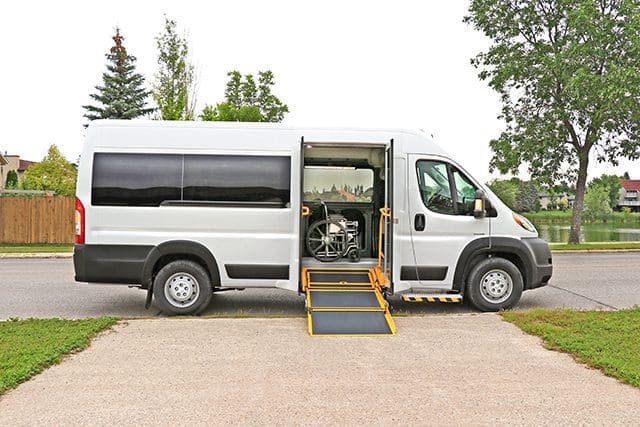
Below are the 10 takeaways that can help you make decisions, especially if you’re weighing a wheelchair van program or a mobile health unit.
1. The plan’s purpose is barrier-free work and barrier-free services
PSPC spells it out. This plan covers both:
- A barrier-free workplace
- Accessible services and programs delivered to government partners and Canadians
If you’re in transit or healthcare, this sounds like it mirrors your world. Access isn’t just ramps and lifts. It’s how your program works from first contact to the actual appointment or ride home.
2. It’s built around “identify, remove, and prevent” barriers
PSPC repeats this core idea: the plan focuses on identifying, removing, and preventing barriers.
Practical translation:
- Identify: Listen to users and staff, collect feedback, and look for pain points.
- Remove: Fix what’s blocking access now.
- Prevent: Stop building new barriers into your next project, vehicle spec, or process.
3. It follows the Accessible Canada Act’s 7 priority areas, plus culture
PSPC points out that the plan builds on the 7 priority areas in the Accessible Canada Act, and adds an eighth priority: culture.
Their eight priorities are:
- Culture
- Employment
- Built environment
- Information and communication technologies (ICT)
- Communication (other than ICT)
- Procurement of goods, services, and facilities
- Design and delivery of programs and services
- Transports
For transit and healthcare leaders, this is a helpful checklist. Your vehicles sit right at the intersection of transportation, program delivery, procurement, and communication.
4. Transportation is explicitly a priority area
Transportation appears as one of the plan’s priorities. That’s a big signal. Accessibility isn’t being treated as a side issue. Mobility is part of the core plan structure.
If you’re trying to improve response, reduce missed appointments, or expand community access, this supports the idea that transportation is a serious accessibility lever.
5. “Nothing Without Us” is the guiding principle
PSPC says it’s guided by “Nothing Without Us,” and they shaped the plan using insights from employees with disabilities and partners.
This is your reminder to keep the right people in the room. If you’re designing a transit pilot in Winnipeg, a rural outreach route in northern Manitoba, or a mobile clinic schedule in the Territories, you’ll get better results when people with lived experience help shape the plan.
6. The plan was shaped by large consultations and disability experts
PSPC reports over 1,900 participants across consultation sessions and notes engagement with an external Accessibility Advisory Panel made up of experts from organizations representing persons with disabilities across Canada.
In plain terms: they didn’t guess. They asked. And they asked at scale.
7. They recognize stigma and manager readiness as real barriers
Under the Culture priority, PSPC lists barriers that employees raised, including:
- Fear of stigma and consequences for self-identifying as a person with a disability
- A need for manager training and stronger accessibility competency
This connects to your world more than you might think. A vehicle can be accessible, and your program can still fail if staff don’t feel confident using it, booking it, or supporting riders and patients with respect.
8. The plan commits to measurement, not vibes
PSPC highlights: “Progress is only meaningful if it is measurable.” They also state that each priority includes activities linked to performance indicators, and they include a Key Performance Indicator Framework as an annex.
If you’re building a case for funding, this is gold. Decision-makers want numbers:
- More completed trips
- Shorter wait times
- Higher program uptake
9. There’s a transparent feedback process, including anonymous feedback
PSPC invites feedback and says there’s a process for receiving comments, with an option to provide feedback anonymously. They also offer alternate formats on demand.
That’s a practical standard you can copy. If your transit riders or patients can’t give feedback easily, you’ll miss the barriers you need to fix.
10. Annual progress reports keep the plan alive
PSPC states it will provide annual accessibility progress reports, including updates on each priority area and a summary of feedback received. They also frame the plan as part of a longer journey toward a fully accessible department by 2040.
That ongoing reporting rhythm is a strong model for your own program governance. Simple, consistent reporting builds trust and helps you defend budget and expansion decisions.
Canada’s Accessibility Plan self-check for transit and healthcare organizations
This self-check is based directly on Canada’s Accessibility Plan priorities for 2026 to 2028. It’s meant to help you pause and ask a simple question:
Are we aligned with where accessibility expectations are going, or are gaps quietly growing?
If you’re considering a wheelchair van or a mobile health unit, this table helps you spot pressure points early, before missed appointments, service delays, or funding friction show up.
Accessibility self-check table
| Accessibility focus from Canada’s Accessibility Plan | Ask yourself this | What a growing gap looks like |
| Transportation as a priority area | Can people reliably get to care, programs, or services without help from family or staff? | Missed appointments, late arrivals, or cancelled outreach days |
| Barrier identification | Do we actively collect feedback from riders, patients, and staff with lived experience? | Complaints show up late or through funders instead of directly |
| Barrier removal | When a barrier is found, do we act quickly or defer it to “next year”? | Temporary workarounds become permanent |
| Barrier prevention | Are new programs, routes, or services designed with accessibility first? | New barriers appear in new initiatives |
| Culture and awareness | Do staff feel confident supporting people with disabilities? | Hesitation, inconsistent service, or awkward interactions |
| Program and service delivery | Can services reach people where they live, work, or gather? | Heavy reliance on fixed locations that limit access |
| Procurement decisions | Does accessibility influence vehicle and equipment choices early? | Retrofits cost more and solve less |
| Measurement and reporting | Do we track access outcomes like completed trips or visits? | Decisions rely on stories, not data |
| Feedback mechanisms | Can people give feedback easily and anonymously if needed? | Silence is mistaken for success |
| Continuous improvement | Do we review access regularly and adjust? | The same issues repeat year after year |
How to use this self-check
If you answered “yes” most of the time: You’re already aligned with the direction of Canada’s Accessibility Plan. Expansion and funding conversations tend to feel smoother here.
If several questions gave you pause: That’s the gap the plan is pointing to. It’s often less about intent and more about tools, reach, and flexibility.
In the next section, we’ll look at how these gaps show up most often in transportation and healthcare settings, and why mobile solutions are becoming part of the accessibility conversation dans tout le Canada.
How does Canada’s Accessibility Plan meet day-to-day reality?
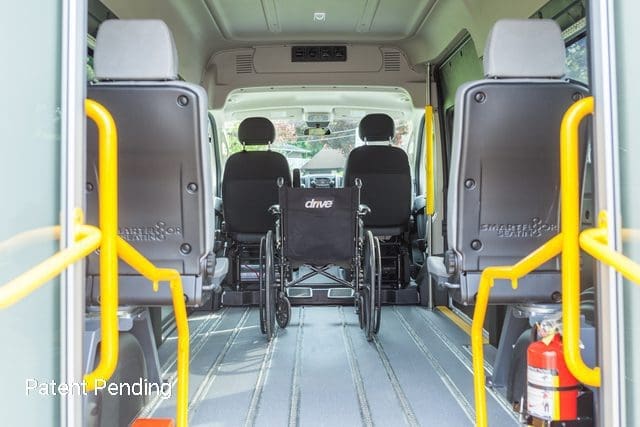
Canada’s Accessibility Plan talks about identifying, removing, and preventing barriers. On paper, that sounds clear. In real operations, those barriers tend to hide in plain sight. Most organizations don’t see them as “accessibility failures.” They see them as busy days, stretched teams, and complex trade-offs. That’s where the gap quietly grows.
For transit agencies and healthcare providers, these gaps often show up in the same places, even across very different regions of Canada.
When access depends on someone else’s schedule
You might see this when a patient or rider relies on family, volunteers, or limited public transit. Appointments get missed. Rides arrive late. Staff spend time rescheduling instead of serving people. In northern communities, this can mean long waits or cancelled care days. In urban centres, it shows up as no-shows that look like disengagement, but really signal access problems.
Canada’s Accessibility Plan pushes for services designed around real needs, not ideal conditions. When access depends on someone else’s availability, the system already has a barrier built in.
When fixed locations limit reach
Many programs are built around buildings. Clinics, offices, hubs. That works until the people who need support can’t reach them. Rural communities, remote regions, and even neighbourhoods with poor transit feel this most.
Barrier prevention, a core theme in Canada’s Accessibility Plan, asks a simple question: are new services designed to reach people where they are? When the answer is no, staff compensate with extra effort, and burnout creeps in.
When staff carry the weight of the gap
Accessibility gaps don’t disappear. They shift to staff. Coordinators juggle schedules. Nurses adapt workflows. Drivers improvise. Over time, this creates stress and inconsistency.
The plan highlights culture and awareness as a priority for a reason. When systems lack flexibility, even the most committed teams struggle to deliver consistent, dignified access.
When measuring impact becomes difficult
Canada’s Accessibility Plan emphasizes tracking progress. In daily operations, that’s hard when access itself is unstable. Missed visits, shortened routes, and last-minute changes make outcomes harder to measure.
If you can’t clearly show who you reached and how, funding conversations get tougher. Trust becomes harder to maintain. The gap widens, even when effort stays high.
What does aligned access look like under Canada’s Accessibility Plan?
When Canada’s Accessibility Plan is working as intended, access feels steady instead of fragile. People don’t need to explain their situation over and over. Staff don’t rely on last-minute fixes. Services show up consistently, even when conditions change. This is the desired state the plan is pointing toward, and it’s one that many organizations are actively working to reach.
Let’s take a look at how aligned access looks in five different ways.
1. Predictable access replaces uncertainty
Aligned access means people can count on services showing up when promised. Appointments happen as planned. Rides arrive on time. Care feels dependable, not conditional.
- Consistent scheduling: Fewer cancellations caused by transportation breakdowns.
- Clear expectations: People know when and how they’ll be supported.
- Reduced stress: Less anxiety for clients, patients, and families.
This lines up closely with Canada’s Accessibility Plan on preventing barriers, not reacting to them.
2. Services are designed around real life
Aligned access reflects how people actually live. Some communities are spread out while some neighbourhoods lack reliable transit, and then there are some people who can’t travel far without support. When services adapt to these realities, participation improves naturally.
- Flexible delivery: Programs reach people where they are.
- Local presence: Care and services appear in familiar community spaces.
- Better engagement: Fewer missed visits and stronger follow-through.
This supports the plan’s priority on design and delivery of programs and services.
3. Transportation is part of the plan from day one
Under Canada’s Accessibility Plan, transportation isn’t treated as a side issue. In aligned systems, mobility is considered early, not added later.
- Integrated planning: Transportation supports program goals.
- Fewer workarounds: Less reliance on volunteers or emergency fixes.
- Stronger reach: Services extend beyond fixed locations.
This approach directly reflects transportation as a priority area in the plan.
4. Staff are supported by structure
When access is aligned, staff spend less time compensating for gaps. Systems do more of the work. That leads to calmer days and more consistent service.
- Clear processes: Less guesswork and fewer exceptions.
- Improved morale: Staff energy goes toward people, not logistics.
- Sustainable operations: Teams can grow without burnout.
This connects to the plan’s emphasis on culture and awareness.
5. Results are easier to measure and defend
Aligned access makes outcomes visible. Programs can show who they reached and how often.
- Clear data: Fewer missed visits and cancelled services.
- Stronger reporting: Easier progress tracking.
- Better funding conversations: Evidence supports investment.
Got any questions about Canada’s Accessibility Plan?
You came here because Canada’s Accessibility Plan raised an important question. How do you move from good intentions to real access when transportation and care still fall short? You’re trying to reduce missed appointments, reach more people, and meet rising expectations without stretching your team even thinner.
Here’s what this article helped you clarify:
- The challenge: Accessibility gaps often show up in daily operations, not policy documents.
- The insight: Canada’s Accessibility Plan points toward predictable access, flexible services, and fewer workarounds.
- The opportunity: When access is designed into programs early, people experience care and mobility with dignity and consistency.
Au MoveMobility, we’ve spent decades working beside transit agencies, health organizations, and community leaders like you across Canada who face these same pressures. Our teams design and build mobility solutions that support programs, not complicate them, backed by deep operational experience, national safety compliance, and partnerships from urban centres to remote communities.
We lead by listening first, then building with purpose, because access changes lives when it’s done right. If you have questions about how mobility fits into your accessibility goals, click the button below to talk to a mobility expert.
If you’re not ready to talk yet, here are a few resources that can help you take the next step.
Lectures recommandées
- Comment choisir un fauteuil roulant (11 étapes) : A practical guide to aligning vehicle choices with program goals and accessibility needs.
- Comment obtenir plus de financement pour votre camion-fourgonnette pour personnes à mobilité réduite : Breaks down practical funding paths and planning tips for organizations trying to close accessibility gaps without overextending budgets.
- How to start a mobile clinic: This is useful for healthcare organizations that are looking to start a mobile clinic in Canada.



 English
  French