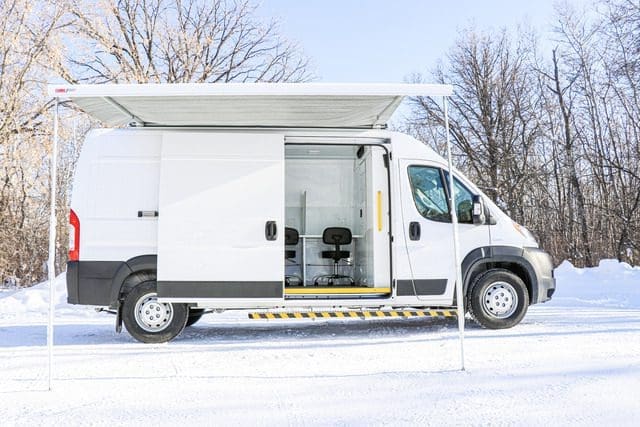
Poor weather conditions can mean the difference between a calm, relaxed medical appointment and a nerve-racking one. Your vehicle’s awning often becomes the front door of your service. It’s where people line up, ask questions, or wait for their appointment. When a vehicle’s awning isn’t used properly, small problems show up fast.
- Equipment might get wet.
- Staff might not understand the setup.
- Patients stand in uncomfortable conditions.
That moment matters because the space around your mobile clinic awning sets the tone for care. When everything works well, the area feels welcoming and organized. When it doesn’t, the day becomes harder for everyone.
Au MoveMobility, we’ve spent more than 20 ans working alongside organizations across Canada that bring services directly into their communities. Over the past three years alone, our team has built more than 480 wheelchair vans and 180 unités médicales mobiles. Our vehicles meet Ford Pro Upfitter and Stellantis QPro standards and carry the Marque nationale de sécurité for safety compliance in Canada.
We’ve partnered with organizations like Quest Community Health Centre to help expand access to care. We were also honoured to receive the 2026 DARE Innovation Award. Many manufacturers build mobile units across Canada, and each brings valuable experience. Our goal here is simple. Share what we’ve learned from supporting hundreds of mobile programs across the country.
In this guide, you’ll learn seven practical tips to keep your vehicle’s awning working well so your outreach runs smoothly in Canadian conditions.
What are the 7 best practices for using your vehicle’s awning?
A vehicle’s awning can quickly turn the side of your mobile unit into a useful outdoor space. It becomes the spot where people gather, wait, or ask questions before stepping inside. That’s why the first step is simple. Take a moment to check the area before opening it.
1. Check the area before opening your vehicle’s awning
Nombreux outreach teams operate in tight or unpredictable spaces across Canada. One day, you may be parked outside a community centre in Saskatchewan. The next day, you might be on a narrow street in downtown Toronto or a gravel lot in Northern Ontario. A quick check helps avoid awkward situations or damage to the clinique mobile awning.
Before extending your vehicle’s awning, pause and look around the vehicle.
Here are a few simple questions your team can ask:
- Is there enough room to open the vehicle’s awning fully? Look for walls, poles, fences, trees, or other vehicles nearby.
- Will the awning block anything once it opens? Think about doors, sidewalks, parking spots, or pathways people use.
- Is the wind too strong right now? Wind can catch the awning quickly, especially in open areas or near large buildings.
- Will it interfere with anything during the clinic? Consider how people will move around the mobile medical unit awning while services are running.
This quick scan takes less than a minute. Yet it helps prevent damaged equipment, blocked walkways, or unsafe conditions.
A thoughtful setup also sends a message to the people you serve. The space feels organized, calm, and ready for them.
Small habits like this help your vehicle’s awning support your outreach instead of slowing it down.
2. Know when to use your vehicle’s awning and when to keep it closed
A vehicle’s awning works best when it protects people and equipment from mild weather. It creates shade during hot days and a dry spot during light rain. For many outreach teams, the mobile clinic awning becomes a comfortable place where people can gather before stepping inside the unit.
At the same time, there are moments when a vehicle awning should stay closed. Strong wind or heavy snow can place stress on the structure and create unsafe conditions around the mobile medical unit’s awning. Knowing when to use it and when to leave it folded helps protect both the equipment and the people around it.
When does a vehicle’s awning work well?
Nombreux mobile programs use their awning during everyday outreach conditions.
Here are common situations where a mobile clinic awning helps:
- Sunny days: Provides shade for patients waiting outside the mobile medical unit awning.
- Light rain: Keeps people and equipment dry during check-in or short waits.
- Light snowfall: Offers brief protection when snow is falling gently.
In these situations, the vehicle’s awning adds comfort and creates a welcoming outdoor space.
When should a vehicle’s awning stay closed?
Certain weather conditions can make using the awning unsafe.
Keep the vehicle awning closed when you notice:
- Strong wind: Gusts can catch the awning quickly and cause damage.
- Heavy snowfall: Snow can build up weight on the surface.
- Unstable weather: Conditions that are changing quickly.
A good rule of thumb is simple. If the weather feels strong enough to move the awning, it’s safer to keep it closed.
Your mobile clinic still operates well without it. Safety always comes first for your team and the people you serve.
3. Secure your vehicle’s awning after opening it
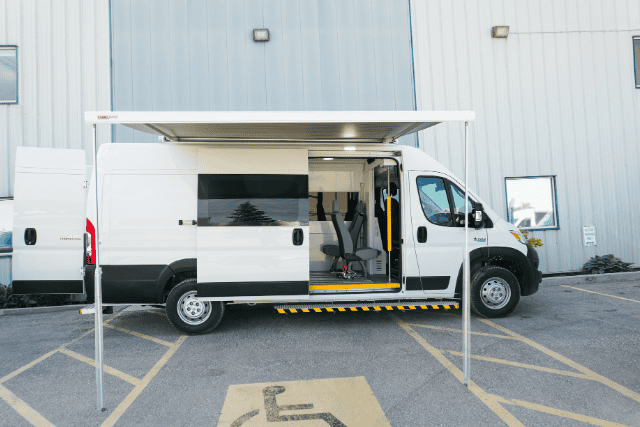
Once your vehicle’s awning is open, the next step is securing it properly. A mobile clinic awning creates a helpful outdoor space for patients and staff. Still, it needs to stay stable while people move around underneath it.
Outreach teams often set up in different environments across Canada. One day, you may be parked on grass beside a community hall. Another day, the mobile medical unit awning might be set up on a paved parking lot in a busy urban area. Because surfaces change from location to location, it helps to know a couple of simple ways to secure the vehicle awning safely.
What are two common ways to secure a vehicle’s awning?
On grass, gravel, or soil:
Many awnings have small holes at the base of the support legs. These allow staff to anchor the awning directly into the ground.
- Insert a tent peg or ground stake through the hole at the base of each leg
- Drive the peg firmly into the ground
- Check that the leg feels stable before patients gather underneath the mobile clinic awning
This method works well in parks, rural communities, and gravel parking areas where the ground allows stakes.
On asphalt or concrete:
In many cities or facility parking lots, stakes are not possible. In these situations, weights help keep the vehicle’s awning steady.
- Place heavy weights on the ground near the awning legs
- Tie or strap the legs of the vehicle awning to the weights
- Confirm the weights sit securely and will not shift during use
Both approaches help keep the mobile medical unit’s awning stable during outreach activities. A properly secured awning gives your team confidence that the space will stay safe and comfortable while services are running.
4. Avoid this common mistake when using your vehicle’s awning
A vehicle’s awning looks simple to use, yet a few common mistakes can cause problems during outreach. Many teams learn these lessons the first time they set up their mobile clinic awning in the field. With a little awareness and basic training, most of these issues are easy to avoid.
Mobile outreach programs often move quickly. Staff are focused on patients, schedules, and equipment. That is why a few small habits make a big difference when setting up a mobile medical unit awning.
Awning legs unfolded the wrong way
There is a technique for unfolding the legs on many awnings. If staff have not been trained on the correct method, the process can feel confusing. The legs may not extend smoothly, which can slow down setup.
A quick orientation or demonstration helps staff understand the proper steps and makes opening the vehicle awning much easier.
Opening the awning when it is too windy
Wind is one of the most common causes of awning problems. A strong gust can catch the fabric and place stress on the frame.
Before opening the vehicle’s awning, it helps to pause and check the weather conditions around the mobile clinic.
Leaving the awning legs unsecured
Another common oversight is forgetting to secure the legs once the awning is open. Without stakes or weights, the mobile clinic awning can shift if the wind picks up or people move around it.
Taking a few extra moments to secure the legs keeps the vehicle awning stable and helps your outreach space stay calm and organized.
Small setup habits like these help your team focus on what matters most. Serving the people who rely on your mobile program.
5. Close and store your vehicle’s awning properly at the end of the day
At the end of a long outreach day, packing up your vehicle’s awning is one of the final steps before heading out. It may seem simple, yet closing and storing it properly helps protect the awning and keeps the equipment ready for the next clinic.
Mobile programs often move between communities, sometimes driving long distances across provinces. A mobile clinic awning that is stored correctly avoids damage during travel and keeps the setup process smooth the next time your team arrives on site.
How to close and store a vehicle’s awning
The process is straightforward and usually takes less than a minute.
Follow these simple steps:
- Retract the awning fully: Wind the vehicle’s awning all the way up until the fabric is completely rolled in.
- Check the position: Make sure the mobile medical unit awning is fully closed and sitting flush against the side of the vehicle.
- Store the winding tool: Place the awning winding tool back inside the van so it stays secure during transport.
These small steps help keep the vehicle awning protected while travelling between outreach locations.
Teams that build this into their daily routine often find their mobile clinic awning stays in better condition over time. It also helps the next setup go faster because everything is already where it should be.
At the end of the day, a quick and careful close keeps your outreach equipment ready for the next community visit.
6. What if your awning gets stuck?
Sometimes a vehicle’s awning will not retract smoothly at the end of the day. This can feel frustrating, especially when your team is ready to pack up and travel to the next community. The good news is that most situations like this have a simple cause.
A mobile clinic awning can occasionally shift slightly during use. Wind, uneven movement, or tension in the fabric can cause the awning to roll in unevenly. When that happens, the vehicle awning may stop partway or feel difficult to retract.
Taking a calm, step-by-step approach usually resolves the issue quickly.
What should staff check first?
Before trying to force the awning closed, pause and take a quick look at the setup.
Check for these common issues:
- Angle of the awning: Is the vehicle’s awning rolling in on an uneven angle?
- Fabric overlap: Has wind caused the awning material to shift or fold over itself?
- Obstructions: Is anything blocking the awning from retracting properly?
In many cases, the easiest solution is to reset the position of the awning.
Try this approach:
- Deploy the mobile medical unit awning fully again
- Allow the fabric to settle into its normal position
- Slowly begin retracting the vehicle awning once more
This quick reset often helps the awning roll in evenly.
Most of the time, the issue comes down to alignment rather than damage. Taking a moment to check the position helps your team close the mobile clinic awning smoothly and finish the day without added stress.
7. Extending the life of your awning
Many outreach teams across Canada travel long distances between communities. A few simple habits help protect the awning so it continues working well during each visit.
- Avoid extreme weather: Strong wind, heavy rain, or deep snow can place stress on a vehicle awning. Keeping the mobile clinic awning closed during harsh conditions protects the frame and fabric.
- Wash the awning regularly: Dust, dirt, and road grime can build up over time. Cleaning the vehicle’s awning from time to time helps keep the fabric in good shape and prevents buildup that can wear down the material.
- Always stow the awning when not in use: Leaving a mobile medical unit awning open when the clinic is finished can expose it to weather or wind changes. Closing the vehicle awning after each use helps keep it protected between outreach visits.
These habits take only a few minutes. Over time, they help your vehicle’s awning stay reliable for the many communities your team serves.
Got any questions about your mobile medical unit awning?
You came here because running a mobile clinic or outreach program means dealing with real-world conditions. Rain, sun, wind, and tight parking spaces can quickly turn a simple setup into a challenge. When your vehicle’s awning isn’t used the right way, staff feel rushed, equipment can get damaged, and the space meant for care becomes stressful.
After reading this guide, you now have a clearer approach to using your vehicle’s awning safely and confidently.
You learned how to:
- Check the setup area first before opening a vehicle awning
- Use the awning in the right weather conditions and keep it closed when needed
- Secure and store a mobile clinic awning properly during daily operations
- Handle common issues and maintenance so the awning lasts longer
Au MoveMobility, we spend a lot of time listening to organizations that bring healthcare, transportation, and support directly into communities. Teams running mobile clinics, outreach vans, and transportation programs across Canada often face the same challenge. You want equipment that works reliably so you can focus on people. Our role is to help programs like yours design vehicles that remove barriers to care and mobility. If you’re exploring a mobile medical unit awning or planning a new outreach vehicle, our team is always happy to share what we’ve learned along the way.
Si vous n'êtes pas encore prêt à parler à un expert en mobilité, nous avons quelques autres ressources à vous proposer pour en savoir plus.
Recommended next reads
- 5 steps to buying a mobile medical van: A helpful overview of the planning process that many organizations follow when preparing to purchase their first mobile clinic.
- How to choose the best van for your outreach program: Learn how to pick the perfect unit.
- How much does a mobile medical van cost? Learn what cost range you can expect for mobile medical vans.

 English
  French