


Saviez-vous que ambulance transports in Ontario jumped from 758,000 in 2010 to over 967,000 in 2019? With calls rising like that, it makes sense you’re trying to figure out what the three different types of ambulances are and which one will actually work for your program. It can feel stressful when you don’t know the differences.
Choosing the wrong ambulance can slow your team down, limit what care you can offer, and cause problems for the people you want to serve. You want to feel confident. You want a vehicle that supports your goals, fits your daily work, and helps your staff take great care of your community.
Au MoveMobility, we help programs across Canada work through these choices every day. We’ve spent more than 20 ans building safe, reliable vehicles for health teams, outreach groups, and community programs. Our vehicles carry the Marque nationale de sécurité, and we’re certified by both Ford QVM and Stellantis QPro.
We’ve teamed up with groups like Yellowknife Women’s Society to support care in tough-to-reach places. We provide you with clear information first because we know we’re not the only manufacturer out there, and you deserve facts you can trust before making a big decision.
In this guide, you’ll get a simple breakdown of the different types of ambulances:
- Type 1 ambulance: What it is and who it fits
- Type 2 ambulance: Why some programs choose this size
- Type 3 ambulance: How it compares to type 1 and type 2
- Your best fit: How to match each type to your needs
What is a type 1 ambulance?

When you look at the different types of ambulances, the type 1 ambulance is the truck-style option. It uses a pickup-truck chassis at the front and a large, box-shaped patient area on the back. The patient area is a separate module, often called a “mod box,” where treatment and transport happen. Because of this setup, it looks and feels more like a work truck with a medical space attached.
What are the key features of a type 1 ambulance?
A type 1 ambulance is known for its modular box design and truck frame. This mix gives programs a sturdy vehicle with space to move around inside, but it also comes with its own tradeoffs.
Here’s a simple breakdown:
- Truck chassis: The front cab is built like a pickup truck. This can feel familiar to drivers who already use municipal or work trucks.
- Separate patient box: The back is a large square compartment for patient care. Because it is separate, it may be replaced or remounted later in the vehicle’s life.
- Room to work: The layout gives crews space for stretchers, storage, and extra equipment.
- Heavier frame: These units often handle more weight but can be larger to drive and park.
- Common in high-demand areas: Some programs use type 1 ambulances for busy or mixed call types, but this depends on regional needs, not a rule.
This setup can help some programs, but it can also feel like too much vehicle for others. It all depends on how you operate day to day.
When would a type 1 ambulance fit your program?
Because programs across Canada vary so much, a type 1 ambulance can be a great match in one region and the wrong fit in another. Here’s a balanced look at both sides so you can compare all the different types of ambulances fairly.
Where a type 1 may help:
- Rougher roads: Rural areas in Alberta, northern Saskatchewan, or the Yukon may like the heavier frame for long highways, gravel, or winter routes.
- Extra equipment: If your program carries more medical gear or supports more complex care, the box space can feel useful.
- Crew space: Some teams prefer the extra room to move around the patient.
Where a type 1 might not fit as well:
- Tight urban areas: If you work in downtown Winnipeg or Halifax, the size can feel harder to park or turn.
- Mostly transfers: Programs doing scheduled, low-acuity trips may find they don’t need the larger box.
- Light equipment loads: If your team carries fewer items, the extra space may go unused.
A simple way to think about it
Here’s a quick table to help you picture how a type 1 compares to your reality:
| Question | What a type 1 offers | What to keep in mind |
| Do you drive long or rough roads? | A sturdy, truck-style chassis | Bigger size can feel less agile in cities |
| Do you carry lots of equipment? | More room in the box compartment | Extra storage may be more than you need |
| Do you need more interior space? | Crew can move around more freely | Crew cab and box are more separated |
A type 1 ambulance is one part of the picture. It can support certain types of work very well, but it isn’t automatically the best choice. The right fit always depends on your community, your calls, your staff, and your daily challenges.
Up next, we’ll walk through the type 2 ambulance so you can compare all the different types of ambulances in a clear, simple way.
What is a type 2 ambulance?
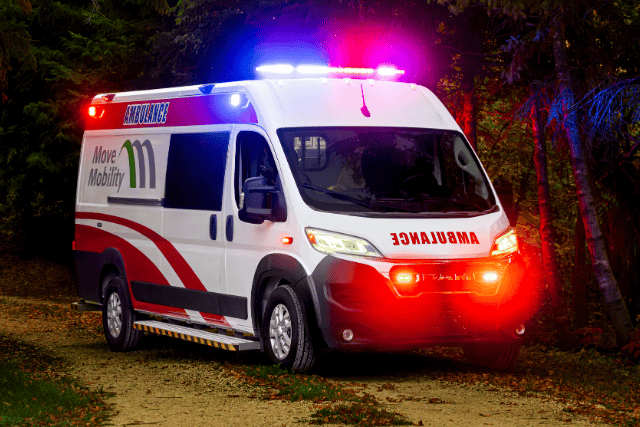
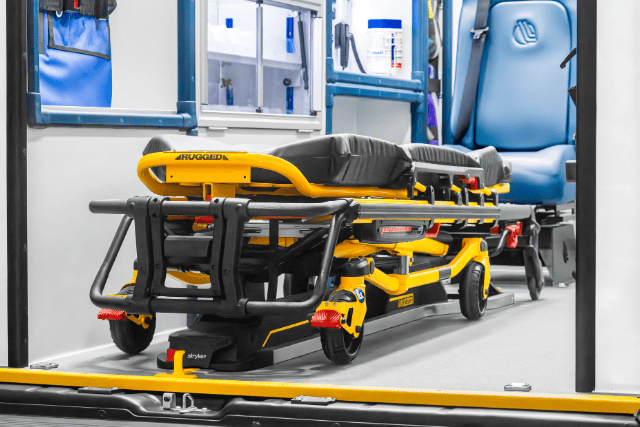
As you continue researching the different types of ambulances, you’ll come across type 2, which is the van-style option. The type 2 ambulance is a van, such as the RAM ProMaster, that’s converted and upgraded with medical equipment, seating, lights, oxygen storage, and space for a stretcher. Since the van keeps its original shape, it drives and parks like a regular commercial van you’d see around town. Many Canadian programs like this because it feels familiar and straightforward for staff.
Inside a type 2 ambulance, there’s a separation between the front cab and the patient area. It’s called a bulkhead wall. Most bulkheads include a pass-through opening, so the crew can speak to each other, hand small items through, and stay connected during transport. This setup keeps everyone safe while still supporting teamwork. For programs focused on transfers, outreach visits, or day-to-day patient support, this layout often feels calm, simple, and easy to manage.
What are the key features of a type 2 ambulance?
A type 2 ambulance stays practical and easy to understand. Even though it’s smaller than a type 1 modular box unit, it still gives the space most transfer and community programs need. Here’s what stands out:
- Van-style chassis: A RAM ProMaster feels natural to drive and fits well into most parking areas.
- Bulkhead with pass-through: Keeps the cab and patient area separate while still supporting communication.
- Smooth handling: Many drivers say it feels like driving a regular vehicle.
- Fuel-friendly: Usually lighter on fuel compared to larger ambulance types.
- Fits transfer work well: Many hospitals, long-term care homes, and community programs across Canada use this type for daily trips.
- Easier in cities: The size helps in tight streets and busy urban zones.
When does a type 2 ambulance make the most sense?
A type 2 ambulance often fits programs that want something easy to drive, simple to park, and comfortable for staff and patients.
You might see a good fit if:
- Your work is mostly in cities or larger towns, like Winnipeg, Halifax, or Edmonton, where narrow streets and busy parking lots are normal.
- Your team handles many planned transfers between clinics, long-term care homes, or hospitals.
- You carry a moderate amount of equipment, not a full load of heavy rescue gear.
- You want the vehicle to feel less intimidating for patients during calm, scheduled trips.
- You care about operating costs and want a type of ambulance that helps manage fuel and maintenance.
For example, a hospital in southern Ontario might use type 2 ambulances to move patients between campuses all day. A community health program in downtown Calgary might pick a van-style unit so they can get into underground parkades and small lots.
When would a type 2 ambulance not fit?
There are a couple of times when a type 2 might feel too small:
- You carry a lot of large or heavy equipment.
- You respond to complex emergencies that need extra room inside.
Questions to ask before choosing a type 2 ambulance

Here’s a simple table to help you compare your needs with what a type 2 offers:
| Question | What a type 2 offers | What to keep in mind |
| Do you drive in busy city areas? | Easy turning and parking in tight spots | May feel smaller for teams that prefer extra space |
| Do you focus on transfers? | Smooth loading and a layout made for calm trips | Larger units can hold more complex gear |
| Do you want simple teamwork? | Pass-through helps crew stay connected while working | Separation is helpful, but less open than some teams prefer |
What is a type 3 ambulance?

The type 3 ambulance is the one built on a cutaway van chassis with a square modular box on the back. The front looks like a van, and the back looks like the larger, box-style patient compartment you see on many EMS vehicles. The cab and the box connect through a wide walk-through opening, so staff can move between the front and rear more easily than in a type 1.
Canadian standards consider type 3 ambulances part of the “modular” group, but the van cutaway front gives them a different feel compared to truck-based type 1 units.
What are the key features of a type 3 ambulance?
Here’s what stands out about a type 3 ambulance:
- Cutaway van chassis: Built on van cutaways like the Ford E-Series. The front cab is integrated into the box.
- Modular patient box: A square box is mounted behind the cab and holds the full patient area.
- Large walk-through: The opening between the cab and the patient area is bigger than in a type 1. This helps crews pass equipment or switch positions faster.
- Intérieur spacieux : Similar working space to many type 1 ambulances, with space for storage, seating, and gear.
- Often remountable: Some programs remount the box onto a new chassis later.
When would a type 3 ambulance make the most sense?
A type 3 ambulance can make sense when you want space to move and a larger walk-through between the cab and the rear. Here are a few situations where it fits well:
- Mixed call types: Some services use type 3 units for a mix of 911 calls and transfers.
- Teams that want easy movement: The bigger walk-through helps when crew members need to help quickly without getting out of the vehicle.
- Programs that need more room: The wide box often supports more equipment than a type 2 van-style ambulance.
Picture a regional health service in Ontario that handles long transports and also supports higher-acuity trips. A type 3 could give them the room they need while still offering the van-style front many staff prefer.
When would a type 3 ambulance not be suitable for your program?
A type 3 ambulance isn’t always the best option. Here are several situations where it may not be the right match:
- Tight urban driving: The larger box can feel harder to turn or park in busy downtown areas.
- Limited parking or small loading zones: Facilities with narrow bays or small lots might find the size challenging.
- Programs with lighter equipment needs: You may not need the full box space if most of your work is steady transfer trips or outreach care.
- Teams wanting the smallest footprint: A type 2 ambulance is usually easier to handle in crowded areas.
- Fleets focused on truck-style units: If your entire fleet uses truck platforms, switching to a van cutaway may mean new parts, new training, and a different driving feel.
- Programs with strict fuel or operating cost budgets: Type 3 units are heavier and may use more fuel than type 2 ambulances.
- Rough rural roads: Some rural or northern programs prefer the heavier-duty suspension of a type 1 for long gravel or winter routes.
Questions to ask before choosing a type 3 ambulance
Here’s a simple table to help compare your needs with what a type 3 actually offers among the different types of ambulances:
| Question | What a type 3 offers | What to keep in mind |
| Do you want easy access between cab and rear? | Large doorway-style walk-through | Bigger body length can be harder to park or turn |
| Do you need space like a type 1? | Wide, square box with room for gear and crew | More interior space than some programs really need |
| Do you handle mixed call types? | Works for both 911 and transfer work in many regions | Some urban services still prefer a smaller type 2 |
| Do you want a van-style cab feel? | Van cutaway front gives a familiar driving experience | Not as heavy-duty as a full truck chassis in some conditions |
| Do you have room for a larger vehicle? | The box layout supports good storage and movement | Tight lots or older facilities may be challenging |
Which type of ambulance should you choose?
Choosing between the different types of ambulances can feel stressful. It’s a big decision, and the choice affects your staff, your budget, and the people you serve every day. Before you decide on a type 1 ambulance, type 2 ambulance, or type 3 ambulance, it helps to slow down and look at the whole picture.
Six things to think about before you decide
Here are the main areas to look at as you compare what are the different types of ambulances:
- Type of work you do:
- Are your trips planned or scheduled?
- Do you offer outreach services, patient transport, or community support?
- Do you need space for complex care, or is your work more routine and steady?
- Roads and geography:
- Do you drive in busy city areas with tight parking?
- Do you work in small towns with older buildings and narrow bays?
- Are your routes long or short?
- Equipment load:
- Do you carry a moderate amount of gear?
- Do you have large or bulky tools that take up a lot of room?
- Staff comfort:
- Do your drivers prefer something easy to handle?
- Would a van-style feel reduce stress during busy days?
- Facilities and parking:
- Do you park in tight spots, narrow bays, or underground areas?
- Do you load patients at community buildings with limited room?
- Budget and operating costs:
- Are fuel and maintenance important for your long-term planning?
- Do you want a vehicle that keeps daily costs predictable?
Looking at these questions first makes it easier to see which of the three main types of ambulances match how your team actually works.
Quick snapshot of the three types of ambulances
Here’s a simple table your team can skim:
| Question | Type 1 ambulance (truck + box) | Type 2 ambulance (van) | Type 3 ambulance (van cutaway + box) |
| Where does it shine? | Tough roads, heavy gear | Urban driving, transfers, outreach | Mixed calls, easy cab-to-rear access |
| How big does it feel? | Largest footprint | Smallest footprint | Similar size to Type 1 |
| Driving feel | Pickup truck | Fourgon | Cutaway van |
| Interior space | Large box | Smaller, focused layout | Large box |
| Typical use | Heavy-duty EMS | Transfers, community care, steady daily trips | EMS with mixed roles |
Why do many programs lean toward a type 2 ambulance?
Across Canada, many EMS, community health, and patient transport programs end up choosing the type 2 ambulance after looking at all three options. This is because it often matches the real-world needs of programs that focus on comfort, access, and smooth daily operations and emergency response.
Here’s why the type 2 ambulance fits so many organizations:
- City-friendly size: Most programs work around medical clinics, long-term care centres, hospitals, community buildings, and urban neighbourhoods. A van-style ambulance fits in places where large modular units struggle.
- Easy handling for staff: A Ram ProMaster-based type 2 ambulance drives like a van. This helps staff feel confident quickly, especially if they don’t come from an EMS or truck-driving background.
- Comfortable for patients: For planned or routine trips, the calmer, simpler layout often feels more welcoming. Many community clients prefer a space that doesn’t feel like a large emergency truck.
- Better for outreach and community visits: Programs doing wellness checks, mobile care, supportive housing visits, or local transport often need something nimble, not oversized.
- Predictable operating costs: Type 2 units are usually lighter and can help organizations manage fuel and maintenance budgets more easily.
- Good match for moderate equipment loads: Most community programs carry the basics: stretcher, oxygen, support equipment, and a few add-ons. A type 2 gives enough room without paying for space they won’t use.
Choosing between the different types of ambulances isn’t about picking the best one. It’s about picking the right one for how your team works and how your community lives.
If your program focuses on:
- Planned trips
- Community visits
- Outreach
- Steady transport
- Urban or regional routes
- Moderate equipment loads
- Staff comfort
- Emergency response
…then a type 2 ambulance is usually the option that makes daily work simpler, smoother, and more supportive for both staff and patients.
Choose the right type of ambulance for your program today
You came to this article because choosing between the different types of ambulances can feel confusing, and you didn’t want to make the wrong call for your team or your community. You wanted clarity, confidence, and a path forward that puts your people first.
Après avoir lu cet article, vous savez maintenant :
- How type 1, type 2, and type 3 ambulances differ
- Which designs fit city driving, transfers, outreach, or mixed medical work
- Why many community and transport programs lean toward a type 2 ambulance
Au MoveMobility, we’ve spent more than 20 years helping Canadian programs remove barriers to care with safe, purpose-built vehicles. We work alongside hospitals, First Nations communities, municipal teams, and outreach programs that put people first every day. What makes us different is how we guide you. We listen closely, ask real questions, and give you honest advice instead of pushing one “best” choice.
And because so many organizations across Canada are choosing van-style vehicles for community care and steady transport, our team is actively building a new type 2 ambulance that will be ready for programs in 2026. It’s designed with the same care, safety, and reliability we bring to every build. We’re proud to help you bridge the gap between today’s challenges and tomorrow’s possibilities. If you have questions, click the button below to talk to an ambulance expert.
If you’re not ready to talk to an ambulance expert yet, here are a few helpful resources you can explore to move one step closer to the right decision.
- Mobile Response Van vs. ambulance: Learn the difference to determine the right fit for your organization
- How to prepare for your MoveMobility Discovery Call: Take a look at what’s involved in your Discovery Call with MoveMobility.

 English
  French