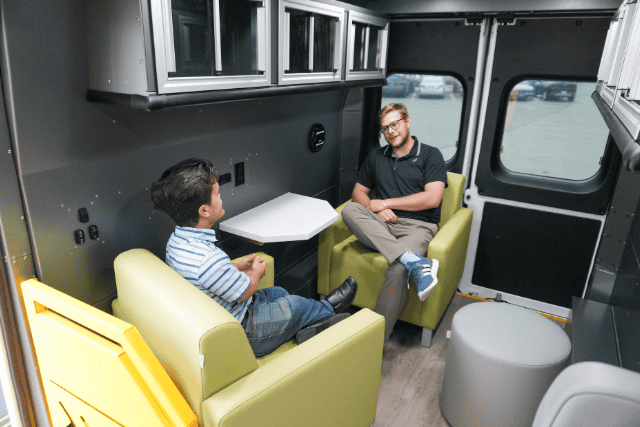
Did you know that 6 out of 10 young people in custody in Canada have a santé mentale challenge? If you run youth justice programs, you’ve likely seen how tough it is to get these youth the proper support. Long wait lists, no services close by, and the stigma of asking for help make it even harder.
When those needs go unmet, youth can end up stuck in the justice system longer, families and communities feel more stress, and programs like yours feel stretched thin. But there’s hope. Mobile counselling for youth justice programs can change this. These units bring help straight to the youth, in a safe and welcoming space, so they’re more likely to accept the care they need.
Pour plus de 20 ans, MoveMobility has worked with groups all across Canada to remove barriers to care. We’ve built vehicles for governments, non-profits, and health teams that are designed around real community needs. While we know we’re not the only manufacturer out there, our mission stays the same: Help you reach more youth, give them dignity, and sauver des vies.
In this article, you’ll learn about:
- Barriers that youth justice programs in Canada face
- How mobile counselling units fill those gaps
By the end, you’ll know how youth restorative justice programs in Canada can reach more youth with care that meets them where they are.
What barriers do youth justice programs in Canada face?
Across Canada, youth justice programs work hard to guide young people toward better paths. But challenges often stand in the way. Many programs deal with limited funding, long wait times for counselling, and difficulty reaching youth in rural or remote communities. These barriers make it tough to provide consistent, timely care that youth can trust. Let’s take a look at five common barriers your program might face.
1. Reaching youth in remote locations
Programs based in cities like Toronto face a big challenge: Youth in remote parts of Canada often can’t make it to you. About 16% of Canada’s youth live in rural areas. For Indigenous youth, the numbers are even higher, hovering around 60%.
That means many young people live far from youth justice services. There might be no bus transportation, no car, and maybe just ski-do or plane trips to get help. Weather, road closures, and long distances all slow things down, making it hard for them to get consistent care or make it to appointments.
You might feel stuck, seeing youth fail to connect with care. You probably worry they’ll drop out of programs or fall back into the system. That gap hurts your mission.
Voici à quoi cela ressemble :
- Long travel means low attendance: Youth may skip visits if getting there takes too long or costs too much.
- Weather and roads can block access: Snow, ice, or bad roads can shut a trip down altogether.
- Isolation raises costs: Sending staff or youth over long distances takes more time and money.
If you can’t reach youth where they are, they may not get the support they need when they need it most.
2. Stigma around seeking help
Stigma makes it hard for youth justice programs to connect with young people. Many youth worry they will be judged if they ask for help. In Canada, 60% of people with a mental health problem or illness won’t seek help because of fear of being labelled. That hesitancy can keep youth from showing up at all.
Research in Ontario also shows stigma is a major barrier for youth when they try to get mental health services. This can stop them before the first visit.
- Fear of judgment: Youth may skip counselling to avoid labels from friends or family.
- Privacy worries: Some don’t want to be seen going into a clinic or office.
- Cultural expectations: In some homes, talking about mental health still feels off-limits.
When stigma blocks healthcare, problems grow. Your program’s goals get harder to reach, and youth stay stuck longer.
3. Limited funding and resources
Funding and resources are a big challenge for youth justice programs in Canada. Many programs have tight budgets, which can make it hard to hire enough staff, run enough sessions, or buy needed supplies. Youth programs often struggle because government funding doesn’t always match the service demand.
Limited resources can lead to:
- Fewer staff: Programs may not have enough counselors to see every youth who needs help.
- Shorter sessions: Youth may get rushed support instead of the time they need to work through issues.
- Cuts to programs: Some initiatives may be reduced or cancelled when budgets are tight.
These limitations make it hard for youth justice programs to provide consistent, quality care. Youth may fall through the cracks, and programs may struggle to meet their goals.
4. Long wait times for support
Another major barrier that youth justice programs in Canada face is long wait times. Reports show that some youth wait months, even up to a year, to access mental health services. For a young person already involved in the justice system, that’s a long time to go without help.
Long waits can create bigger problems:
- Issues worsen over time: Without timely support, small struggles can turn into serious challenges.
- Youth disengage: Long delays make it harder to keep young people motivated to attend programs.
- Families lose trust: Parents and caregivers may feel the system is failing their child.
These delays can be frustrating for programs like yours. You’re ready to help, but the youth who need care the most may not get it soon enough.
5. Lack of culturally relevant assistance
Many youth justice programs in Canada also face the challenge of providing culturally safe and relevant care. For Indigenous youth especially, mainstream counselling services often don’t reflect their traditions, languages, or ways of healing. The Truth and Reconciliation Commission has highlighted the need for culturally appropriate services, yet gaps remain nationwide.
When care doesn’t connect with a youth’s cultural identity, it can feel distant or unhelpful.
This can cause:
- Low engagement: Youth may feel the program doesn’t understand them, so they pull back.
- Distrust of services: Past negative experiences can make youth wary of participating again.
- Occasions manquées : Without cultural relevance, youth may lose a chance to connect in meaningful ways.
For programs like yours, the goal is to build trust and help youth feel seen. But without culturally informed care, it’s harder to form that strong connection.
How can mobile counselling units help youth justice programs overcome barriers?
Mobile counselling units can help your youth justice program in many ways.
Voici comment :
- Reach youth where they live: Your team can drive the unit directly to communities, even in rural or remote areas. Youth don’t have to worry about long trips, bad weather, or limited public transit.
- Reduce stigma: Usually, one or two staff members meet with the youth inside the vehicle. There’s no crowded office or prying eyes, so the youth feel safe and private and are more willing to open up.
- Shorten wait times: Youth don’t have to wait weeks or months for an appointment at a central location. You can bring counselling to them, giving timely support when they need it most.
- Offer culturally relevant care: If your team is trained in culturally sensitive counselling, mobile units let you bring those services straight to the communities. Youth feel understood, respected, and more likely to engage.
- Increase program flexibility: Mobile units can visit multiple communities in a day, helping your program serve more youth efficiently without overloading staff or resources.
With mobility, privacy, cultural awareness, and flexibility, mobile counselling units make it easier to reach youth, provide better support, and strengthen your program’s impact.
Do you have any questions about mobile counselling units?
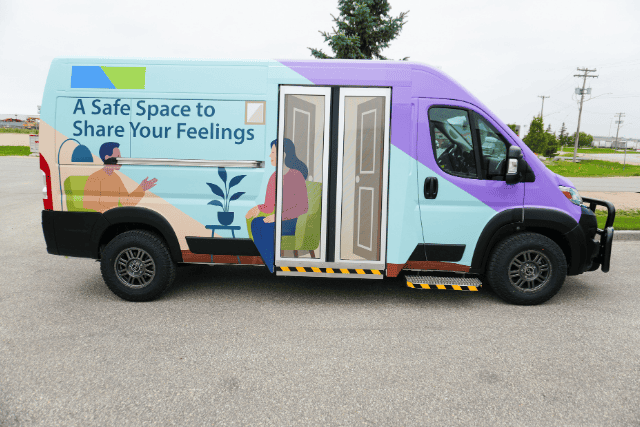
You came to this article because your youth justice program is facing some big challenges. Reaching youth in faraway communities, helping them get care on time, dealing with stigma, and making sure services are culturally relevant can make your job harder than it should be.
After reading this article, you now know how mobile counselling units can make a difference:
- Bring support to youth: Drive the unit directly to communities, even remote ones.
- Keep it private: Youth get one-on-one help without feeling judged.
- Cut wait times: They get help faster, without travelling to a central office.
- Respect culture: Culturally sensitive care can come straight to the community.
- Reach more youth: Units can visit multiple locations, helping your program serve more people.
Au MoveMobility, we help organizations like yours overcome healthcare barriers and reach more people safely and efficiently. We’ve been working with programs across Canada for over two decades, building mobile units that actually make a difference. Our goal is to make your work easier, so you can focus on helping youth while we handle the mobility side of things.
If you’re ready to see how a mobile counselling unit could fit into your program, click the button below to talk to a mobility expert.
If you’re not ready yet, check out these helpful articles to learn more:
- 5 étapes pour l'achat d'un fourgon médical mobile: This will guide you through the steps in purchasing any type of mobile medical unit.
- Mobile medical RV vs. mobile medical van: which should you choose? At this stage, you might be comparing different mobile medical units. This article will help you compare vans and RVs.

 English
  French