

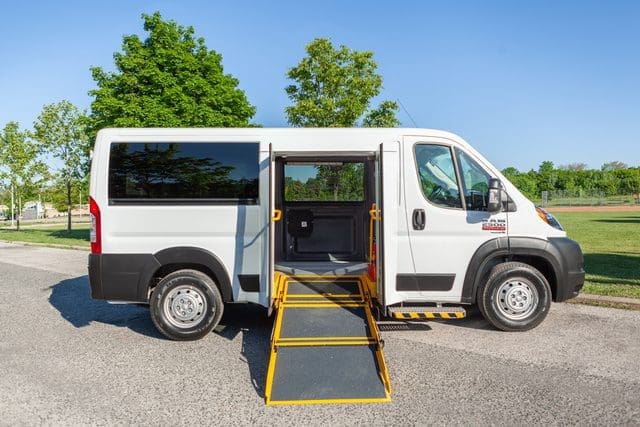
Getting around Alberta can be tough when buses are few and far between. In towns like Peace River, Drayton Valley, and Taber, public transit is limited or doesn’t run at all. If you manage transportation for seniors, healthcare programs, or people with disabilities, you’ve probably seen how this hurts people. Riders wait for rides that don’t show up. Appointments get missed. Some folks stop going out altogether. When that happens, independence fades, and so does connection.
That’s where a simpler, faster option can make a real difference. Wheelchair-accessible vans give communities the flexibility that big buses can’t. They can go where buses can’t, run more often, and bring people closer to where they need to be.
Au MoveMobility, we’ve been helping organizations across Canada improve access to care and transportation for over 20 ans. We’re Ford QVM and Stellantis QPro certified, and every van we build carries the Marque nationale de sécurité. We know we’re not the only ones building vehicles, but our focus is always on listening first and designing around what matters to you and your riders.
Dans cet article, vous apprendrez
- What Alberta’s transit deserts really look like
- Why wheelchair-accessible vans can be a faster solution than buses
What are Alberta’s transit deserts like?
Alberta’s transit deserts are places where the demand for rides is higher than the supply of transit. Transit planners often define a transit desert as a gap between how many people need service and how much service exists. Researchers measure this with maps of routes, stops, and travel times, then compare that to where people live and work. The result shows which areas are underserved and by how much.
What this looks like on the ground in Alberta
Brevet en cours
Alberta has world-class transit in its major cities, but coverage becomes sparse as you move into smaller towns and rural areas. That is where wheelchair-accessible vans and other flexible options can help.
Here is a clear picture of what things look like:
Rural and small communities face service gaps
The federal Rural Transit Solutions Fund has put new dollars into Alberta projects because many towns need help planning routes, buying vehicles, or testing new models. Recent rounds funded planning and service expansions in rural Alberta, which signals that gaps exist today and not only in the past.
On-demand models are filling the gap
Cochrane launched an on-demand system after studying a fixed route bus and found it could move people at roughly one-third of the cost of a similar fixed route service. Lower costs and flexible routing make this model attractive for communities with spread-out demand.
Urban success does not remove rural need
Edmonton is growing transit ridership and has thousands of bus stops and dozens of transit centres. That is great for the city, but it also highlights how different the picture looks outside major centres, where that level of infrastructure is not present.
Rural commuting by transit is rare
Across Canada, less than 2 percent of commuters in rural and remote regions use public transit. Alberta’s rural towns share many of the same size and distance challenges behind that number, like long travel times and small, spread-out populations.
Local studies show unmet demand
Municipal feasibility work, such as Beaumont’s recent study, examines peer towns across Alberta to project ridership and evaluate service options. These studies often point to small fleets or demand-responsive service rather than big buses, because trips are spread out and budgets are tight.
What does this mean for your riders?
In Alberta’s transit deserts, people who use mobility devices, seniors, and clients living outside town cores face long waits or no ride at all. When there is no reliable option, medical visits get missed, day programs are skipped, and caregivers burn out.
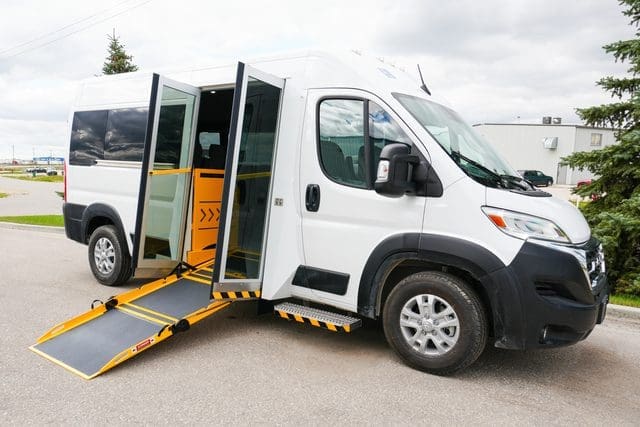
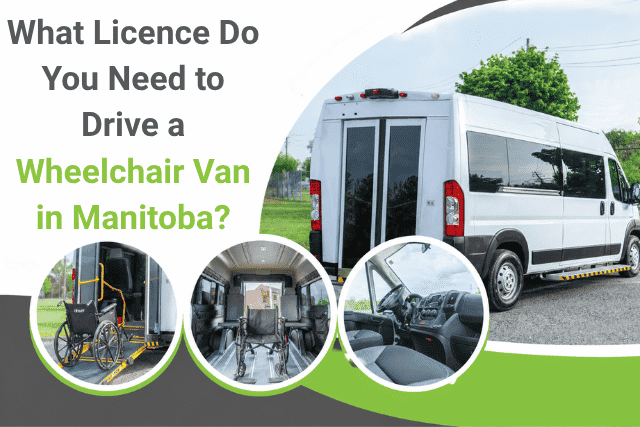
Smaller vehicles, like wheelchair vans, can reach gravel roads, turn on tight streets, and pick up at the door. That makes the ride faster and more personal than a low-frequency bus line. Cochrane’s experience shows how flexible service can stretch budgets while improving access.
Funding is coming to rural Alberta to plan and test new solutions, and communities are already proving that right-sized fleets work. If you operate in Alberta’s transit deserts, a small, flexible fleet of wheelchair vehicles can connect more riders to care faster than adding a low-frequency bus. The next section breaks down the differences between a van-based service and a bus-based model for speed, cost, and dignity.
How do wheelchair vans compare to buses in Alberta’s transit deserts?
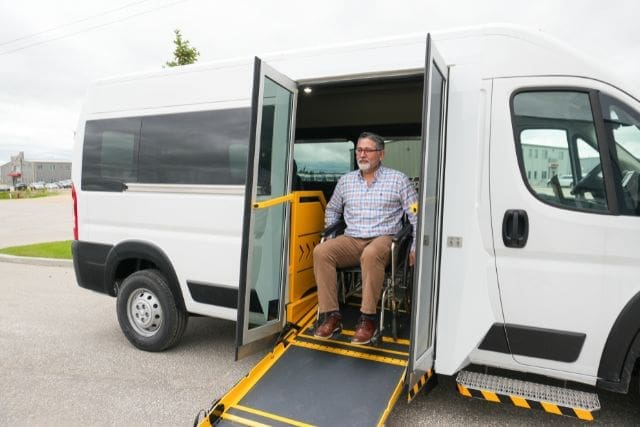
Alberta’s transit deserts slow people down. Riders wait a long time for a fixed bus. In some places, a bus never comes. When you run programs for seniors or people who use mobility devices, you feel that pain every day. A right-sized fleet of fourgonnettes accessibles aux fauteuils roulants changes that story.
Let’s take a look at four ways how.
1. Faster rides when time matters
Fixed routes work well in very busy corridors. In low-density areas, large buses make long loops with few riders. That means longer waits and longer trips. On-demand service flips this. Vehicles go where people are, when they ask.
- Shorter waits with on-demand models: A feasibility study that compared options in Alberta notes the average wait for Edmonton’s on-demand transit was about 10 minutes in 2022. That is a strong benchmark for small communities exploring flexible service.
- Cochrane’s on-demand system (COLT) serves the full community with request-based trips. Town planning documents highlight a push to add limited fixed routes to reduce failed requests and improve wait times. The takeaway is clear. When demand shifts, service can shift with it.
When rides come sooner, people keep their medical visits, counseling sessions, and work shifts. Less waiting means less anxiety for riders and fewer no-shows for your team.
2. Lower operating costs without cutting care
Running a forty-foot bus on a long, low-ridership loop burns budget. Fuel, entretien, and operator time add up. A van fleet uses smaller vehicles and dynamic routing. That reduces empty miles and trims cost per trip.
- Cost signal from Alberta towns: Cochrane’s public feedback shows its on-demand service performs well on cost per trip compared with similar communities, even with limited evening and weekend hours. That is a strong sign that right-sized service can stretch local dollars.
- Why the math works: On-demand fleets dispatch only when trips are requested, then pool riders heading the same way. Industry toolkits and case studies describe this model as a fit for low-density areas where fixed routes struggle to fill seats.
With wheelchair-accessible vans, you match vehicle size to real demand. You keep service frequent. You keep budgets steady. Most importantly, you keep people moving.
3. Dignity at the door
People want a ride that feels safe, respectful, and human. Wheelchair vans help you deliver that.
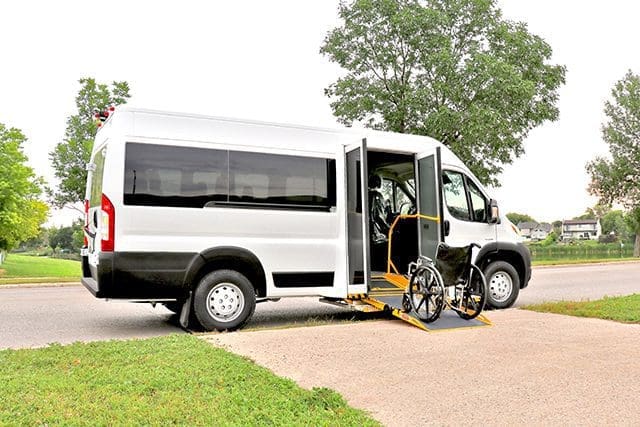
- Door-to-door feel: Vans can reach gravel roads and tight cul-de-sacs where a bus cannot. Drivers can stage closer to homes and clinics. Riders spend less time in the cold and heat.
- Predictability builds trust: Edmonton’s accessible service, DATS, tracks on-time pickups against a defined window. That focus on reliability shows how performance targets support rider trust across accessible services.
- Quicker recovery after a miss: If a bus breaks down, the gap can be an hour or more. With a van fleet, you can reassign a nearby vehicle and save the trip.
Small touches matter. A shorter walk to the curb. A driver who knows the lift. A pick-up window that feels reasonable. These moments add up to dignity.
4. Buses still shine in the right places
This is not a bus versus van fight. It is a service design choice. In Calgary and Edmonton, major corridors and frequent networks move large numbers well. Cities track on-time performance and publish route data to keep making those networks better. High-capacity routes work in dense areas with steady demand.
Outside those corridors, the picture changes. Sprawl, long distances, and scattered trip patterns make big buses slow and costly. That is where wheelchair-accessible vans step in.
What do riders feel on the ground?
The wait: Riders in small towns often face long gaps between buses. Miss one, and the next ride could be quite a long wait. In an on-demand model, average waits can be closer to ten to twenty minutes when the system is resourced well. The Edmonton On Demand benchmark shows what is possible when service matches demand.
The ride time: Fixed routes detour to cover more stops. A van can take a more direct path. That means shorter ride times and fewer missed transfers. On-demand guidance from Canada’s transit association highlights that meeting wait and ride time targets is central to trust.
The outcome: Faster rides help people make dialysis, counseling, and rehab on time. Your staff spends less time rescheduling. Your budget buys more completed trips.
A quick side-by-side
- Speed: Wheelchair-accessible vans can respond in minutes and take direct paths. Buses in low-density areas face longer headways and longer loops.
- Coût : Vans reduce empty miles and right-size fuel and maintenance. Public feedback in Cochrane points to a lower cost per trip than other towns using less flexible models.
- Dignity: Vans reach the curb, cut wait anxiety, and support predictable pick-up windows tracked in accessible programs like DATS.
As you can see, in Alberta’s transit deserts, large buses make sense in a few places but miss the mark across many. Wheelchair-accessible vans are faster to arrive, cheaper to run, and kinder to the rider experience. They help people get to care, work, and community on time. They help your team keep promises. And they help your budget go further without giving up on dignity.
Wheelchair-accessible vans: Alberta’s faster, smarter way forward
You came here because your riders are waiting too long or not getting rides at all. You’ve seen firsthand how limited transit options can isolate people and stretch your team thin. That’s why you wanted to know if wheelchair-accessible vans could work better in Alberta’s transit deserts.
Voici ce que vous avez appris aujourd'hui :
- What Alberta’s transit deserts look like and who they leave behind.
- Why smaller, flexible fleets like wheelchair-accessible vans serve riders faster, with more dignity, and at a lower cost.
- How these vans can complement or even outperform buses in rural and low-density areas.
Au MoveMobility, we’ve spent more than two decades helping Canadian communities close gaps in healthcare and transportation. Our vehicles aren’t off-the-shelf; they’re built for the people you serve. From listening to your challenges to delivering custom wheelchair vans that meet safety standards and funding criteria, our mission is simple: Help you connect people to care, independence, and community.
If you’re ready to explore a solution that fits your needs, click below to talk with a mobility expert.
If you’re not quite ready to chat, here are a few helpful reads to take you a step closer:
- Wheelchair van vs. bus: A direct comparison of vans and buses, expanding on today’s discussion of speed, cost, and practicality.
- Comment choisir une camionnette pour fauteuils roulants: Helps leaders evaluate real-world needs, budgets, and options when starting or upgrading a transport program.
- Combien coûte un fourgon pour fauteuils roulants ?? Discover the typical costs associated with purchasing a wheelchair van.

 English
  French