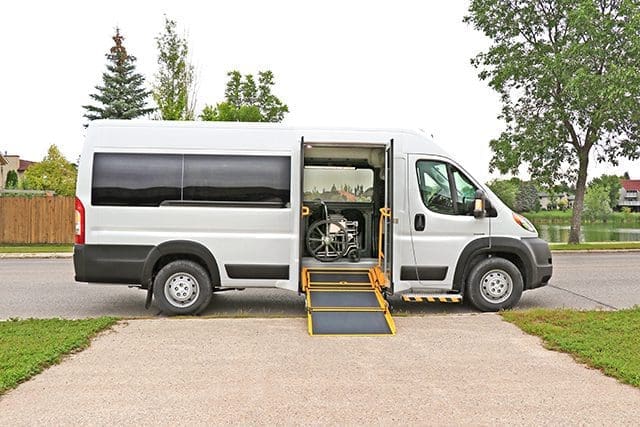
Updated: August 21, 2026
A missed ride can mean a missed medical appointment, a missed day program, or another day feeling cut off from the community. For transportation teams, those moments add up fast. A wheelchair accessible van can help close that gap, but the wrong wheelchair accessible vehicle can create new ones through difficult boarding, tight interiors, or layouts that don’t match your riders. You may know you need an accessible van or mobility van, but still feel unsure about what makes one truly accessible.
The goal is simple: make every trip easier, safer, and more dignified for the people you serve.
Au MoveMobility, we’ve spent more than 20 ans focused on accessible transportation and manufactured over 480 wheelchair vans in the past three years. We’ve worked with organizations such as Transdev across Canada to help solve real transportation barriers. Our vehicles carry the Marque nationale de sécurité, and we’re certified through Ford Pro Upfitter and Stellantis QPro. We’re also a Prix d'innovation DARE 2026 recipient. That experience gives us a close view of accessible transportation, but we’ll keep this guide balanced because we’re one manufacturer in a larger industry.
Dans cet article, vous apprendrez :
- What they are: What makes a wheelchair accessible vehicle different from a standard van.
- How they work: How ramps, lifts, and interior changes create access.
- What types exist: The main types de fourgonnettes accessibles en fauteuil roulant used across Canada.
What is a wheelchair accessible vehicle?
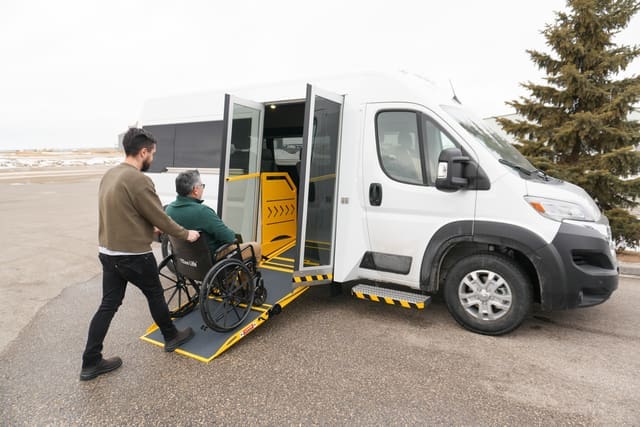
A wheelchair accessible vehicle is designed or modified so someone using a wheelchair can get in, ride safely, and get out with less hassle. It usually includes a wider entrance, extra interior space, flexible seating, and a ramp or lift. The goal is simple: make transportation work for the person, not the other way around.
If you’re wondering what is a wheelchair accessible vehicle compared with a wheelchair accessible van, think of it as the bigger category. Accessible vehicles can include vans, minivans, cars, SUVs, and buses. This article focuses on the wheelchair accessible van, since that’s a common choice for Canadian transportation programs, healthcare teams, and community organizations.
A proper accessible vehicle also involves a lot more than adding a ramp and hoping for the best. Depending on the van, the conversion can include:
- A wider entrance: This gives the wheelchair and rider enough room to enter without squeezing through the doorway.
- A ramp or lift: A wheelchair ramp or lift bridges the height between the ground and the van floor.
- More interior room: Floors, walls, and seating can be changed to create usable wheelchair space.
- Flexible seating: Seats can be moved or removed to support different passenger and wheelchair layouts.
- Accessibility equipment: Grab handles, lighting, restraint systems, and other features help support safer trips.
These changes turn a regular van into a mobility van that works around the people riding in it.
Next, we’ll look at how a wheelchair accessible van actually works from the moment a rider approaches the vehicle to the moment they’re ready to travel.
How does a wheelchair accessible van work?
A wheelchair accessible van works by changing how a passenger enters, moves through, and rides in the vehicle. Wider doors, ramps or lifts, added interior space, and flexible seating all work together to remove barriers that exist in a standard van. The setup depends on the van size, entry point, and people your program transports.
For your team, that means looking beyond the vehicle itself. A good accessible van should make each pickup feel straightforward for the rider and manageable for the staff member helping them.
Entering and exiting the wheelchair accessible van
A wheelchair user usually enters through the rear or side of the van using a ramp or powered wheelchair lift.
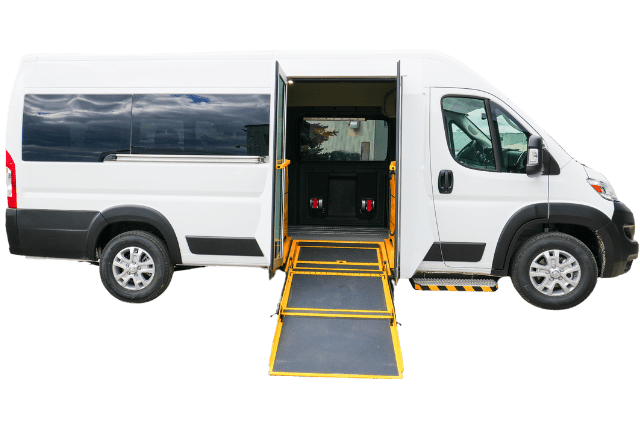
A ramp creates an angled path from the ground to the van floor. Some are manual, while powered ramps deploy using a control. A wheelchair lift raises the rider from ground level until they’re even with the vehicle floor.
You can see a more detailed comparison in our guide to ramps vs. lifts for wheelchair vans.
The entry style also changes the loading process. Rear entry often allows the wheelchair to move straight into the passenger area. Side entry works well in other layouts and parking situations. Either way, nobody wants boarding to feel like solving a puzzle in a parking lot.
If ramp angle is a concern for your riders, our guide to reducing wheelchair ramp angle explains what affects that slope.
Creating enough space inside the wheelchair accessible van
Getting through the door is only half the job. Once inside, the rider needs enough room to move into position without tight turns or awkward manoeuvring.
A wheelchair accessible van can include:
- Wider door openings: These provide clearance for wheelchairs and larger mobility devices.
- More interior height: Extra headroom gives riders a more comfortable amount of space.
- Modified flooring: The floor can be changed to create additional room or support flexible seating.
- Open wheelchair space: Clear floor area gives staff room to position the passenger safely.
- Flexible seating: Seats can move or come out to support different passenger layouts.
Not every wheelchair vehicle needs a lowered floor. Lowered floors are common in accessible minivans because the original vehicle sits lower and has less interior height.
Full-size wheelchair accessible vans often have enough height to keep the original floor level. Some use systems such as AutoFloor, which lets seats and wheelchair positions move along tracks in the floor.
That flexibility becomes useful when Tuesday’s passenger list looks nothing like Wednesday’s.
Travelling while using a wheelchair
Once the passenger is in position, the wheelchair and rider have to be secured before the vehicle moves.
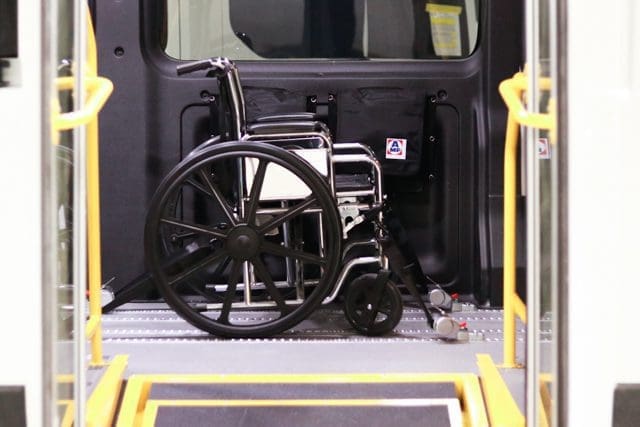
Approved wheelchair and occupant restraint systems hold the chair in place and protect the person during travel. The exact setup depends on the vehicle and restraint equipment.
We cover that process separately in our guide on how to secure a wheelchair into a van, so we won’t turn this section into a securement lesson.
With access, space, and safe travel covered, the next step is looking at the specific features that turn a standard van into a mobility van.
What features make a van wheelchair accessible?

A wheelchair accessible vehicle needs a few key features to work well for real people. The door, floor, seating, headroom, and safety equipment all have to work together. One feature on its own usually isn’t enough.
Here are some of the most common features you’ll see:
| Fonctionnalité | What it does |
| Ramp or wheelchair lift | Helps the wheelchair user get into and out of the van. |
| Wider entry | Gives a wheelchair enough room to pass through the doorway. |
| Interior headroom | Gives riders more space to sit comfortably inside. |
| Modified floor | Creates more room or helps support a lower ramp angle. |
| Assise flexible | Lets you change passenger and wheelchair positions as needed. |
| Grab handles | Gives riders extra support during loading and unloading. |
| Accessible controls | Helps staff operate powered doors, ramps, or lifts. |
| Wheelchair restraint equipment | Helps keep the wheelchair and rider secure during travel. |
| Interior lighting | Makes it easier to load and unload in low light. |
| Emergency equipment | Helps staff respond if something goes wrong during a trip. |
How do these features work together?
The setup can look very different from one accessible van to another. A minivan often has part of the floor lowered to create more headroom and make the ramp easier to use. A full-size mobility van usually has more height from the start, so lowering the floor isn’t always needed.
Some full-size vans also use track flooring systems. These let seats and wheelchair positions move around more easily. That can help when your passenger list changes from one trip to the next.
And let’s be honest, that happens a lot.
The main thing to remember is that accessibility comes from the whole setup working together. A ramp isn’t much help if the doorway is too tight. Extra headroom won’t solve the problem if there isn’t enough room to move inside.
Safety also goes beyond the ramp and floor. Our overview of wheelchair van safety features covers other systems that support safer daily operation.
Next, we’ll look at the main types of wheelchair accessible vans you’ll see across Canada.
What types of wheelchair accessible vans are available?
Most wheelchair accessible vans fall into two main groups: minivans and full-size vans. Both give wheelchair users safe, dignified transportation, but they offer very different amounts of space, capacity, and flexibility. You’ll also see rear-entry and side-entry designs, which describe where wheelchair users enter and exit the vehicle.
For your organization, knowing these basic types helps narrow the field before you get buried in models, floorplans, and option sheets. Nobody wants to compare 30 vehicle features only to realize the van was too small from the start.
Monospaces accessibles aux personnes en fauteuil roulant
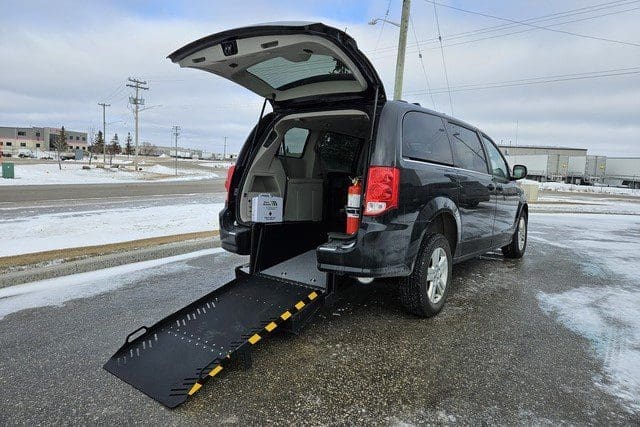
A wheelchair accessible minivan is the smaller of the two main van types. Its lower height and smaller footprint make it feel closer to driving and parking a regular passenger vehicle.
Most accessible minivans use a lowered-floor conversion. Part of the original floor is lowered to create more headroom for the wheelchair user and provide a smoother path from the ramp into the vehicle.
A typical accessible minivan includes:
- Rear or side entry: The wheelchair user enters through the back or passenger side of the van.
- Ramp access: Minivans commonly use manual or powered ramps rather than large platform lifts.
- Smaller capacity: Most minivans carry fewer wheelchair users and passengers than full-size vans.
- Lower vehicle height: This makes parking garages and tighter urban spaces easier to manage.
- Passenger-style driving: Drivers usually find the size and handling familiar.
MoveMobility’s current minivans are built on the Chrysler Grand Caravan platform, though other manufacturers use platforms such as the Toyota Sienna and Chrysler Pacifica.
Capacity depends on the conversion. Some accessible minivans carry one wheelchair user, while other layouts support up to two. The smaller interior means there’s less room to change seating layouts compared with a full-size van.
That can work well for a smaller transportation program. For example, a community organization in downtown Toronto may value easier parking and a smaller vehicle more than carrying several wheelchairs at once.
Our guide to wheelchair accessible minivan options looks more closely at the different layouts available.
Fourgonnettes pour fauteuils roulants
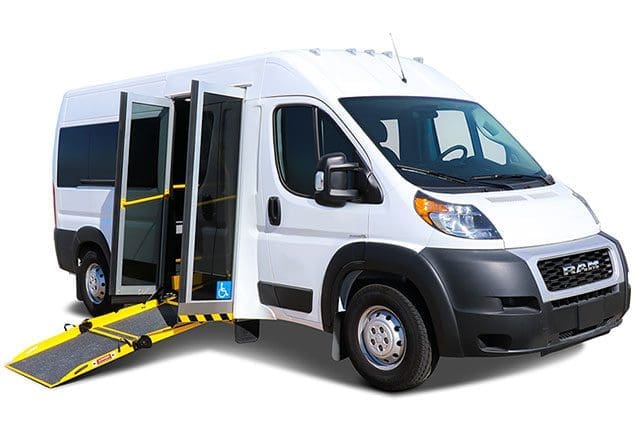
A full-size wheelchair van gives you much more interior room. These vehicles are commonly built on commercial van platforms such as the RAM ProMaster and Ford Transit.
That extra space opens up more options for organizations transporting several people during the same trip.
Depending on the model and layout, full-size wheelchair accessible vans offer:
- More wheelchair positions: Some layouts support several wheelchair users at once.
- More passenger seating: Additional space allows wheelchair users and ambulatory passengers to travel together.
- Accès par rampe ou ascenseur : Full-size vans can use manual ramps, powered ramps, or wheelchair lifts.
- More interior height: Many adults can stand inside, and wheelchair users have more headroom.
- Dispositions flexibles : Track flooring systems allow seats and wheelchair positions to change between trips.
For context, some full-size MoveMobility vans support three to five wheelchair positions and up to 12 ambulatory passengers, depending on the vehicle and layout. Your needs might be smaller, but the extra room gives you options.
Think about an adult day program in rural Manitoba. Monday’s route could include two wheelchair users and four ambulatory passengers. Tuesday might look completely different. A larger mobility van gives the program room to adapt instead of making the passenger list fit one fixed layout.
The trade-off is size. Full-size vans require more parking space and usually won’t fit in low parking garages. They also cost more than most accessible minivans.
So, bigger isn’t automatically better. It comes down to how much room your program actually uses.
Our breakdown of full-size wheelchair vans and minivans goes deeper into those differences.
Rear-entry and side-entry wheelchair vans
You’ll also hear wheelchair accessible vans described as rear-entry or side-entry. This simply tells you where the wheelchair user gets into the vehicle.
A rear-entry wheelchair van loads from the back. The wheelchair user normally moves straight into the passenger area. This reduces the need to turn larger wheelchairs once inside. You’ll need enough clear space behind the van for the ramp or lift.
A side-entry wheelchair van loads from the passenger side. This allows riders to enter from a curb or sidewalk instead of behind the vehicle. In many layouts, the wheelchair turns after entering so the rider faces forward for travel.
These configurations show up differently in minivans and full-size vans. For example, side-entry minivans commonly use ramps, while full-size rear-entry vans can use either ramps or wheelchair lifts.
Your parking environment plays a big role here. A rear-entry setup might make sense for a rural Saskatchewan program loading in large parking areas. A side-entry accessible van could work better for frequent curbside pickups in Ottawa or Mississauga.
Consultez notre article sur rear-entry and side-entry full-size wheelchair vans, which goes deeper into those configurations.
For smaller vehicles, you can also compare rear-entry and side-entry minivans.
Now that you know the main types of wheelchair accessible vans, the next step is understanding which standard vehicle platforms are commonly converted into them.
What vehicles are commonly converted into wheelchair vans?
A wheelchair accessible vehicle usually starts as a standard minivan or full-size van built by an automaker. A qualified mobility manufacturer or upfitter then completes the wheelchair van conversion. That work changes the vehicle so it can support wheelchair access, extra interior space, and specialized equipment without losing sight of how the original vehicle was designed.
Minivan platforms
Common minivan platforms include vehicles from Chrysler and Toyota. These vans are popular for accessible van conversions because their lower height and smaller size work well for ramp access.
For example, the Chrysler Grand Caravan has been widely used for rear-entry and side-entry conversions. Other manufacturers also convert models such as the Chrysler Pacifica and Toyota Sienna.
Minivan conversions often involve larger changes to the original vehicle, including lowering part of the floor and modifying the doors. That’s why it’s important to work with a company that understands both the conversion and the original vehicle.
If you’re researching minivan layouts, our guide to long-cut and short-cut accessible minivans explains another common difference.
Full-size van platforms
Full-size wheelchair accessible vans are commonly built on commercial platforms such as the RAM ProMaster and Ford Transit. These vehicles already have more interior height and floor space, which gives the upfitter more room to create wheelchair positions, flexible seating, and ramp or lift access.
You can learn more about the RAM ProMaster wheelchair van platform et le Ford Transit wheelchair van platform in our separate guides.
Some organizations buy a van first and then send it away for conversion. Others buy the chassis and conversion together as one package. Our guide to buying a converted van versus converting one later explains that difference.
One more thing to check is warranty support. A proper conversion doesn’t automatically cancel the original vehicle warranty, but the conversion parts can have separate coverage. Our article on wheelchair van conversion warranties explains how that works.
Next, we’ll clear up some of the common terms used for a mobility van and other accessible vehicles.
Is a mobility van the same as a wheelchair accessible van?
A mobility van and a wheelchair accessible van often describe the same type of vehicle, but the terms aren’t always used in exactly the same way. If you’re comparing vehicles online, you’ll probably see all of these phrases used by manufacturers, dealers, and transportation programs.
Here’s the simplest way to think about them:
- Wheelchair accessible van: This is the clearest term. It describes a van designed or converted so a wheelchair user can enter, ride, and exit safely.
- Mobility van: This is a common industry term for a van adapted for someone with a mobility need. In many cases, it means a wheelchair accessible van.
- Accessible van: This is a broader, shorter term. It can describe a van with wheelchair access or other accessibility features.
- Accessible vehicle: This is the widest term of the group. An accessible vehicle can be a van, car, SUV, bus, or another vehicle modified for people with disabilities.
So, if your transportation team is searching for mobility vans and keeps seeing different names, don’t worry. You’re not looking at four completely different products.
The more important question is what the vehicle actually does. Look at the entry system, interior space, wheelchair positions, seating, and how the layout fits your riders.
For this article, we’ll mainly use wheelchair accessible van because it’s the clearest description of the vehicles we’re discussing.
Now that the terminology is sorted out, we can look at the kinds of people and organizations that use these vans every day.
Who uses wheelchair accessible vans?
Wheelchair accessible vans support people whose transportation needs don’t fit a standard vehicle. That includes wheelchair users, seniors, and people with mobility limitations who need more room, easier entry, or extra support during a trip.
They also play a big role in community transportation across Canada. Common users include:
- Adult day programs: Helping clients get to programs, appointments, and community activities.
- Community living organizations: Supporting daily transportation for people with disabilities.
- First Nations and Indigenous communities: Connecting people to healthcare, services, and community events, sometimes across long rural routes.
- Public and community transit: Providing accessible transportation for riders who can’t use a standard bus or vehicle.
- Healthcare organizations: Transporting patients between appointments, programs, and care locations.
- Families: Giving a wheelchair user more freedom to travel together without relying on separate transportation.
The right setup depends on the people you’re serving. A senior program in Winnipeg might need room for one wheelchair user and several seated passengers. A community transportation service in northern Ontario could need more wheelchair positions and space for longer trips.
That’s why wheelchair accessible vehicles and mobility vans come in so many layouts. The people, routes, and daily trips shape what works best.
For organizations running public or community transportation, our guide to choosing a wheelchair van for handi transit and urban transit goes deeper into program-specific needs.
Vehicle requirements can also look very different depending on whether the van is being purchased for an organization or an individual. Our guide to personal-use and commercial wheelchair vans explains those differences in more detail.
Next, we’ll compare a wheelchair accessible van with a standard van so you can see what actually changes.
What is the difference between a wheelchair accessible van and a standard van?
A wheelchair accessible van is built or converted around the needs of someone using a wheelchair. A standard van is designed mainly for seated passengers. The biggest differences are the entrance, interior space, seating layout, and the equipment used to help a wheelchair user enter and travel safely.
| Fourgon standard | Wheelchair accessible van |
| Standard passenger entrance | Wider accessible entrance |
| Standard floor and interior | Modified interior where needed |
| Fixed passenger seating | Space for wheelchair positions |
| No wheelchair loading system | Ramp or wheelchair lift |
| Designed around seated passengers | Designed to support wheelchair users |
The biggest mistake is thinking an accessible van is simply a regular van with a ramp added.
A proper wheelchair accessible vehicle usually needs several parts of the van to work together. The doorway has to be wide enough. There needs to be enough headroom and floor space inside. Seating may need to move or come out. The vehicle also needs safe wheelchair access and restraint equipment.
So, the ramp is important, but it’s only one piece of the puzzle.
If you’re comparing a properly converted van with a cheaper alternative, our article on the risks of low-cost accessible vehicles explains why the conversion itself deserves close attention.
That difference is what turns a standard van into a vehicle that works for real daily transportation.
Frequently asked questions about wheelchair accessible vans
What is considered a wheelchair accessible vehicle?
A wheelchair accessible vehicle is designed or converted so a wheelchair user can enter, travel, and exit safely. It usually includes a wider entrance, extra interior space, a ramp or lift, and room for the wheelchair during travel. Vans are one common type, but accessible vehicles can also include cars, SUVs, and buses.
Can a wheelchair user stay in their wheelchair while travelling in a van?
Yes. A wheelchair user can stay in their chair during travel when the van is designed for wheelchair transportation and the proper securement equipment is used.
If you want to understand the rules around transporting wheelchair users safely, our guide to legal wheelchair transportation requirements covers that topic in more detail.
Do wheelchair accessible vans use ramps or lifts?
A wheelchair accessible van can use either a wheelchair ramp or a wheelchair lift.
Ramps create an angled path from the ground into the van. Lifts raise the wheelchair user up to the vehicle floor. The right option depends on the vehicle, rider needs, loading space, and how your team uses the van.
For a closer look at one option, our guide to wheelchair van lifts explains their main advantages and drawbacks.
Does a wheelchair accessible van need a lowered floor?
No. A lowered floor is common in wheelchair accessible minivans, but it isn’t required for every van.
Minivans often need extra floor modifications to create more headroom and improve ramp access. Full-size vans such as the RAM ProMaster or Ford Transit already have more interior height, so they can often be converted without lowering the floor.
If floor height is a concern, our comparison of high-floor and low-floor wheelchair vans explains how those designs differ.
Can any van be made wheelchair accessible?
No. Some vans are much better suited for wheelchair conversions than others.
The vehicle needs enough interior height, door space, floor strength, and room for accessibility equipment. The conversion also has to work safely with the original vehicle design.
Our guide to Quels véhicules sont accessibles aux personnes en fauteuil roulant ? explains what to look for.
What is another name for a wheelchair accessible van?
You may see a wheelchair accessible van called a mobility van, accessible van, or wheelchair vehicle. These terms are often used to describe similar vehicles.
Accessible vehicle is a broader term because it can include vans, cars, SUVs, and buses. When you’re comparing options, focus less on the label and more on the actual layout, entry system, space, and accessibility features.
Ready to find the right wheelchair accessible van?
You may be trying to solve a transportation gap that affects real people every day. Riders could be missing appointments, community programs, or time with family because a standard vehicle doesn’t work for them. Understanding how a wheelchair accessible van works gives you a much clearer path forward.
You now know:
- What makes a van accessible: Wider entrances, ramps or lifts, added interior space, flexible seating, and safety equipment all work together.
- What options are available: Accessible minivans and full-size vans offer different amounts of space, capacity, and entry options.
- What the terminology means: Mobility vans, accessible vans, and wheelchair accessible vehicles often describe similar vehicles, but the details of the design matter more than the label.
Au MoveMobility, our team works with transportation organizations across Canada to turn real service gaps into vehicle designs that work on real routes. That means listening to who you transport, where you travel, and what your staff deal with each day before recommending a layout. We build around the people your program serves because accessible transportation should create more freedom, dignity, and connection. If you have questions about your next vehicle, click the button below to talk to a mobility expert.
If you’re not ready to talk with a mobility expert yet, these resources can help you take the next step.
Que devriez-vous lire ensuite ?
- Comment choisir un fourgon pour fauteuils roulants (11 étapes): Use this guide to turn what you’ve learned into a clear list of vehicle requirements for your program.
- Combien coûte un fourgon pour fauteuils roulants ?: Learn what affects wheelchair van pricing so you can start building a realistic budget.
- Comment acheter un fourgon pour fauteuils roulants: See what the buying process looks like once you’re ready to move from research into planning and purchasing.


 English
  French