What happens when people in your community can’t get to the care they need? In places like Caledon, distance, limited transit, and mobility barriers can quietly turn small gaps into serious risks. Many Canadians with disabilities face challenges accessing transportation, which directly affects their health and independence.
If you’re responsible for serving your community, you feel that pressure. Missed appointments. Isolated seniors. Families trying to fill the gaps on their own. Over time, it adds up to lost trust and growing demand you can’t keep up with. The goal is clear. You want reliable, dignified transportation that helps people stay connected to care, community, and daily life.
Au MoveMobilityNous avons dépensé plus de 20 ans helping organizations close that gap. We’ve built more than 480 fourgons pour fauteuils roulants in the past three years alone. Our work meets strict safety standards through the Ford Pro Upfitter program, Stellantis QPro certification, and the Marque nationale de sécurité. More importantly, we’ve partnered with organizations like Services communautaires de Caledon to turn real challenges into practical solutions that work on the ground.
In this case study, you’ll see how Caledon Community Services is changing what transport accessible looks like all across the community.
The human side of accessible transportation
“It’s not just about a ride to and from something. It’s about continuing a relationship… keeping people connected to each other… removing isolation.”
-Cathy Perennec-McLean: Direct, Programs and Operations
That reflection from Cathy Perennec-McLean captures what’s really at stake.
Cathy shared a simple story that sticks.
A senior gentleman used local transportation to visit his wife in long-term care. He went three times a week. That routine gave him something steady to hold onto. It kept their relationship alive in a time when distance could have easily taken over.
Now imagine if that ride wasn’t available.
Visits become harder. Then less frequent. Over time, that connection starts to fade.
That’s where the gap becomes personal.
It’s about connection, not convenience
When transportation isn’t working, the impact builds quickly:
- Fewer visits: Families spend less time together.
- More isolation: People are left on their own more often.
- Lower well-being: Daily routines that bring comfort begin to slip away.
Social isolation can increase health risks for seniors, including mental health challenges and reduced quality of life.
Now flip that.
When transportation works the way it should, it supports:
- Stronger relationships: People stay present in each other’s lives.
- Independence: Riders move with confidence and control.
- Community connection: Services reach people who would otherwise be left out.
For that gentleman, those three weekly visits weren’t routine. They were a lifeline.
And if you’re shaping transportation in your community, that’s the shift. You’re helping people stay connected to what matters most.
That thinking guided how Caledon Community Services built their approach.
From a phone line to a community lifeline
“In 1971 it was a contact centre. It was a phone number that you called to say, ‘I’m looking for this in the community.’”
“Today, we are the largest social service agency in Caledon… we serve newcomers, seniors, and provide transportation in a community with no public transportation.”
-Geraldine Aguiar: Chief Executive Officer
That perspective from Geraldine Aguiar tells a story of steady growth driven by one thing. Listening.
Back in 1971, Caledon Community Services started with a simple idea. If someone needed help, there should be a place to call. A real person on the other end. A starting point.
Fast forward to today, and that single phone line has grown into a full network of support across Caledon.
Growth shaped by real needs
What stands out is how that growth happened. It wasn’t built around trends or assumptions. It came from real people asking for help.
Over time, those needs expanded:
- Newcomers arriving: Looking for support settling into a new community.
- Seniors aging at home: Needing help staying independent.
- Families facing food insecurity: Searching for reliable access to meals.
- Residents without transportation: Trying to reach appointments, services, and each other.
Each request added a layer. Each gap became a new service.
And eventually, one challenge became impossible to ignore.
A community without public transportation
Caledon doesn’t have traditional public transit. That creates a unique challenge for organizations like yours.
If someone doesn’t drive, their world can shrink fast.
- Medical appointments get missed
- Grocery trips become complicated
- Social connections fade
For Caledon Community Services, this wasn’t a side issue. It was central to everything else they were trying to do.
Because without transportation, many of their other programs couldn’t reach people effectively.
Transportation became the bridge
Instead of treating transportation as a separate service, they built it as a connector across everything they offer.
Think about how that plays out in real life:
- A senior can attend a wellness program and still make it home safely
- A newcomer can access settlement support without relying on others
- A resident can pick up food support without worrying about how to get there
Transportation became the link that made every other service stronger.
And that decision reflects something important.
“This is how much our organization is committed to growing with the needs of the community.”
That commitment shows up in action. It’s about adapting as needs change and building services that actually work in the real world.
If you’re in a similar position, this might sound familiar.
You’re seeing growing demand. More people relying on your services. More pressure to reach them in ways that are practical and dignified.
That’s where this story starts to shift from inspiration to application.
Because next, we’ll look at how they turned that commitment into a transportation program that delivers real results.
Why does transportation look different in Caledon?
“We’re larger than Brampton and Mississauga combined in terms of landmass… it’s very difficult to get from one point to the other in a quick way or in an easy way.
Transportation… is the connector. It helps our seniors access programs… it is vital… and when you don’t have access to that, you’re isolated.”
-Cathy Perennec-McLean
That insight from Cathy Perennec-McLean highlights a challenge you might recognize right away.
Distance changes everything.
In Caledon, the issue isn’t just access. It’s scale. You’re dealing with a wide, spread-out community where getting from one end to the other takes time, planning, and the right support.
Geography creates real barriers
If your community looks anything like this, you already know how it plays out.
- Long travel distances: Simple trips can take much longer.
- Limited options: Non public transit to rely on.
- Higher dependency: People depend on family, friends, or not going at all.
Now think about someone trying to get to a medical appointment across town. Or a senior who wants to attend a local program. Without reliable transportation, those plans fall apart fast.
That’s where isolation starts to creep in.
When distance leads to disconnection
Cathy’s point is clear. When people can’t move freely, they lose more than convenience.
They lose connection.
- To healthcare: Missed appointments and delayed care.
- To daily needs: Groceries and errands become harder to manage.
- To community life: Programs, events, and social time slip away.
Transportation barriers are a key factor in social isolation, especially in rural and low-density areas.
That’s a serious outcome tied to something that often gets overlooked.
Transportation as the backbone
For Caledon Community Services, transportation IS the backbone that supports everything else.
It connects people to:
- Programs: So seniors can stay active and engaged.
- Work: So individuals can maintain independence.
- Essential services: So daily life stays manageable.
Take transportation away, and those connections weaken. Strengthen it, and everything else becomes more effective.
If you’re facing similar challenges, this is the turning point.
You’re not solving for distance alone. You’re building a system that keeps people connected, no matter how far apart things are.
Finding the right fit for a complex job
“We were looking for something more mid-size… something that would fit the transportation gap that we had.
What we really liked was the versatility of the van… you can adjust the seats to what you need that day.
From the driver’s seat, the vision was so good… eliminating blind spots… it just met our specific unique needs.”
That experience from Fay Davy brings the conversation into the day-to-day reality of running a program.
Because at some point, every organization reaches this moment.
You’ve identified the gap. You know your community needs better access. Now you have to figure out what actually works on the road.
One size doesn’t work here
In a place like Caledon, your riders don’t all look the same.
Some walk on their own. Some use mobility aids. Others rely on wheelchairs. And often, they’re all riding at the same time.
That creates a challenge.
How do you serve different needs without overcomplicating your fleet?
For Caledon Community Services, the answer wasn’t a bigger vehicle. It was a smarter one.
Flexibility became the solution
Fay’s story shows how small design choices can have a big impact on daily operations.
Instead of locking into one setup, they gained flexibility:
- Adjustable seating: Reconfigure the interior based on who’s riding that day.
- Mixed-use capability: Carry ambulatory passengers and wheelchair users together.
- Right-sized vehicle: Easier to navigate long rural routes and tighter spaces.
Think about a typical day.
Morning might include a few seniors heading to a program. Midday could involve a wheelchair pickup for a medical visit. Afternoon might bring a mix of both.
With a flexible setup, you’re not turning people away or running multiple trips when one will do.
Confidence behind the wheel
There’s another piece that often gets overlooked.
Fay called out something simple but critical. Visibility.
- Clear sightlines: Drivers can see around the vehicle with ease.
- Reduced blind spots: Lower risk when navigating busy or narrow roads.
- Driver comfort: Less stress during long shifts.
That translates into safer, smoother trips for everyone on board.
And when your drivers feel confident, your whole program runs better.
Built around real-world needs
At the end of the day, this wasn’t about picking a vehicle off a spec sheet.
It was about finding something that fits how the community actually moves.
For Caledon Community Services, that meant choosing a solution that could adapt, support their drivers, and handle the variety they see every day.
If you’re weighing your own options, this is the takeaway.
The right fit isn’t always the biggest or the most complex. It’s the one that works with you, not against you.
And once that fit is in place, the next step is seeing how it performs where it matters most.
Choosing a partner you can trust
“I was really impressed with the fact that they were a local company and that they were Canadian.
My team had all of their questions answered and came to me with such confidence.
Everything they said about the customer service, the customization, and all of the interactions… really told me that this is the way to go.”
-Geraldine Aguiar
That perspective from Geraldine Aguiar speaks to a decision many organizations wrestle with.
Confidence starts before the purchase
When you’re working with a new manufacturer, there’s always some uncertainty.
- Will they understand your needs?
- Will they respond when you have questions?
- Will the solution actually work day-to-day?
Geraldine’s team did what most teams do. They asked questions. A lot of them.
And what stood out was simple.
They got clear answers.
That clarity built confidence. Not in a sales pitch, but in the process.
Local knowledge makes a difference
Choosing a Canadian partner also brought something practical to the table.
- Familiarity with local conditions: Weather, roads, and regulations.
- Easier communication: Same time zones, quicker responses.
- Ongoing support: Help that’s accessible when you need it.
For organizations like Caledon Community Services, that local connection helps remove friction at every step.
Built around your reality
Customization also played a role.
Every community has its own mix of needs. That means the solution can’t be generic.
It has to reflect how your program actually runs.
For Geraldine’s team, the combination of clear communication, tailored options, and strong support made the decision feel straightforward.
And if you’re in the same position, that’s what you’re looking for too.
A partner who listens, responds, and helps you move forward with confidence.
What does it look like from the people you serve?
“We don’t have a public transportation system… this is just a wonderful option to get you out into the community and to the places that you need to go.
They picked me up early… I got into my CT scan very quickly… I phoned in and they very kindly sent the van out immediately.”
-Susan Fulcher: Caledon resident
That experience from Susan Fulcher brings everything into focus.
This is what your decisions look like in real life.
When access becomes peace of mind
Susan relies on transportation for out-of-town medical appointments. Without it, getting to care would be complicated at best.
Think about that for a second.
A CT scan isn’t something you reschedule easily. It’s important. It’s time-sensitive. It often comes with stress already built in.
Now add transportation uncertainty on top of that.
- Will I get there on time?
- How long will I have to wait?
- What happens if plans change?
That’s where the experience either builds confidence or creates frustration.
Flexibility changes everything
What stands out in Susan’s story isn’t just the ride.
It’s the responsiveness.
- Early pickup: Enough time to arrive without rushing.
- Quick appointment access: No added delays.
- On-demand return: A simple call led to a faster ride home.
When her appointment ended early, she didn’t have to sit and wait for hours. She made a call, and within 20 to 30 minutes, she was on her way home.
That kind of flexibility shifts the entire experience.
Independence you can feel
For residents in Caledon, this service fills a gap that would otherwise limit daily life.
- Access to care: Appointments stay on track.
- Freedom to move: No need to rely on others.
- Less stress: Plans can adjust when life does.
And that’s the real outcome.
It’s about giving people the ability to manage their day with confidence.
If you’re building or improving a program like this, Susan’s experience is a clear signal.
When transportation is reliable and responsive, people get where they need to go.
They feel supported the entire way.
Behind the wheel: Where safety and comfort meet
“This van in comparison to the bus is like night and day.
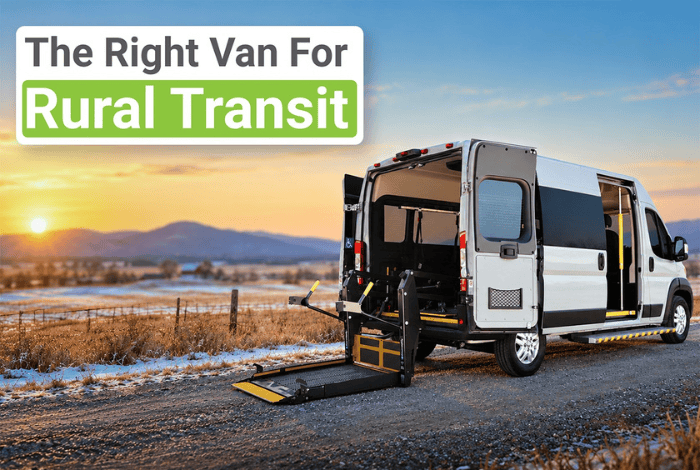
We have a ramp that goes to the ground level… easier transportation for passengers with wheelchairs, walkers, and other accessories.
“At the end of the day, the goal is to provide safe service… and see the happy faces.”
-Lucy: Transportation driver
That perspective from Lucy, a transportation driver, brings you right into the day-to-day reality of delivering this service.
Because what looks good on paper has to work in motion.
Making every trip easier to manage
Drivers are the ones who see it all.
They help passengers on and off, navigate tight roads, and handle different mobility needs throughout the day.
So when Lucy talks about the difference, it carries weight.
Here’s what changed for her:
- Ground-level ramp: Easier, safer boarding for passengers using mobility aids.
- Simpler loading: Less strain when assisting with wheelchairs and walkers.
- Better handling: More control behind the wheel compared to larger buses.
Think about a typical pickup.
A passenger with a walker. Another using a wheelchair. Maybe someone who just needs a steady hand.
With the right setup, that process feels smooth. Without it, it can slow everything down and add stress for both the driver and the rider.
Comfort people actually notice
There’s another side to this that often gets overlooked.
The ride itself.
Lucy pointed out something simple but important. Comfort.
- Smoother trips: Less rattling during longer drives.
- More space: Room to sit comfortably without feeling cramped.
- Better experience: Passengers arrive feeling settled, not worn out.
For riders in Caledon, that makes a difference, especially on longer trips outside the community.
Ending the day on a high note
At the core of it, Lucy said it best.
The goal is to deliver a safe service and see people leave with a smile.
That’s what success looks like at the end of each route.
For Caledon Community Services, those small moments add up. Every smooth pickup, comfortable ride, and stress-free drop-off.
And if you’re building a program like this, it’s a good reminder.
The details that support your drivers and riders each day are what shape the experience people remember.
Transportation as freedom, not just a service
“Transportation is definitely more than getting from point A to point B. Transportation is freedom. Transportation is life.
It is an opportunity for the world to open up… and we are committed to continuing to provide that in Caledon.”
-Geraldine Aguiar
That reflection from Geraldine Aguiar brings everything full circle.
Take a moment and think back.
The first time you got your licence. Or the first time you had a reliable ride. Plans became easier. Opportunities opened up. You could go where you needed, when you needed.
That feeling is what many people in Caledon are gaining access to through this program.
When transportation opens doors
This is where the impact goes beyond logistics.
- Access to care: People make it to appointments without added stress.
- Connection to others: Families and friends stay part of daily life.
- Participation in community: Programs and services feel within reach.
Without that access, those same opportunities start to shrink.
Days feel smaller. Options become limited. Independence fades.
With it, the opposite happens.
People regain control of their time. They stay engaged. They feel part of their community again.
A commitment that keeps moving forward
For Caledon Community Services, this work continues to grow.
- Adapting to change: Responding to evolving community needs.
- Expanding access: Reaching more people across a large region.
- Strengthening impact: Supporting dignity and independence every day.
That kind of commitment builds something lasting.
What does this mean for you?
If you’re looking at your own transportation challenges, this is the takeaway.
You’re opening doors.
You’re helping someone get to a critical appointment. Visit a loved one. Stay connected to their world.
And when that happens, the impact is clear.
Transportation, when done right, gives people something simple and powerful.
The freedom to live life on their terms.
Got any questions about accessible transportation?
You came here because transportation gaps are holding people back in your community. Missed care, isolation, and limited independence are real challenges you’re trying to solve.
Here’s what you’ve seen through this story:
- The challenge: Large geography, no public transit, and growing demand.
- The solution: Flexible, community-focused transportation that adapts daily.
- The outcome: Stronger connections, better access to care, and more independence.
Au MoveMobility, we work alongside organizations like Caledon Community Services to turn complex challenges into practical, working solutions. Over the years, we’ve supported communities across Canada with vehicles built for real-world use, not theory. Our team stays involved from early planning through delivery and beyond, so you’re never left figuring things out on your own. That hands-on approach is what helps organizations move forward with clarity and confidence. If you’re ready to take the next step, click below to connect with a mobility expert who can walk through your goals with you.
If you’re not ready to talk just yet, we’ve pulled together a few helpful resources to guide you forward.
What should you read next?
- How to choose a wheelchair van (11 steps): A clear path to help you evaluate your options and make the right decision for your program.
- Wheelchair Van vs. Bus: Everything you need to know! See how different vehicle types compare and what works best for communities like yours.
- 8 considerations for choosing a van for handi-transit/urban transit programs: Practical insights to help you plan a transportation program that fits your day-to-day needs.

 English
  French