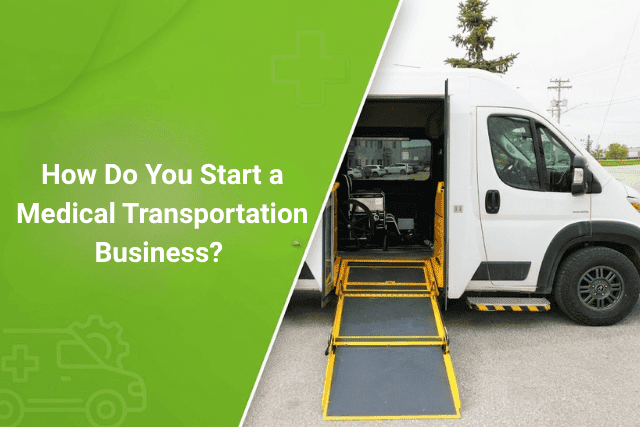
Did you know that in suburbs like Scarborough, Ontario, over 34% of people have missed or delayed healthcare due to transportation problems? That’s a shocking number. You’re likely reading this how do you start a medical transportation business guide because you see this gap every day. You’ve felt that awful, sinking feeling. A patient in your care, or a member of your community, can’t get to a vital appointment.
It’s frustrating. It feels wrong that a simple ride is the one thing standing between someone and their health. You want to fix it. You’re ready to fill that gap and give people the reliable, dignified medical transport they deserve.
We get it. You care deeply about the people you serve. So do we. For over 20 ans, MoveMobility has helped organizations just like yours remove these barriers. It’s why partners like Transdev trust us with their medical transportation fleets. We’re Ford QVM and Stellantis QPro certified, and our vehicles all have the Marque nationale de sécurité. We’re proud of our work, but we know we’re not the only option out there. Our goal is to give you the honest information you need to save lives, whether you work with us or not.
This article is your roadmap. We’re going to walk you through the key steps for how to start a non-emergency medical transportation business in Canada.
- Building your business plan
- Navigating Canadian licensing and insurance
- Finding the right financing
- Choosing your vehicles
- Hiring and training your team
- Operations and logistics
- Marketing your new medical transportation service
6 steps on how to start a medical transportation business in Canada
You’re ready to make a real difference and fill that medical transportation gap. That’s fantastic. Thinking about how to start a medical transportation business can feel huge, but it’s a bit easier to do when you can follow a series of steps. We’ve broken it down into seven main parts to guide you from idea to your first client.
1. Build your business plan (your roadmap to success)
I know, I know. A business plan might sound a bit boring to create. It’s the “eat your vegetables” part of starting a business.
However, here’s the straight truth: this document is your single most effective tool. It’s not just for funders. It’s for vous. This is where you prove the gap you see is real.
Did you know that entrepreneurs who write a formal business plan are 16% more likely to achieve viability than those who don’t? That’s a huge edge. This plan is your roadmap. It’s how you turn that feeling of “my community needs this” into a real, working medical transportation service.
Think of it as the GPS for your medical transport company. You wouldn’t start a trip across the country without one, right? This plan stops you from making costly wrong turns. It’s the first step in how to start a non-emergency medical transportation business that lasts.
So, what goes in this magical document?
4 things to include in your business plan
- Market analysis (A.K.A. “the gap”): This is the most important part. Who exactly needs your help?
- Are seniors in a specific area of Vancouver in need of medical travel?
- Is it dialysis patients in rural Alberta? Get specific. Call the local hospital, long-term care homes, or clinics. Ask them about their transportation challenges. Use real data, not just a gut feeling.
- How many competitors are there? If there are some, what are they missing? That’s your gap.
- Services you’ll offer: What kind of medical appointment transportation service will you be offering? Will you focus on wheelchair-accessible vans? Stretcher transport? Or maybe ambulatory (walking) clients who just can’t drive? Defining this clearly helps you figure out everything else, like what medical van to buy.
- Operations plan: This is the “day-to-day” stuff. How will people book a ride? What software will you use? Where will you park your vans? Who cleans them? It sounds small, but these details add up.
- Financial projections (the big one): Okay, the scary part. Money. You need to figure out your startup costs. This includes vehicles, insurance (which we’ll talk about later, it’s a big topic), permits, and wages. Then, you need to project your income. How much does a medical transportation business make? That depends entirely on your model, your rates, and your volume. Be realistic here. It’s better to be conservative and be happily surprised.
Getting this plan right is the foundation for everything that follows. It makes the next steps, such as obtaining funding and permits, so much easier.
2. Navigate Canadian licensing and insurance
Let’s talk about the part that makes some people’s eyes glaze over: rules, permits, and insurance.
When you’re figuring out how to start a medical transportation business, this step often feels like a red-tape maze designed to stop you. It’s confusing. The biggest gap you’ll face is that there isn’t one single, national rulebook.
Why? Because in Canada, medical transportation services are regulated by a mix of federal, provincial, and municipal governments. What you need to operate in Red Deer, Alberta, is different from what you need in Halifax, Nova Scotia. It’s frustrating, and it prevents many good ideas from even getting started.
Your first call should always be to your local municipal (city) government. They will tell you what business licenses you need. Then, you’ll need to look at provincial rules.
Let’s break this down into the two big categories.
Licenses and permits
This is all about getting permission to operate. Here’s what you’ll likely need to investigate:
- Provincial vehicle standards: This is a big one. The rules change drastically depending on what you’re doing. In Ontario, for example, if you’re only transporting clients in wheelchairs or who can walk, the rules are different from those if you’re using a stretcher.
- National Safety Mark: This is a federal requirement. As a manufacturing company, we have to put this on every vehicle we build. It proves your vehicle meets all Transport Canada safety standards.
- Driver licensing: Your drivers need the right license. In British Columbia, for instance, a driver needs a Class 4 license (the kind for taxis or limousines) to transport passengers. In Ontario, a Class F license is often required for vehicles that carry more than 10 people. A standard G (or Class 5) license is what you’ll need for most wheelchair and medical vans, like the ones from MoveMobility.

Getting the right insurance
This is one area where you absolutely cannot cut corners. Having the wrong insurance can wipe out your business before you’ve even helped your first client. Your insurance must reflect that higher level of care and risk that comes with medical transport.
You will likely need a package that includes:
- Commercial auto liability: Your personal car insurance is void the second you use your van for business. You need a commercial policy, and it needs to have a high limit (think $2 million to $5 million) because you’re carrying passengers.
- General liability: This covers you if someone is injured getting in or out of your vehicle (but not in an auto accident).
- Professional liability (or errors & omissions): This is critical. What if your driver is late and a client misses a life-saving dialysis appointment? This insurance helps protect your medical transportation service from claims of negligence.
It’s a lot, we know. But every one of these steps is about building a safe, reliable, and legal service.
3. Find the right financing (how to pay for your mission)
This is the big one, isn’t it? That business plan you built is about to get its first big test. You need to purchase a medical transport van (or a fleet of them), obtain the necessary insurance, and cover the costs of fuel and drivers. All of that happens before you get your first dollar.
The gap here is simple: you have a plan to save lives, but you need capital to make it real. It’s a nerve-wracking part of how to start a medical transportation business, but you have more options than you think.
Let’s clear one thing up first. Many people search for grants. The hard truth is that securing for-profit grants to start a business can be challenging. Most grants are for non-profits or specific community projects.
So, you’ll most likely be looking for a loan. This is where your business plan shines.
Here are the most common paths in Canada:
- Le Canada Small Business Financing Program (CSBFP): This isn’t a direct loan from the government. Instead, the Government of Canada shares the risk with your bank (like BMO, Scotiabank, RBC, etc.). This makes the bank much more likely to say “yes” to your loan. You can use this money for equipment (your vehicles!) and leasehold improvements.
- The Business Development Bank of Canada (BDC): Le BDC is a crown corporation, and its whole job is to help Canadian entrepreneurs. They are often more flexible than traditional banks and have loans specifically for startups, for buying equipment, and for technology. They love to see a solid business plan.
- Equipment loans: This is a loan where the medical van itself is the collateral. If you don’t make the payments, the lender takes the van. This is a very common way to finance a medical transportation service fleet.
- Your local bank or credit union: Don’t forget your own bank. Armed with your business plan, you can apply for a standard small business loan or a line of credit.
Your business plan is what proves to these lenders that you’re not just a person with a good idea. It shows you’ve done the math, you understand the risks, and you know how to start a medical transportation business that will last.
Finding the right funding can feel like a job in itself. We’ve seen what works for other organizations. You can read our guides on how to apply for wheelchair van grants et funding for mobile medical vehicles. We also have a resource to help with the grant application process that you might find helpful.
4. Choose your medical transportation vehicle

This is the part everyone thinks of first. The vehicle you choose is a direct extension of your promise. It’s the core of your medical transportation services.
Back in your business plan, you decided who you would be helping. This is where that pays off. Buying a medical van isn’t like buying a car. You can’t just go to a lot and pick one at random. These are purpose-built tools, and the tool must match the job.
So, how do you start a medical transportation business with the right fleet? You match the vehicle to the need.
5 things to think about when choosing your vehicle
- For ambulatory clients: These are clients who can walk but need some help. You might use a rear-entry or a side-entry van. Think of features like non-slip running boards, a high-contrast step, and strong, easy-to-see grab bars.
- For wheelchair transport: This is where it gets specific. You have two main choices: a ramp or a lift. Both of these options have their pros and cons. Check out our comparison article or watch the video below to learn more.
- For stretcher transport: This is a different category. These are medical transport services for clients who cannot sit upright. This requires a specialized van with a stretcher and a floor-mounted locking system.
In Canada, the right equipment is all about safety and compliance with the law. Any vehicle modified to transport a person in a wheelchair must meet strict Canadian standards.
Look for these two things:
- The National Safety Mark (NSM): We mentioned this before. It’s a sticker that proves the manufacturer (like us) followed all of Transport Canada’s rules.
- CSA D409: This is the Canadian Standards Association’s rulebook for “Motor Vehicles for the Transportation of Persons with Physical Disabilities.” It sets the rules for things like ramp slopes, lift strength, and securement systems.
Choosing your medical transport vehicle is the biggest financial decision you’ll make. It’s also the most important one for your clients’ safety and dignity.
Check out these three medical transportation vehicle options:
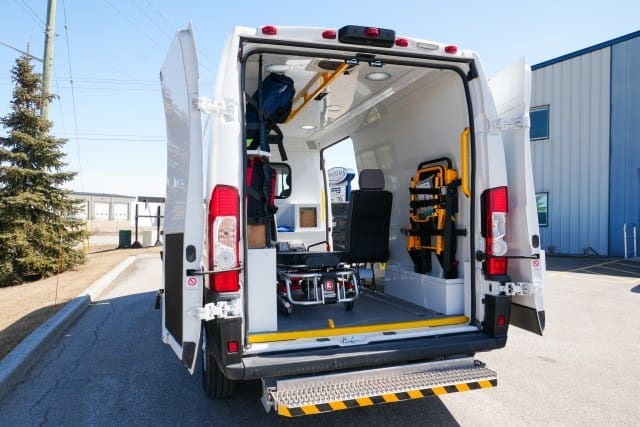
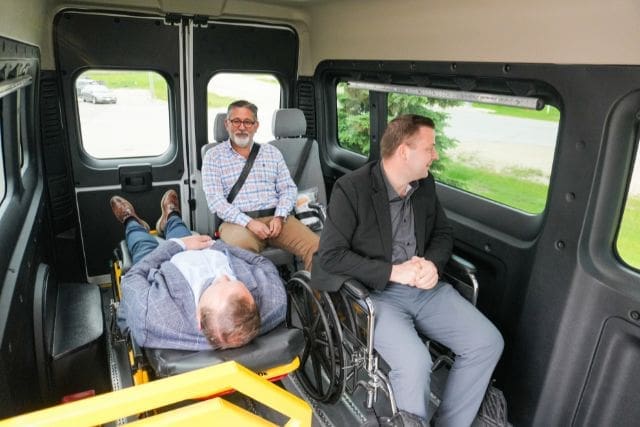

5. Hire and train your team
Your vehicles are the tools, but your people are the mission. This is the single most important part of how to start a medical transportation business that makes a huge impact.
Many new businesses think they just need to hire drivers. A driver with a clean record might not be great at the job. A person who is patient, kind, and empathetic can be trained to be a great driver.
Hiring the wrong person puts your clients and your entire medical transportation service at risk. Your team is who your clients will trust during a moment of vulnerability.
What traits should you look for when hiring?
You are hiring for character first and skill second.
Look for:
- Empathy and patience: Are they kind? Will they wait patiently for a client who moves slowly?
- Fiabilité : This is not a “maybe I’ll show up for work on Monday” job. A missed medical appointment has real health consequences.
- A clean record: This is the non-negotiable part. Your team will need:
- A clean driver’s abstract from your province.
- A Vulnerable Sector Check (VSC). This is different from a regular criminal record check. It’s designed for people working with children, seniors, and people with disabilities. Do not skip this step.
What should you train them on?
Once you find these great people, you must give them the right tools.
- Standard first aid & CPR: Your drivers will be alone with clients. They must know how to respond in an emergency. Most organizations require a Level C or BLS certification.
- Equipment safety: This is vital. Your team must be professionally trained on how to operate every piece of equipment in your medical van. This includes the wheelchair lift or ramp and the wheelchair securement systems, like AutoFloor.
- Passenger assistance: How do you safely help someone from a walker into a van? What’s the most respectful way to communicate with a client who is hard of hearing? This is often called Passenger Assistance Safety and Sensitivity (PASS) training. It teaches your team how to provide dignified transport medical care.
Your team is the face of your business. Investing in them is investing in your clients’ safety and your company’s reputation.
6. Manage operations and logistics
So, you have the vehicles and a reliable team. Now you need a system that works perfectly every time. This is the difference between a successful medical transportation service and one that constantly causes stress.
The major gap here is efficiency. If your operations are messy, your drivers will be late. A late driver means a missed appointment, and that breaks the trust you’re working so hard to build. Reliability is the cornerstone of medical transport.
Mastering scheduling and dispatch
Your clients might have appointments for things like chemotherapy or dialysis. These are time-sensitive. You can’t just rely on paper and a cellphone.
You need tools to make sure your medical transportation is reliable.
This usually means dispatch software that can do a few important things:
- Route planning: It helps you organize your day. It figures out the fastest, smartest way to get from one pick-up to the next.
- Real-time changes: What if a client calls and cancels? The software should quickly tell your driver and adjust the rest of the schedule for the day.
- Communication: It links your driver to your office. This means instant updates, cutting down on confusion, and keeping everything running on time.
Vehicle maintenance is non-negotiable
What happens if a medical van breaks down halfway between a patient’s home and the hospital? The stress is huge. That’s why maintenance isn’t a chore; it’s a critical safety protocol.
You have to be proactive, not reactive. You should never wait for a part to fail. Every driver should do a quick check of the medical van before the start of their shift. They check the tires, lights, ramps, and the wheelchair securement systems.
You also need a schedule for regular maintenance (oil changes, tire rotations). Keep detailed records of everything. A well-maintained vehicle is a safer vehicle, and that gives everyone, including you, your driver, and your client, peace of mind.
Protocol and communication
Good operations mean clear rules for everything. Think about every step of a ride.
- Communication: Drivers must know who to call for a delay. Dispatch needs to be ready to call the hospital immediately if a client is going to be late for their medical transport services.
- Safety procedures: What is the protocol if a client feels unwell during the ride? Your team needs to know exactly what to do.
- Cleaning: Especially now, cleanliness is key. Vehicles must be kept spotless, not just to look good, but to keep vulnerable patients safe from germs and infections.
7. Market and launch your service
You’ve done the hard work. You have a plan, the proper permits, the funding, the right medical transport van vehicle (or fleet of them), and a compassionate, trained team. You are ready to deliver a reliable, life-saving service. Now, you need to inform the people who require your services.
The marketing gap in the medical transportation service industry is about being trusted. Healthcare providers won’t refer patients to someone they don’t know or trust.
Your marketing should reflect your mission: you’re selling reliability, compassion, and peace of mind.
Focus on partnerships
A reasonable path to consistent, high-volume work is through B2B (Business-to-Business) partnerships.
- Visit key facilities: Go to local hospitals, dialysis clinics, rehabilitation centers, and long-term care homes. Ask to speak to their discharge planners or social workers. These are the people who manage patient transfers and appointments.
- Solve their Problem: Don’t just hand out a flyer. Ask them, “What are your biggest pain points when scheduling medical transport?” Your service is the solution to their headache. Emphasize your punctuality and professionalism, which saves them time and worry.
- The power of referrals: Set up a referral program. Offer a small incentive or discount to a clinic that consistently refers clients to your reliable medical appointment transportation service.
Build a digital foundation of trust
Even though many of your direct clients might be seniors, their caregivers, their children, and their grandchildren are often the ones doing the research online.
- Your website is your digital dispatch: Your site needs to be clean, mobile-friendly, and simple. It shouldn’t be a sales pitch; it should be an informational hub. Clearly list your medical transport services and safety certifications.
- Local SEO (Search Engine Optimization): When someone in your city searches “wheelchair transport near me,” you need to show up. Claim your free Google Business Profile, put up photos of your medical van fleet, and gather reviews.
- Reviews are gold: Ask every satisfied client or partner to leave a review. In the care industry, trust is everything, and reviews are the fastest way to build it.
When you combine direct partnership efforts with a strong online presence, you’re establishing yourself as the most reliable, professional, and trusted medical transportation provider in your community. That’s how you win.
Ready to start your medical transportation business?
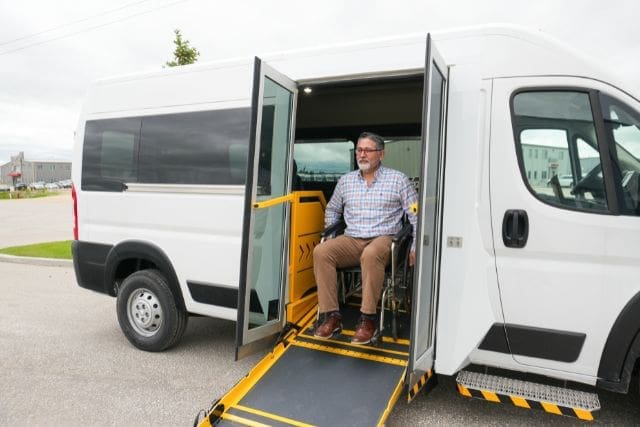
You came here because you felt the real frustration of clients missing vital appointments due to a lack of dignified medical transport.
After reviewing these seven steps on how to start a medical transportation business, you now have a better idea of what path to take. This includes everything from building a bulletproof business plan to securing financing, choosing the correct medical transport van, and hiring the right staff.
Au MoveMobility, we’ve pioneered the process of designing and manufacturing custom mobile medical units right here in North America. We’re proud to be part of your journey. If you’re ready to make a real impact, click the button below to talk to a mobility expert.
If you’re not ready to talk to a mobility expert yet, we have a few other resources you should check out to learn more:
- What are the hidden costs of poor patient transport services? This article explores the costs of what poor patient transport services look like.
- Medical transportation wheelchair vans: A good resource to explore vehicle options now that you understand your service model.



 English
  French