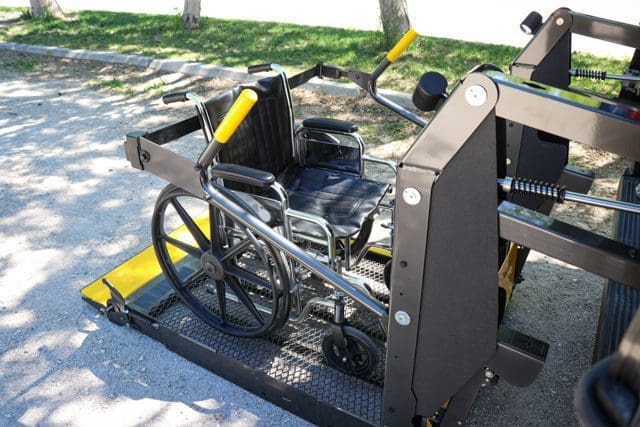
Here’s something I get asked sometimes: How do heavier wheelchairs affect fourgonnettes accessibles? The short answer is that heavier wheelchairs place much more strain on wheelchair van lifts because their combined weight with the ride can approach or exceed the lift’s rated capacity, as we’ll discuss later.
Power chairs with tilt, recline, and large batteries give people more comfort, support, and independence in their daily lives. A van wheelchair lift is the platform that safely raises and lowers a wheelchair and passenger into an accessible vehicle, and that’s where capacity really starts to matter.
In cities like Winnipeg, Calgary, or Halifax, agencies depend on accessible vans every single day. If a lift breaks down, riders miss appointments, staff scramble, and people are left waiting. That gap between what riders need and what the van can actually handle can feel huge. The goal is simple, though: A safe, reliable wheelchair van that can lift and carry every chair without worry.
Je suis Dan Cherry, and I’ve been with MoveMobility for nearly 10 years. As an account executive, I work with outreach programs, handi-transit, retirement agencies, and inclusion services all across Canada. My focus is on helping groups like yours remove barriers to transportation and healthcare. Our team has been building fourgonnettes accessibles depuis plus de 20 ans. While I’m proud of what we do, I also want to share unbiased info, since I know we’re not the only manufacturer out there.
Dans cet article, vous apprendrez
- Why heavier wheelchairs stress lifts
- What to look for in a van wheelchair lift
How do heavier wheelchairs stress wheelchair van lifts?

Let’s start with the numbers, because numbers don’t lie. A standard manual wheelchair usually weighs between 35 and 40 pounds. Add the person sitting in it, and you’re often looking at a total load of 150 to 250 pounds. Manageable, right? But things change fast when you move into the powered and heavy-duty category.
A powered wheelchair can tip the scales at 150 to 250 pounds on its own. Add in a rider, and you’re closer to 400–500 pounds rolling onto that lift.
Now let’s talk about bariatric wheelchairs, which are built for individuals who need a wider seat and a reinforced frame. Some of those chairs weigh 400 to 450 pounds before anyone even sits in them. With a passenger, you can quickly climb into the 700–800+ pound range. That’s a whole lot of stress for a lift to manage, day in and day out.
Now picture this: Many wheelchair van lifts in Canada are rated for around 800 pounds. On paper, that looks like enough. But think about what happens when you’re running trips in Winnipeg or Toronto, loading and unloading that much weight ten or fifteen times a day. Over the course of a year, that’s thousands of heavy cycles. The lift wasn’t designed to carry 850 or 900 pounds consistently, but that’s exactly what you’re asking it to do in the long run.
Here’s where the gap shows up. You might think, “The lift is rated for 800 pounds, so we’re fine.” But ratings are a maximum, not a suggestion. If you’re constantly testing that upper limit, the stress compounds. It’s like carrying groceries. You can probably handle six bags at once, but if you do that every single day, eventually your shoulders are going to give out. Wheelchair lifts aren’t much different.
What happens when wheelchair lifts get overloaded?
When lifts are consistently overloaded, it’s a recipe for breakdowns. And breakdowns are more than inconvenient.
They create real problems:
- Embarrassment: Imagine the lift freezing halfway up with someone sitting in their chair, looking at you, wondering how they’re supposed to get off. That’s not a situation any staff member wants to explain.
- Préoccupations en matière de sécurité: If the lift buckles or gives out completely, you’re dealing with possible injury. In today’s world, that also means liability risks. One incident could spiral into legal action.
- Downtime: Every day your van sits out of service is a day you’re losing revenue and leaving people stranded. In northern communities, where vans are sometimes the only link to medical care, that downtime can have a serious ripple effect.
- Factures de réparation: Replacing hydraulic parts, motors, or entire lifts isn’t cheap. And because accessible vans are specialty vehicles, you can expect longer waits for parts to ship into Canadian regions.
Now, add the human factor. If your organization is serving seniors in a retirement community in Vancouver or a handi-transit program in rural Saskatchewan, you’re dealing with people who already face barriers. They trust your service to keep them moving safely. A lift breakdown doesn’t just cost money—it chips away at that trust.
What’s the long-term impact?
Think of a wheelchair lift like a bridge. If trucks heavier than the posted limit roll across it daily, cracks form sooner or later. In the short term, the bridge still “works.” But over time, the structure weakens until one day, it fails. Lifts face the same reality. That constant strain from heavier wheelchairs eats away at their lifespan. A lift rated for 800 pounds might last five or six years under normal use, but under heavy strain, you could be replacing it in half that time.
And here’s the kicker: Breakdowns don’t schedule themselves around your calendar. They happen in the middle of a busy Thursday morning, right when you’re loading passengers for a hospital trip. Instead of running your program smoothly, you’re scrambling to find alternate transportation. Staff get stressed, riders get frustrated, and the day snowballs from there.
Bringing it back to your organization
Imagine a retirement home in Ontario where a lift gives out during an outing because it’s been overloaded one too many times. The result shakes residents’ confidence in leaving the building at all. Now, picture a handi-transit program in Manitoba that chose to invest in higher-capacity lifts. Their story looks different: Fewer service interruptions, happier riders, and less money burned on constant repairs.
Why does this matter to you? Because the lift you choose today directly affects how smoothly your programs run tomorrow. Overlook the growing reality of heavier wheelchairs, and you risk breakdowns, safety concerns, and lost trust. Address it now, and you’re building a future of safety, reliability, and peace of mind.
That’s the true impact of heavier wheelchairs on your van lifts. It’s never just about the numbers on a scale. It’s about the lives and programs that rely on them.
What should you look for in a van wheelchair lift?

By now, you know the stress that heavier wheelchairs put on accessible vans. The question becomes: What should you actually look for in a van wheelchair lift that won’t leave you sweating bullets every time you load a passenger? The truth is, not all lifts are created equal. Some are built for occasional use, while others are built for heavy, daily service in Canadian transit programs. If you’re running handi-transit in Winnipeg, outreach in Thunder Bay, or seniors’ trips in Vancouver, you need the latter.
At MoveMobility, we play it safe. Our vans are equipped with wheelchair van lifts rated for 1,000 pounds. Why go higher than the 800-pound standard? Because consistently operating at the upper edge of a lift’s capacity is like running your car engine in the red, it won’t take long before something fails. Giving yourself that extra buffer keeps the lift stable, reliable, and ready for heavier wheelchairs without cutting corners on safety.

Key features to prioritize
When shopping for a van with a élévateur pour fauteuil roulant, here are the things I recommend looking at:
- Heavy-duty build: Transit-grade lifts are designed to take a beating. They’re built for dozens of cycles per day, which makes them ideal for handi-transit agencies and community programs. Cheaper models might save you money upfront, but will cost you more in repairs and replacements.
- Weight capacity: Always confirm the lift rating. Go for at least 1,000 pounds if you’re ever going to be transporting powered or bariatric wheelchairs. This margin protects both your passengers and your budget.
- Stable platform: The larger the mobility device, the more stability matters. A wobbly platform makes riders nervous, especially seniors. A rock-solid design builds confidence and safety with every trip.
- Smooth operation: Modern lifts are designed to fold and unfold quietly. That matters when you’re loading riders at a retirement residence or hospital, where loud, clunky equipment adds stress.
- Compatibility: Not every lift works well with every accessible van. Make sure the lift you’re considering is proven to work with the wheelchair accessible van model you’re purchasing.
A closer look: BraunAbility Century Series
One lift that checks all these boxes is the BraunAbility Century Series. It’s a transit-grade lift that’s built with agencies like yours in mind. The Century Series is designed to handle heavy daily use, accommodates larger mobility devices, and has an improved platform design for extra stability. On top of that, the folding and unfolding are smooth and quiet, which is something your riders and staff will both appreciate.
I’ve seen agencies in Alberta move to this lift after struggling with cheaper options, and the difference was night and day. Instead of worrying about breakdowns during multiple daily trips, they had confidence the lift would just work. That peace of mind is priceless when you’re juggling schedules, staff, and passengers who are depending on you.
So what’s the bottom line? Picking the right van wheelchair lift is about closing the gap between what your riders need and what your vehicles can deliver. If heavier wheelchairs are becoming the norm, then settling for an 800-pound lift is like trying to build a bridge with lumber instead of steel. It might work for a while, but eventually, cracks show.
When you invest in a transit-grade, 1,000-pound rated lift like the BraunAbility Century Series, you’re buying reliability, safety, and the confidence to serve your community without second-guessing every trip. And in my experience, that’s the kind of investment that pays for itself in the long run.
Got any questions about choosing the right van wheelchair lift?
You came to this article because you’ve seen how heavier wheelchairs are changing the way accessible vans operate. The challenge is clear: Bigger chairs plus heavier loads put serious strain on lifts. That gap between what you have now and what you actually need can leave your riders and staff at risk.
Here’s a quick recap of what you learned today:
- Weight adds up: Powered and bariatric wheelchairs plus riders can push lifts close to or beyond their limits.
- Overloading costs: Breakdowns equal safety risks, liability, and expensive downtime.
- Better options exist: Transit-grade, 1,000 lb-rated lifts like the BraunAbility Century Series bridge the gap with stability, quiet operation, and reliability.
Au MoveMobility, we’re not a dealership that sells whatever’s on the lot. We’re a Canadian manufacturer that designs and delivers accessible vans with the right lifts, seating, and layouts for organizations like yours. From Winnipeg to Vancouver to small northern towns, we’ve partnered with outreach groups, handi-transit providers, and retirement communities to keep people moving safely. If you have questions, click the button below and talk with one of our mobility experts today. We’re here to help.
And if you’re not ready to talk to a mobility expert yet, we’ve got you covered. Here are three resources that will take you a step further down the path to making the right decision:
- Les 5 principaux problèmes des ascenseurs pour fauteuils roulants (avec 5 solutions): This is a perfect follow-up if you’re still weighing the risks and want to see the most common issues you might face.
- Comment choisir un fauteuil roulant (11 étapes): Once you’re clear on lifts, this guide helps you look at the bigger picture of picking the right van for your organization.
- Wheelchair van maintenance practices you need to know: Choosing the right lift is only half the story; keeping it in top condition protects your investment long-term.


 English
  French