If you’re buying a fourgon pour fauteuils roulants in Manitoba, one of the first questions you likely have is who can legally drive it. That question matters more than most people think. A missed licence requirement can delay service, create insurance issues, or leave your team unable to transport the people counting on you. For an adult day program in Brandon, a First Nations community near Thompson, or a non-profit in Winnipeg, that can mean missed appointments, fewer outings, and more barriers for the people you support.
Selon le Manitoba Public Insurance, licence requirements can change depending on how many passengers the van carries and how it is used. In many cases, a standard Class 5 licence is enough. In others, you may need a Class 4 licence.
Au MoveMobility, we’ve spent more than 20 ans helping organizations across Canada remove barriers to transportation and care. We’re Ford Pro Upfitter-certified and Stellantis QPro-certified, and our vehicles carry the Marque nationale de sécurité. Healthcare groups, First Nations communities, municipalities, and non-profits trust us because we take the time to understand your goals before recommending a solution. We know we’re not the only manufacturer out there, but we do know this topic well.
Dans cet article, vous apprendrez :
- Which licence is needed for a wheelchair van in Manitoba
- When a Class 4 licence may apply
- How passenger count affects Manitoba wheelchair van licence requirements
Remarque : The information in this article is based on public information available online at the time of writing. It is always a good idea to do your own due diligence and confirm licence requirements with Manitoba Public Insurance or your local licensing authority before buying or operating a wheelchair van.
Which licence is needed for a wheelchair van in Manitoba?
The licence needed for a wheelchair van in Manitoba depends on how the vehicle is classified by Manitoba Public Insurance.
The biggest factor is the way wheelchair positions are counted.
In Manitoba, one wheelchair position can be counted as 4 people. Because of that, a wheelchair accessible van can reach “bus” classification faster than many organizations expect.
A smaller accessible van with one wheelchair position may be fine with a Class 5 licence, as long as it stays below Manitoba’s bus threshold.
However, many full size wheelchair accessible vans can carry two wheelchair users. Once two wheelchair positions are counted, the vehicle is treated more like a bus by MPI. That means a Class 4 licence is required.
According to MPI, a Class 4 licence applies to buses with a seating capacity of 10 to 24 passengers while carrying passengers. A Class 5 licence covers most passenger vehicles, light trucks, SUVs, and similar vehicles.
So, the real question is not, “Does it look like a van?”
The better question is:
How does MPI count the total capacity of this vehicle?
When is a Class 5 licence enough?
A Class 5 licence is enough when the vehicle has:
- One wheelchair position
- A low number of seated passengers
- A smaller van platform, such as a rear-entry minivan
- A layout used for one-on-one transportation or basic community trips
For example, an adult day program may use a rear-entry accessible minivan with one wheelchair position and a few seated passengers. In that type of setup, a staff member with a full Class 5 licence may be able to drive it.
The same may apply to a home care provider using a side-entry van for individual medical appointments.
Even then, it is still worth confirming the final vehicle layout with MPI or your insurance provider before the van goes into service.
When is a Class 4 licence likely needed?
As we mentioned earlier, a Class 4 licence is needed when the wheelchair van is classified as a bus.
This happens with full-size wheelchair accessible vans, especially when the vehicle can carry two wheelchair users.
For example, if one wheelchair position is counted as 4 people, then two wheelchair positions may be counted as 8 people. Add the driver, attendants, or seated passengers, and the vehicle can quickly reach the range where Class 4 requirements apply.
That can affect:
- Who can drive the vehicle
- How quickly your program can launch
- Insurance setup
- Hiring plans
- Volunteer driver use
- Staff training timelines
This is where organizations can get caught off guard. They may choose the right floorplan, approve the right seating, and order the right accessibility equipment. Then, near delivery, someone asks, “Do we actually have a Class 4 driver?”
That question is much easier to answer before the vehicle is built.
How wheelchair positions affect licence requirements
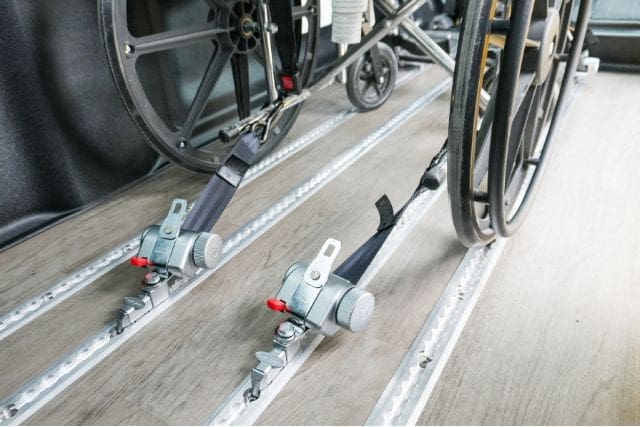
Wheelchair positions matter because they may count as more than one passenger space.
Here is a simple way to think about it:
| Vehicle layout | Likely licence impact |
| One wheelchair position with a low seated passenger count | Class 5 is enough |
| Two wheelchair positions in a full-size van | Class 4 is required |
| Bus classification with 10 to 24 passengers | Classe 4 |
| Bus classification with more than 24 passengers | Class 2 |
This is why the floorplan matters so much.
Two accessible vans can look similar from the outside. But if one has a single wheelchair position and the other has two wheelchair positions, the licence requirement may be different.
Is a Class 4 licence hard to get in Manitoba?
A Class 4 licence takes extra steps, but it is usually manageable with planning.
MPI’s process can include:
- Being at least 18 years old
- Holding the required Class 5 licence stage
- Meeting medical and vision requirements
- Passing a knowledge test
- Getting authorized instruction
- Passing a road test
The bigger issue is timing.
If you wait until after the vehicle arrives, your program may be delayed while staff complete the process. That can be frustrating if you are trying to launch transportation before winter, start a new route, or meet a funding deadline.
Planning early gives your organization more options. You may decide to train current staff, hire drivers who already hold Class 4, or choose a smaller one-wheelchair layout.
Why you should check licence requirements before buying
Licence requirements should be reviewed before your wheelchair van is ordered.
Once the vehicle is built, changing the seating layout or driver plan can be difficult. You may need to delay service, adjust staffing, or limit how the vehicle is used until the right licence is in place.
Before choosing a wheelchair van in Manitoba, ask:
- How many wheelchair positions are included?
- How many seated passengers can the van carry?
- How will MPI count the wheelchair positions?
- Will the vehicle be classified as a bus?
- Will your drivers need Class 4?
- Do local vehicle-for-hire rules apply?
- Does your insurer require anything specific?
These questions are much easier to answer before delivery.
Need help choosing the right wheelchair van in Manitoba?
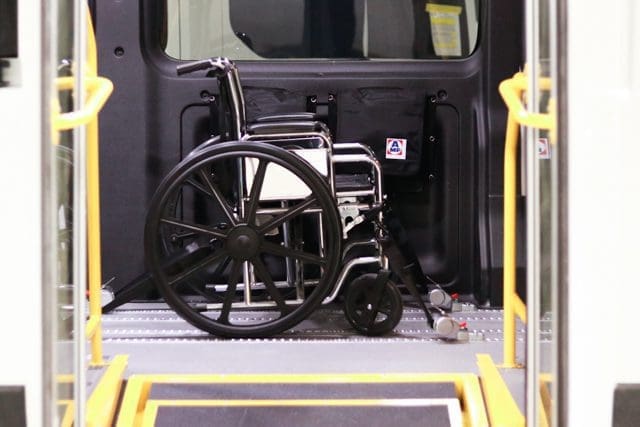
You came to this article because you wanted clarity. Licence rules can feel confusing, especially when you are trying to balance staffing, insurance, passenger capacity, and the needs of the people you serve. One wrong assumption can delay your program or leave your team unable to legally drive the vehicle you worked hard to secure.
Après avoir lu cet article, vous savez maintenant :
- Most smaller wheelchair vans in Manitoba can be driven with a Class 5 licence
- A larger accessible van may require Class 4 if Manitoba classifies it as a bus
- Passenger count is one of the biggest factors in Manitoba wheelchair van licence requirements
- Local municipalities may have extra rules for vehicles used for hire
Au MoveMobility, we’ve spent more than two decades helping organizations across Canada find the right balance between passenger capacity, accessibility, staffing, and long-term operating costs. In the last three years, adult day programs, First Nations communities, municipalities, and transit organizations have purchased over 480 wheelchair vans from us.
Our team takes the time to understand how your vehicle will actually be used so you can avoid costly surprises later. At the end of the day, our goal is simple: help you move more people, supprimer les obstacles, and create a more connected community. If you have questions, click the button below to talk to a mobility expert.
Que devriez-vous lire ensuite ?
If you’re not ready to talk to a mobility expert yet, here are a few more articles that can help you take the next step:
- Comment choisir un fauteuil roulant (11 étapes) : This article can help you narrow down the right size, layout, and seating capacity for your organization.
- Wheelchair van vs. bus: Reading this is a great next step if you’re comparing a smaller accessible van to a larger shuttle-style vehicle.
- What is the seating capacity of wheelchair vans? This article helps you understand the seating capacity of wheelchair vans.

 English
  French