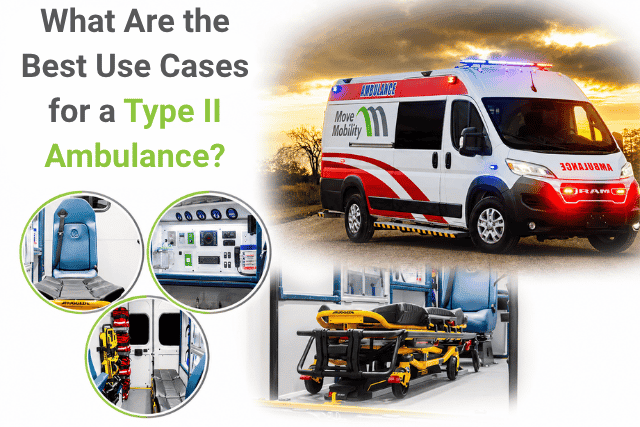
Recent audits from Ontario paramedic services show response times for some urgent calls have increased by more than 20% over the past few years. That’s a sobering reality for anyone responsible for a medical fleet. You might be looking at a Type II ambulance, but feel unsure if it’s the right choice. It’s frustrating to feel caught between needing enough room for care and wanting a vehicle that’s easier to drive in busy communities.
Choose the wrong fit, and your crew may be uncomfortable during long shifts. You want patients to receive solid care while your team stays comfortable and confident. We understand that pressure because we see how much these decisions matter to the communities you serve. When the stakes are this high, hesitation makes sense. You want your team to feel prepared and your patients to feel safe.

MoveMobility has been around for over 20 years. We’ve built more than 150 mobile medical units to help organizations like yours help people get the care they need. We’ve worked with groups like Saint Thomas Health Centre to reach more patients, and our team has certifications from the Ford Pro Upfitter program and Stellantis QPro. We’re experts, but we know we’re not your only option. We want to give you the facts without any bias so you can make a smart choice.
In this article, you’ll learn the five best use cases for a Type II ambulance. These ideas will help you see if this vehicle fits your goals.
- Urban medical response
- Patient transfers between hospitals
- Remote community healthcare
- Non-emergency medical trips
- Family-centered emergency care
Five best use cases of a Type II ambulance
Choosing the right vehicle means looking at where your team spends most of their time. A Type II ambulance works best in spots where speed and space need to find a happy middle ground.
1. Urban medical response
City life is fast, and the streets in places like downtown Toronto or Vancouver can be very tight. When every second counts, a big, bulky type 1 ambulance truck can feel like a disadvantage. This is where a Type II ambulance really shows what it can do. It’s built on a van chassis, which makes it much easier to drive through heavy traffic or down narrow back alleys. You’ve probably felt that stress when a large vehicle just won’t fit into a busy hospital drop-off zone.
Using a smaller, more agile vehicle takes that weight off your shoulders. It helps your team reach patients faster because they aren’t fighting the vehicle just to turn a corner. H
Why is a Type II ambulance ideal for urban medical response?
- Tight turns: The shorter wheelbase lets you zip around corners and parked cars that would block a larger unit.
- Parking ease: You can pull right up to the curb or into small emergency bays without blocking the whole road.
- Height perks: While it has a 6’2″ interior height so your team can stand up, the outside is still slim enough to handle most city obstacles.
Imagine a call comes in from a high-rise in a crowded neighborhood. A traditional large ambulance might have to park a block away, forcing your team to carry heavy gear a long distance. With the maneuverability of this van, you can often get much closer to the door. This saves energy for your staff and time for the patient.
We also know that kids are often part of the picture in city accidents. Our units let you attach a baby seat easily. If a parent needs a ride to the hospital after a fender bender and the kids are okay, you don’t have to leave the little ones behind. You can keep the family together, which is a huge relief during a scary time. This kind of care moves beyond just transportation and focuses on the real human connection your organization provides every day. Using a vehicle that fits the city removes the physical barriers that slow down life-saving care.
2. Patient transfers between hospitals
Another huge gap that many EMS groups face is how to handle patient transfers without tying up their biggest rigs. In Ontario alone, about 1,000 inter-facility transfers happen every single day. Many of these aren’t high-speed emergencies. They’re often just moving a stable patient from a small clinic to a larger hospital for a special test or a surgery. Using a massive, expensive truck for these trips can feel like a waste of money and fuel. It also means that if a real code 3 emergency happens, your biggest vehicle might be stuck on a highway an hour away.
A Type II ambulance fills this gap perfectly. It’s much more fuel-efficient and has lower operating costs than larger units. This saves your budget for other important things. Plus, because it’s built on a proven van platform, it’s super reliable for those long drives between towns. Your team won’t feel like they’re driving a tank, and your patients will enjoy a much smoother, quieter ride.
Keeping patients comfortable on the road
When a patient is being moved between hospitals, they might feel a bit nervous or tired. A Type II ambulance feels surprisingly big on the inside, which helps everyone feel less cramped. With its 6’2″ stand-up height, your paramedics can move around easily to check on the patient without bumping their heads. The clean and modern interior also makes the space feel like a real professional clinic on wheels.
- Smart storage: The layout is designed to keep life-saving gear within arm’s reach while keeping the floor clear.
- Smooth ride: These vans handle bumps much better than heavy truck frames, which is vital for patients in pain.
- Easy loading: The rear entrance is at a great height for stretchers, making the transition from hospital bed to van much more dignified.
Imagine you’re moving a senior from a rural home to a city hospital for dialysis. They might be scared and uncomfortable. In a Type II ambulance, the environment is calmer and more personal. It doesn’t feel like a scary machine; it feels like a safe way to get to the care they need. Choosing a vehicle that fits the job means you’re making sure every patient is treated with the dignity they deserve.
3. Remote community healthcare
Providing care in Canada’s north or in rural areas like the interior of British Columbia comes with its own set of hurdles. You might be dealing with long gravel roads or communities where the nearest hospital is a three-hour drive away. In these areas, a Type II ambulance acts as a lifeline because for many, it’s the only way to see a healthcare professional at all.
Because these vans are built on a standard RAM ProMaster chassis, they’re much easier to service in remote areas. If you’re in a small town, finding a mechanic who knows how to fix a massive, custom-built truck can be a nightmare. The RAM ProMaster van platform is familiar to almost any shop, which means your vehicle stays on the road instead of sitting in a garage waiting for parts from the city. This reliability is everything when people are counting on you.
Flexibility for different types of care
Remote work often requires a vehicle that can do more than one thing. One day you might be transporting a patient to a flight, and the next you might be answering emergency medical calls. Our units are designed to be configurable to meet these exact needs.
- Bench seating: You can choose a bench option that allows for more people to sit inside during transport.
- Rear equipment access: We moved things like the stair chair access to the rear based on feedback from real crews to make the workflow faster.
- Storage for supplies: The “surprising” amount of interior storage means you can pack enough medical supplies for long trips without feeling cluttered.
Think about a small community in Northern Manitoba. If someone gets hurt, they need to feel that help is coming in a vehicle that can handle the journey. The Type II ambulance is nimble enough to navigate rougher roads while maintaining a professional, calm interior environment.
When you use a vehicle that’s easy to maintain and comfortable to work in, your staff stays less stressed. They can focus entirely on the person in the back. This helps build a huge amount of trust within the community. People feel empowered and cared for when they see a high-quality medical unit arriving at their door, no matter how far away they live.
4. Non-emergency medical trips
Sometimes, the biggest gap in a community isn’t the life-saving emergency gear. It’s actually getting people to their routine medical appointments. These are called Non-Emergency Medical Transportation (NEMT) trips. In Canada, many people live with chronic conditions that need regular hospital visits, like dialysis or cancer treatments. If these patients don’t have a car or can’t drive, they often feel like a burden on their friends. This is a heavy emotional weight to carry.
A Type II ambulance is a game-changer here because it bridges the gap between a taxi and a full emergency rig. It provides a safe, clinical space for patients who are stable but still need medical oversight during the drive. Since it costs about 10 times less to run than a massive emergency truck, your organization can help more people without breaking the bank.
Dignity in every trip
When you use a Type II ambulance for these trips, you’re giving patients back their independence. They don’t have to worry if a regular passenger vehicle can hold their gear or if they’ll be comfortable. The smart layout of a proper Type II ambulance means there’s plenty of room for both the patient and their equipment.
- Room for family: There’s enough space for a family member to ride along, which is so important for peace of mind.
- Child seat safety: If a parent needs to bring a young child along, our easy-to-use baby seat attachments keep everyone safe.
- Easy in and out: The lower step height makes it much easier for seniors or people with limited mobility to enter the vehicle with dignity.
Imagine a grandfather in a small town who needs to get to the city for a check-up. He doesn’t want to call 911, but he can’t sit in a regular car for two hours. In a Type II ambulance, he gets a professional ride that feels safe and comfortable.
If you’re planning on offering this service, you’re helping people stay on top of their health before a small problem becomes a big emergency. You’re removing the barrier of distance and making sure no one in your community is left behind just because they can’t drive. It’s all about empowering people to live their best lives while staying connected to the care they need.
5. Family-centered emergency care
The final use case is one that touches the heart. We call it family-centered emergency care. In many traditional setups, if a parent is hurt in a car crash, the focus is only on the patient. But what happens if they have children with them who aren’t injured? In many cases, those kids can’t ride in the ambulance because there isn’t a safe place for them to sit. This creates a terrifying gap where a parent is being whisked away while their children are left behind with strangers or the police. It’s a traumatic moment that stays with a family forever.
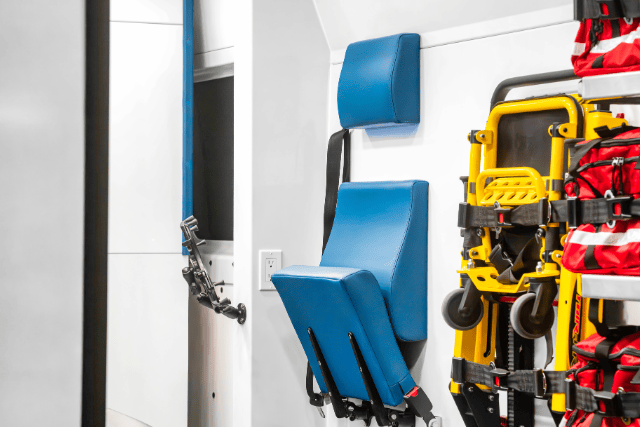
The Type II ambulance from MoveMobility solves this problem with a simple but life-changing feature. We include easy-to-use baby seat attachments right inside the unit. This means if a mom or dad needs to go to the hospital, their kids can come along safely in their own car seats. Keeping a family together during a crisis is one of the best ways to reduce stress and help everyone start the healing process sooner.
Putting people before the problem
When you choose a vehicle that thinks about the whole family, you’re showing your community that you see them as people, not just “calls” to answer. This approach provides a level of comfort that a standard emergency vehicle just can’t match.
- Flip-down seating: Our Type II ambulance offers flip-down seats that provide extra room for family members or extra crew when you need it.
- Calm environment: The modern and clean interior doesn’t look as scary to a child as a cluttered, old-fashioned ambulance might.
- Peace of mind: Parents can relax knowing their children are right there with them, which can actually help lower their heart rate and blood pressure during transport.
Think about a rainy night on a highway in the Maritimes. A family car skids off the road. The dad has a broken arm, but the two toddlers are perfectly fine. Instead of the kids waiting in a cold police car, they can hop into the Type II ambulance with their dad. They stay warm, they stay together, and the trauma of the accident is cut in half.
This is about protecting the bonds of a family when they’re at their most vulnerable. Choosing a vehicle with these features tells your community that their safety and family unity are your top priorities. You’re giving them a dignified experience during a very dark hour.
Ready to find your perfect Type II ambulance and start saving lives?
You likely started reading this because you felt a gap in your fleet. You needed a vehicle that was easy to drive in the city but still tough enough for long hospital transfers. Choosing the right one is a big deal, and you didn’t want to pick a van that felt too small or too expensive to run.
After reading this, you now know that a Type II ambulance is a versatile tool for your team.
You learned that:
- It excels in busy urban areas and for quiet patient transfers between facilities.
- It brings high-quality care to remote towns and keeps families together during emergencies with child-safe seating.
At MoveMobility, we believe that every Canadian deserves the best healthcare, no matter where they live. We’ve spent over two decades listening to folks like you to build vehicles that truly solve problems. Whether we’re helping a small town in the North or a busy city center, our goal is to help you remove barriers and provide dignity to every patient. We’re proud to be leaders who focus on the person in the back of the van, not just the equipment. If you have any questions about how to bridge the gaps in your service, click the button below to talk to an ambulance expert.
If you’re not ready to talk to an ambulance expert yet, we have a few other resources you should check out to learn more.
Recommended next reads
- What are the three different types of ambulances? This article gives you a clear look at the differences between types 1, 2, and 3 so you can see where each fits into a full fleet.
- What should you consider before choosing an ambulance type? Read this for some considerations to keep in mind before deciding on an ambulance type.
- Which ambulance type is best for urban response? This guide focuses specifically on city challenges and explains why a smaller footprint is often the fastest way to save a life.

 English
 French