Saviez-vous que plus de 6 millions de Canadiens live with a disability that affects their daily life? If you run a transit team in a place like chilly Winnipeg or snowy Northern Ontario, you know the pressure of getting people to doctor appointments on time. It feels terrible when a broken part or a dead battery keeps a neighbor stuck at home, missing out on the world.
You want to provide a ride that feels dignified and reliable, but technology can sometimes let you down when it’s 20 below zero. A rear manual fold-out ramp helps you close that gap by giving you a simple way to keep your promises to your community. It removes the fear of a mechanical failure, so you can focus on the smiles of the people you help.
We’ve spent over 20 ans à MoveMobility helping people who help people. Our team has even worked with organizations like the Première nation Liard to make sure their members stay connected to care. We carry the Marque nationale de sécurité because we care about your passengers as much as you do. We understand that you have various entry options for your wheelchair van, and we aim to help you find the best fit for your specific needs and goals.
In this article, you’ll learn exactly how to use this tool to make life easier for your drivers and riders:
- Why a manual fold-out wheelchair ramp for van setups is a smart choice for Canadian winters.
- The simple steps to unbuckle and lower the van wheelchair ramp
- How to safely stow the ramp for the wheelchair van
Why is choosing a manual fold-out wheelchair ramp for vans a smart choice?
Imagine it’s a Tuesday morning in Saskatoon. The temperature has dropped to -30°C, and the wind is howling across the prairies. You have a full schedule of passengers who need to get to their dialysis appointments and grocery runs.
When your driver goes to open a power-operated door or ramp on an older wheelchair van, sometimes the freezing cold makes those tiny electrical wires act up. If that motor freezes, your van is stuck, and your passengers are left waiting in the cold. A rear manual fold-out ramp fixes this problem because it relies on simple physics instead of complex wires.
Why does a simple design beat the cold?
In Canada, we know that winter can be hard on machinery. Salt, slush, and ice love to get into small spaces and cause trouble. When you choose a manual wheelchair ramp for a van, you’re choosing a tool that works every single time, no matter how much snow is on the ground.
- No electronics: Since there are no motors or sensors, there’s nothing that can short-circuit when the snow melts and turns into water.
- Tough materials: These van wheelchair ramps are built to handle the grit and salt used on Canadian roads from Halifax to Whitehorse.
- User control: Your driver is in total control of the movement, which means they don’t have to wait for a slow motor to finish its cycle while the heat escapes the van.
A tale of two transit mornings
Choosing between a manuel et rampe motorisée all depends on your preferences. One organization may prefer a powered ramp, while another may prefer a manual one.
Let’s look at a quick example. Think of a community center in Thunder Bay. They have two vans. Van A has a fancy electric ramp on an older, outdated wheelchair van. Van B has a rear manual fold-out ramp. On a particularly icy morning, Van A’s sensors get covered in road salt. The computer thinks there’s an object in the way and refuses to lower the ramp. The driver is frustrated, and the passenger, who is waiting in their wheelchair, starts to feel anxious about missing their appointment.
Now look at Van B. The driver simply unlatches the manual fold-out wheelchair ramp. Within seconds, the ramp is down. The passenger feels respected because their time is valued, and the driver feels confident because they aren’t fighting with a computer screen. This is about making sure a senior doesn’t feel like a burden because the equipment isn’t working. It’s about the peace of mind that comes from knowing your equipment is as tough as a Canadian winter.
| Fonctionnalité | Manual fold-out ramp | Electric ramp |
| Works in -40°C | Yes, every time | Sometimes finicky |
| Fixes on the go | A bit easier to spot issues | Sometimes needs a technician |
| Speed | As fast as the driver | Limited by motor speed |
Choosing a ramp for wheelchair van use that stays simple means you’re putting your riders first. You’re making sure that healthcare and connection to the community stay open, even when the weather tries to shut everything down. When you remove the risk of a breakdown, you’re really providing a more dignified experience for everyone involved.
Next, let’s talk about the actual steps to get the ramp moving.
How do you operate your rear manual-fold out ramp?
Operating your equipment should never feel like a workout or a puzzle. When you’re helping a passenger, your focus should be on them, not on struggling with a heavy door or a complicated latch. The rear manual fold-out ramp is designed to be smooth and helpful, almost like it’s working with you. Because there are no loud motors or beeping alarms, the whole process feels more natural and less like a procedure. This helps keep the atmosphere calm and respectful for your riders.
Getting started with the safety buckles
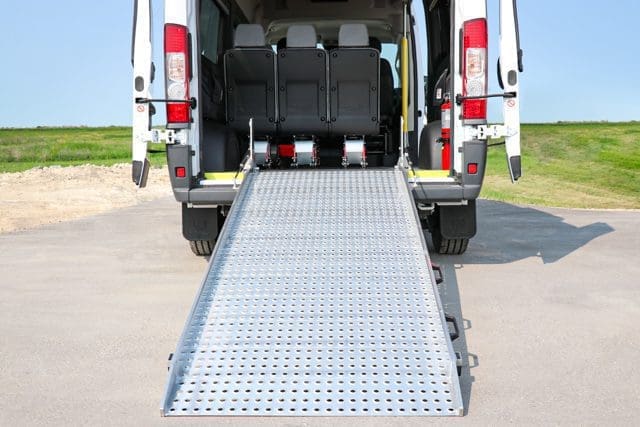
The first thing you’ll notice when you open the back doors is that the ramp is held tightly in place. This is for everyone’s safety while the van is moving. To get things moving, you just need to release the two safety buckles. These look exactly like the seat belt buckles in your personal car, so they’re very easy to recognize.
- Locate the buckles: You’ll find one on the left side and one on the right side of the ramp.
- Press the release: Simply push the red button on each buckle.
- Feel the freedom: Once both are unclipped, the fold-out wheelchair ramp is ready to be lowered.
Using these simple buckles means you don’t have to worry about complicated metal pins that might get stuck or rust. It’s a quick “click,” and you’re ready to go. This speed is great when it’s raining in Vancouver or windy in Calgary, as it keeps the cold air from filling the van for too long.
Lowering the ramp with gas-assisted shocks
Now that the buckles are undone, you might worry that the ramp will be heavy to pull down. This is where the magic of the design comes in. There are two handles on the right-hand side of the ramp. When you grab these handles and start to pull the ramp toward you, the gas-assisted shocks on the sides do the heavy lifting.
- Grab the handles: Use the two sturdy handles on the right side to get a good grip.
- Let the shocks help: As you pull, these gas-assisted shocks take the weight of the metal so it doesn’t feel heavy in your hands.
- Lower it gently: You can guide the rampe pour fauteuil roulant right down to the pavement or sidewalk.
The shocks act like a helping hand. They make sure the ramp doesn’t just flop down or crash onto the ground. This gentle movement is much better for the equipment and much quieter for your passengers. It shows that you care about providing a smooth, professional service from the very first moment they see the van.
Helping your passengers onto the van
Once the van wheelchair ramp is touching the ground, you have a wide, steady path for your passengers. Whether they use a manual chair or a power chair, the ramp is strong enough to handle it. Since the ramp is at the back of the van, there is usually more room for the driver to maneuver without worrying about side-street traffic or tight parking spots.
| Operation step | Action required | The why? |
| Release | Press buttons on buckles | Keeps the ramp secure during transit |
| Unfold | Pull handles on the right | Shocks prevent the ramp from being heavy |
| Position | Guide to the ground | Provides a stable, dignified entry point |
Stowing the ramp for a safe trip
After your passengers are safely inside and secured, it’s time to put the ramp back. You just do the same steps but in reverse. Grab those same handles and lift. Again, the gas-assisted shocks will kick in, taking the weight so you aren’t straining your back. It’s a smooth motion that brings the ramp back to its upright position.
The most important part of this step is making sure everything is locked in. You’ll take those seat belt buckles and push them back together. You want to hear a clear “click” on both the left and right sides. That sound is your signal that the ramps for wheelchairs for vans are locked and won’t move while you drive.
Want to learn more about the rear manual fold-out ramp?
You likely started reading this because you were worried about how winter weather might slow down your transit team. It’s stressful when you feel like you might let down a passenger who is counting on you for a safe, dignified ride. This article helped bridge that gap by showing you that a simple solution can remove those hurdles and keep your community connected.
If you ever feel unsure or have a quick question about how your rear manual fold-out ramp is working, please reach out to us. We know that your van is a lifeline for your community. If the van isn’t moving, people might miss their doctor visits or social outings, and we want to help you avoid that. Our customer support team is always ready to chat.
Au MoveMobility, we believe that every Canadian deserves a way to get to their medical appointments with dignity, regardless of where they live. We don’t just build vans; we partner with you to create a mobile environment that feels safe and welcoming for every rider. Our team has a deep understanding of the unique geographical hurdles in Canada, from the busy streets of Toronto to the remote roads of the Yukon.
This specialized experience is why we lead the way in innovative, accessible transportation that actually works in the real world. If you have any questions about how to better serve your riders, click the button below to talk to a mobility expert.
Si vous n'êtes pas encore prêt à parler à un expert en mobilité, nous avons quelques autres ressources à vous proposer pour en savoir plus.
Que devriez-vous lire ensuite ?
- Manual ramps for wheelchair vans: Everything you need to know: This article goes even deeper into the benefits of manual systems so you can be sure this is the right choice for your fleet.
- Pratiques de maintenance des véhicules-vélis roulants: Now that you know how the ramp works, learn how to keep the rest of your van in top shape for years of reliable service.
- How to secure a wheelchair into a van: Safety doesn’t stop at the ramp, so this guide shows you the best way to keep your passengers comfortable and secure once they’re inside.


 English
  French