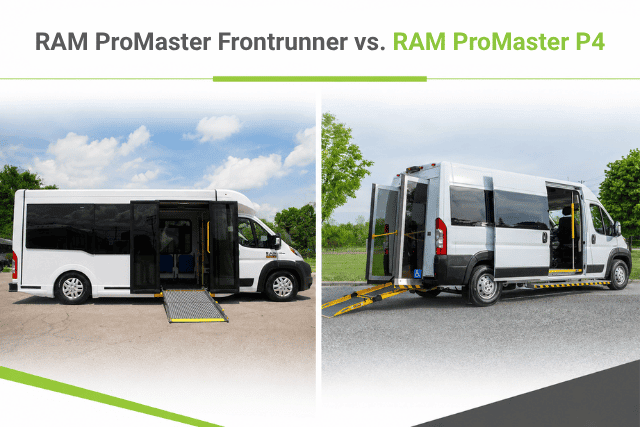
The RAM ProMaster Frontrunner or the RAM ProMaster P4 might appear as options when you start looking for a full-size wheelchair van. The real question behind the comparison is simple. How do you choose a vehicle that makes daily service easier, not harder? In Canada, about 27% of people aged 15 and older live with a disability. That means more people rely on safe and respectful transportation every day.
You’re trying to keep schedules on track, help drivers work safely, and give passengers a comfortable ride. The gap shows up when a van looks good in a brochure but feels slow or awkward in real use. Longer boarding, tight layouts, or limited flexibility can add stress for your team and the people you serve. What you really want is simple. Smooth pickups, confident staff, and passengers who feel valued and supported.
Au MoveMobilityNous avons dépensé plus de 20 ans working with organizations like yours across Canada to remove barriers to mobility. In the past three years alone, we’ve built over 480 wheelchair vans. We hold Ford Pro Upfitter and Stellantis QPro certification, along with the Marque nationale de sécurité on all our vehicles. We’ve partnered with groups like Centre de santé communautaire Quest, helping teams get vehicles that match real-world needs. We also know there are several strong manufacturers in this space, so this comparison stays fair and practical.
After reading this article, you’ll have more clarity on which option is the best fit for your program and service goals.
What are the differences between the RAM ProMaster Frontrunner vs. RAM ProMaster P4?
When you compare the RAM ProMaster Frontrunner and the RAM ProMaster P4, the real difference is not what you see in a brochure. The difference shows up on a cold morning when drivers are rushing to stay on schedule, passengers are waiting outside, and your team needs everything to work smoothly.
Both vehicles aim to solve similar problems. Both are designed to help organizations move people safely. On the surface, they can look close in purpose. Yet once you dig into how they operate in real Canadian conditions, some clear gaps appear.
The RAM ProMaster Frontrunner leans closer to a transit-style design. It tries to bring a micro-transit feel into a smaller package. The RAM ProMaster P4, on the other hand, focuses on flexibility and simplicity for organizations that handle changing passenger needs every day.
So the real question becomes this: Do you need a vehicle built for fixed routes, or one that adapts to people and communities that change day by day?
That’s where the comparison starts to separate. Let’s take a look at how they compare across several criteria.
Platform and overall design philosophy
Let’s start with the foundation, because design choices affect everything else.
RAM ProMaster Frontrunner
As we mentioned earlier, the Frontrunner follows a transit micro style concept. The idea is familiar if you’ve seen city shuttle systems. It focuses on a lower floor height and a larger overall structure. In theory, this helps with accessibility and passenger movement.
However, there are trade-offs.
The chassis is a specialized setup brought in from Europe. That approach works in some settings, yet it can create challenges for Canadian operators who prefer simpler, proven systems that local technicians know well.
Because it’s physically larger and built more like a small bus, it often feels big on the road. Tight turns, smaller town streets, and compact parking areas can become tricky.
Where it fits best:
- Dedicated urban routes
- Predictable passenger flow
- Large city environments
RAM ProMaster P4
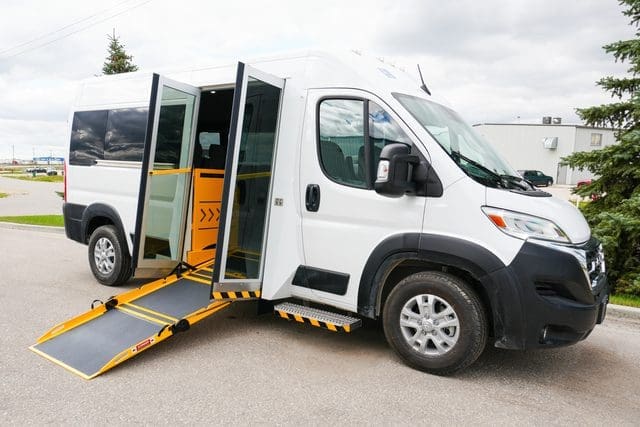
The RAM ProMaster P4 stays closer to the core ProMaster platform. That means drivers feel like they’re operating a full-size wheelchair van, not a minibus.
The design focus is clear. Keep operations simple, flexible, and familiar.
Brevet en cours
What that means for you:
- Easier handling in small towns or mixed routes
- Less learning curve for drivers
- Layouts that adapt to real-world demand
Across Canada, many programs work in places where routes change constantly. Rural Manitoba, northern communities, or smaller Ontario towns rarely operate like big-city transit systems. That’s where this difference becomes important.
Size and driving experience in Canadian communities
Vehicle size sounds like a small detail until you’re squeezing through winter traffic or backing into a narrow healthcare facility lot.
Frontrunner experience
Because the Frontrunner is larger and more transit-like, it works well when routes are wide and predictable. In big urban centres, this can make sense.
Yet smaller communities often notice the opposite.
Drivers may feel:
- Less comfortable navigating tight residential roads
- More cautious in winter conditions
- Slower when parking or loading
Places like Steinbach or smaller Prairie towns can expose this quickly. Roads are tighter, snow banks reduce space, and turning radius matters more than people expect.
P4 experience
The RAM ProMaster P4 behaves more like a traditional van. Drivers often adjust quickly because it feels familiar.
Daily advantages include:
- Easier parking near clinics or homes
- Better handling on smaller roads
- Less driver fatigue over long shifts
When transportation teams tell us what they value most, they usually talk about confidence behind the wheel. Confident drivers move people safely and calmly. That impacts passenger experience more than any marketing feature ever could.
Suspension and winter reliability
Canadian weather is where vehicle decisions either prove themselves or start causing frustration.
Frontrunner suspension setup
The Frontrunner uses an airbag-style rear suspension system. On paper, this sounds appealing. It can lower the vehicle and provide smooth rides under ideal conditions.
Real-world feedback, especially in colder climates, tells a different story.
Air suspension systems require more maintenance. Cold temperatures, road salt, and winter wear can create failure points. In past experiences with similar setups on ProMaster platforms, air suspension kits often ended up removed because of reliability concerns.
Common challenges teams have seen:
- Increased maintenance needs
- Winter performance issues
- Higher risk of downtime
When your program depends on daily service, downtime hurts more than comfort upgrades help.
P4 suspension approach
The P4 keeps factory-style suspension. This sounds less exciting, but that’s often the point.
Factory setups tend to be:
- Easier to maintain
- More predictable in winter
- Supported by local service networks
For Canadian organizations operating year-round, boring reliability can be a huge win.
Ramp design and driver workflow
Here’s one difference that rarely shows up clearly in brochures but matters every single day.
Frontrunner ramp
The ramp on the Frontrunner is manual. That means drivers physically bend down and pull it into place. After boarding, the ramp must be moved out of the way so ambulatory passengers can enter.
This creates a workflow interruption.
Real impacts include:
- More physical strain for drivers
- Slower boarding process
- Ramp sitting in the way during regular passenger flow
Over time, small inefficiencies like this add up.
Drivers already juggle schedules, weather, and passenger support. Extra steps create fatigue and slow service.
P4 ramp setup
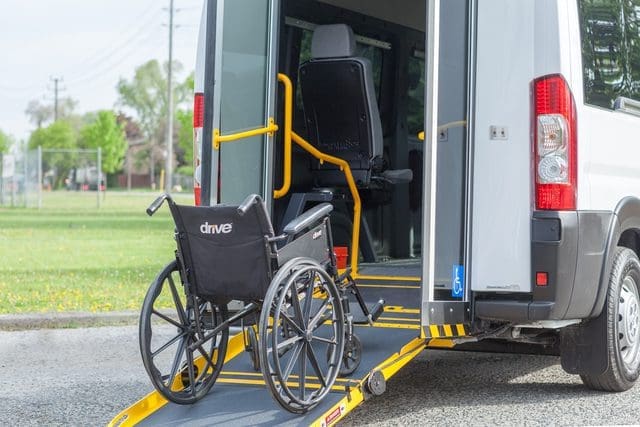
The RAM ProMaster P4 focuses on smoother boarding flow. The design allows easier integration between wheelchair and ambulatory passengers.
What teams notice:
- Faster loading times
- Less bending or awkward movement
- Cleaner passenger flow
That translates directly into shorter stops and less stress for everyone involved.
Transit micro concept vs flexible service model
The Frontrunner leans heavily into the transit micro idea. It works well when your operation looks like a fixed shuttle route.
The challenge is that many Canadian programs don’t work like that.
Community-based services often involve:
- Mixed passenger groups
- Changing daily schedules
- Home pickups instead of fixed stops
The P4 tends to align more naturally with that reality.
When does microtransit work?
- Urban centres with dedicated routes
- High passenger volumes every day
- Predictable boarding locations
When flexibility wins
- Smaller towns
- Rural outreach programs
- Healthcare transport with variable needs
Many organizations discover that what sounded good on paper does not always fit real operations. Nobody wants to become a test case or a guinea pig after investing heavily in a vehicle.
Long-term practicality and fleet confidence
A strong vehicle choice removes worry. A risky one introduces uncertainty.
The Frontrunner has had units sit unsold for long periods in some regions. That doesn’t automatically mean it is a bad product. It does suggest that many organizations are cautious about trying something unfamiliar.
Programs often ask themselves:
- Will this work in our climate?
- Will parts and service be simple?
- Will drivers actually enjoy using it?
The P4 tends to answer those concerns with familiarity.
Because it stays closer to a proven platform, organizations feel more confident integrating it into existing fleets.
Confidence comes from:
- Known maintenance patterns
- Simpler training
- Predictable performance
That’s hard to measure on a spec sheet, yet it matters once the vehicle enters daily service.
Passenger experience and dignity
This comparison is not just about mechanics. It’s about people.
A good full-size wheelchair van helps passengers feel included, comfortable, and respected.
The P4’s boarding flow often feels more natural because wheelchair and ambulatory passengers move through shared space more smoothly. Drivers spend less time repositioning equipment, which means more focus on passengers.
When loading feels calm and organized, riders notice.
That moment makes a big difference. For someone who already faces transportation barriers, small details shape how valued they feel.
Who does each vehicle fit best?
Still wondering which organization each vehicle fits best?
RAM ProMaster Frontrunner
Best suited for:
- Large urban environments
- Dedicated transit-style routes
- Programs prioritizing lower floor entry
Potential considerations:
- Larger size for smaller towns makes navigation more tedious
- Air suspension maintenance concerns
- Manual ramp workflow
RAM ProMaster P4
Best suited for:
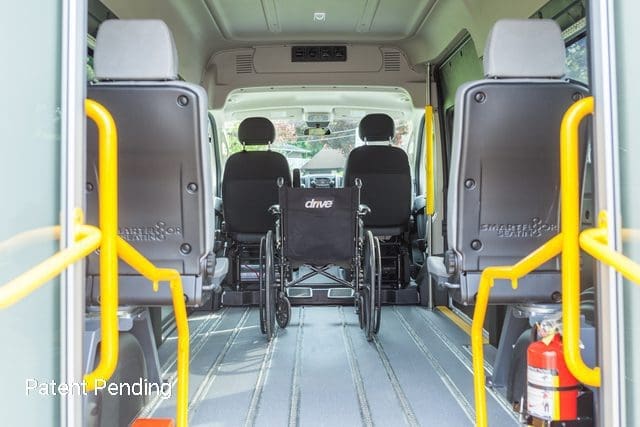
- Canadian community programs
- Mixed passenger needs
- Cities and rural regions
- Organizations wanting reliable, adaptable operations
Strengths include:
- Familiar driving feel
- Winter-friendly reliability
- Flexible layouts that support changing demand
At the end of the day, this comparison is less about which vehicle is better and more about which one fits your reality.
If your program runs like a dedicated transit service in a larger city, the RAM ProMaster Frontrunner may align with that model.
If your days are unpredictable, your roads vary, and your passengers change from trip to trip, the RAM ProMaster P4 feels more natural once operations begin.
And that’s the real goal. A full-size wheelchair van that helps your team focus on people instead of equipment.
Because when the right vehicle fits your program, something important happens. Drivers feel calmer. Passengers feel safer. Service runs smoother. And the work your organization does to remove barriers to mobility becomes easier to deliver, one trip at a time.
Find your right wheelchair van fit
You came here because choosing between the RAM ProMaster Frontrunner and the RAM ProMaster P4 feels like a big decision that you’re confused about. You want a full-size wheelchair van that works in real life, supports your team, and respects the people you serve without adding new problems to your day.
After reading this comparison, you now understand:
- Key differences: How the RAM ProMaster Frontrunner and RAM ProMaster P4 approach layout, size, suspension, and ramp use differently.
- Operational impact: Why daily workflows, winter reliability, and community size matter more than specs alone.
- Best fit thinking: How to match the right vehicle to your routes, passengers, and long-term service goals.
Au MoveMobility, we’ve spent more than two decades helping Canadian organizations turn transportation challenges into smooth, dependable service. Our team works with transit programs, healthcare groups, and community organizations across the country, building solutions that support real people and real environments. Every project starts with listening first, because no two communities operate the same way. That’s part of why we’re trusted leaders in accessible transportation in Canada. If you’re ready to talk through your options, click the button below to connect with a mobility expert who understands your world.
If you’re not ready to talk to a mobility expert yet, we have a few other resources you should check out to learn more.
Recommended next reads
- How to choose a wheelchair van (11 steps): A practical guide that walks you through the decision-making process so you can compare options with confidence.
- Rear-entry vs. side-entry full-size wheelchair vans (pros & cons): Helps you understand boarding styles and how they affect passengers, drivers, and daily operations.
- What’s the cost of a wheelchair van? This article will help you budget more accurately for your next wheelchair van.



 English
  French