

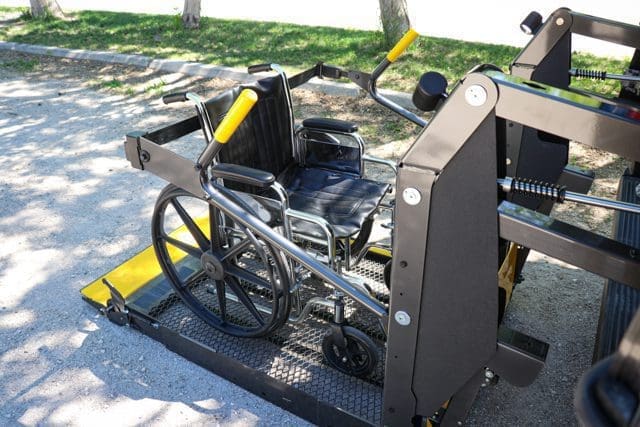
Has your van wheelchair lift ever made a funny sound that you just shrugged off? It’s easy to ignore a tiny squeak when you’re busy helping people in snowy Saskatoon or downtown Toronto. We know you care deeply about your passengers. When a van with a wheelchair lift starts acting up, it feels like a heavy burden.
You might worry about costs or leaving someone stranded in the cold. This gap between your big heart and a glitchy machine is stressful. Skipping van wheelchair lift maintenance today might seem like a time-saver. Sadly, it often turns a tiny rattle into a massive repair bill that keeps your van off the road.
MoveMobility has been a leader in this field for over 20 ans. Our team holds Ford Pro Upfitter and Stellantis QPro certifications, and our vehicles also carry the Marque nationale de sécurité to show we follow strict safety rules. We know that other manufacturers exist, but our goal is to be your trusted and transparent partner that you can rely on.
In this article, you’ll learn about the risks of skipping van wheelchair lift maintenance. We’ll cover:
- How small issues can become big repairs
- The impact of downtime on your community
- Tips for a healthy van wheelchair lift
How can tiny issues turn into major van wheelchair lift maintenance disasters?
Imagine you’re walking through your office in Vancouver on a rainy spring day and notice a tiny, pea-sized wet spot on the ceiling tiles. It looks harmless, right? You might think about calling a repair person, but you’re busy coordinating rides for people who need them. So, you put it off. A month later, that tiny spot is a dark, sagging hole. The next time a big storm hits, the ceiling collapses. Now, instead of a simple patch, you’re replacing the roof, the carpets, and everything underneath it.
This is kind of like how van wheelchair lift maintenance works. These lifts are incredible pieces of engineering that provide freedom and dignity to thousands of Canadians. They’re the bridge between a person’s home and their community. But like any hard-working machine, they rely on small parts working perfectly together. When one tiny piece starts to fail, it doesn’t just stop there. It puts pressure on everything else until the whole system breaks down.
The story of the worn-out bushing
Let’s look at a specific example we’ve seen in the field with a wheelchair lift. Inside the wheelchair lift mechanism, there’s a small part called a threshold plate bushing. It’s a simple, inexpensive component. Its job is to keep things moving smoothly and aligned properly.
In one case, an organization noticed the lift was acting a bit off. Because the van wheelchair lift maintenance was skipped, the severely worn bushing stayed in place. As the lift opened and closed day after day, the lack of support from that one tiny bushing caused the fold arm on the completely opposite side to start warping and bending.
- Small part failure: The worn bushing stopped supporting the weight properly.
- Structural warping: The fold arm on the other side began to bend under the uneven stress.
- Massive repair costs: What could’ve been a cheap fix became a major mechanical overhaul.
- Extended downtime: The van sat in the shop for days instead of serving the community.
If ongoing maintenance had been done and the issue had been caught early, all it would’ve taken was a simple, cheap bushing replacement. It’s a perfect example of how a tiny gap in maintenance leads to a huge gap in service.
The gap between a small fix and a big repair
When you manage a fleet, you’re always balancing a budget. It’s tempting to think that skipping a service check saves money. In reality, it creates a massive gap in your service. When a wheelchair platform lift for van fails, the impact goes far beyond the repair shop.
| The small fix (early catch) | The big repair (skipped maintenance) |
| Cost of a small bushing or bolt | Cost of a new fold arm and motor |
| One hour in the shop | Five days of vehicle downtime |
| Happy, on-time passengers | Frustrated clients with cancelled rides |
| A relaxed fleet manager | A stressed leader facing a budget crisis |
Why tiny parts matter for your community
You aren’t just running a transportation service; you’re providing a lifeline. For someone using a wheelchair lift for a van, that equipment represents their ability to go to work, see family, or visit a doctor. When we talk about van wheelchair lift maintenance, we’re really talking about keeping those promises of freedom.
- Preventing domino effects: One worn part puts extra heat and strain on the motor and gears.
- Protecting independence: Regular checks ensure a passenger never gets stranded far from home.
- Saving resources: Catching issues early means more money stays in your program’s pocket.
- Maintaining dignity: A smooth-running lift provides a much better experience for the user.
Think about the impact on a rural community in Northern Ontario. If your only van with a wheelchair lift goes down because of a bent fold arm, it might take weeks to get parts delivered and fixed. During those weeks, your clients lose their independence. That’s a huge gap in care that could have been avoided with a simple check of a bushing.
When you prioritize van wheelchair lift maintenance, you’re showing your community that their mobility and dignity are worth every second of your time. You’re making sure that the vital connection between health services and patients stays strong. Keeping a small fix from becoming a big repair isn’t just about saving money; it’s about making sure your mission never has to pause.
3 proactive tips for better van wheelchair lift maintenance
Keeping your fleet on the road in Canada means dealing with everything from frozen slush in Winnipeg to salty sea air in St. John’s. These conditions can be tough on moving parts in any vehicle. Consider following a few of these tips to make sure a tiny rattle doesn’t turn into a budget-breaking repair. It’s all about protecting the dignity and freedom of the people who count on you for a ride.
1. Listen to what the lift is telling you
Your drivers are the frontline heroes of your organization. They know these vehicles better than anyone. Encourage them to be mindful of how the wheelchair platform lift for the van behaves during their daily routes. Regular inspections are key to keeping passengers safe and avoiding major structural failures.
- Spot the shudders: If the platform vibrates or jerks while moving, it’s often a sign that something is off.
- Hear the friction: Metal-on-metal screeching usually means a bushing is worn down or a pivot point is bone dry.
- Check the drift: If the lift doesn’t stay tucked tightly against the door while you’re driving, the stowing pressure might be low.
- Clear the debris: Road salt and dirt act like sandpaper on your equipment; a quick spray with a hose can prevent premature rusting.
2. Stick to a professional service schedule
It’s tempting to skip a check-up if the wheelchair lift seems to be working fine. However, many internal parts wear out long before they actually snap. Most manufacturers suggest a professional inspection every six months or after a certain number of cycles.
- Lubrication is life: Using the correct, manufacturer-approved grease prevents the friction that causes arms to warp or bend.
- Hydraulic health: Checking for leaks in the hoses prevents the pump from running dry and burning out, which is a very pricey fix.
- Tighten the hardware: Constant vibrations from Canadian roads can loosen bolts; a technician will ensure everything is torqued to safety standards.
3. Focus on the environment and usage
How you use your van with a wheelchair lift matters just as much as how often you fix it. If your organization is in a particularly hilly area or a place with extreme winters, your maintenance needs will be higher than a fleet in a milder climate.
- Mind the weight: Always stay within the lift’s rated capacity to avoid putting hidden stress on the frame.
- Level ground: Try to operate the lift on flat surfaces whenever possible to keep the weight distributed evenly across both fold arms.
- Cycle counts: Keep a log of how often the lift is used; high-traffic transit vans need more frequent wellness checks than occasional-use vehicles.
When you prioritize van wheelchair lift maintenance, you’re closing the gap between a vehicle that’s just okay and one that provides a world-class experience. You’re making sure that every trip is safe, smooth, and reliable. When you catch that worn bushing or dry pivot point early, you save your organization’s resources for what really matters: helping the people in your community live full, connected lives.
Keep your van wheelchair lift maintenance on track today
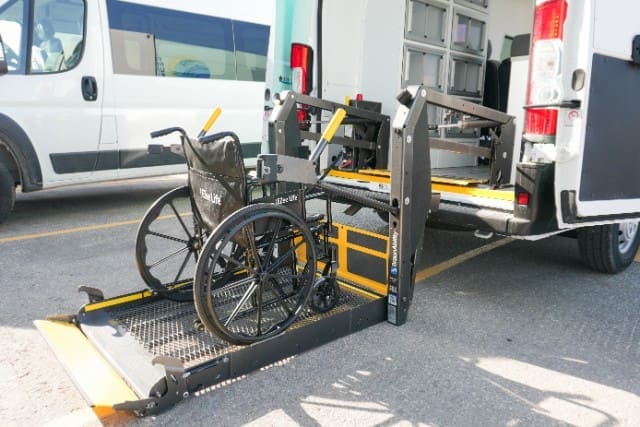
You probably clicked on this article because you were concerned about a strange noise or a minor issue with your equipment. It’s stressful to think that a tiny mechanical hiccup could lead to a massive repair bill or, worse, leave one of your passengers stranded.
After reading this, you’ve now learned how important maintenance is in keeping your program running.
Au MoveMobility, we’ve spent over two decades obsessing over the details so you don’t have to. We’ve seen firsthand how reliable transportation restores dignity to seniors and provides a lifeline for patients in remote areas. Our team partners with you to make sure those vehicles stay on the road for years to come. We value the human connection behind every ride, and we’re here to support your mission with honesty and expertise. If you have any questions about keeping your equipment in top shape, click the button below to talk to a mobility expert.
Si vous n'êtes pas encore prêt à parler à un expert en mobilité, nous avons quelques autres ressources à vous proposer pour en savoir plus.
Recommended next reads
- Wheelchair van maintenance practices you need to know: Read this to learn how to care for your wheelchair van and keep it running smoothly in the Canadian climate.
- Repairing vs. replacing your wheelchair van (pros and cons): This is a great next step if you’re trying to decide if your current van is still the best tool for your community’s needs.


 English
  French