

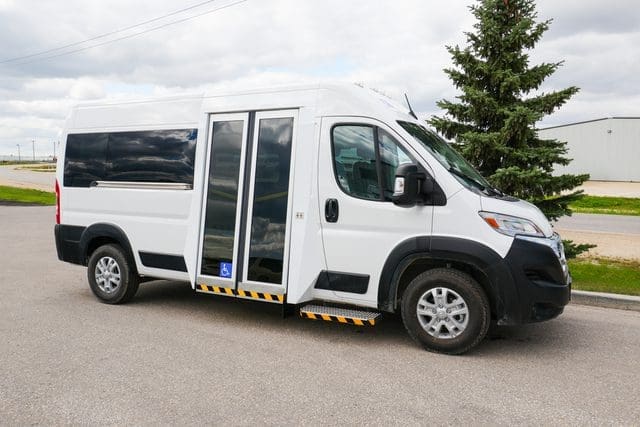
If your organization provides rides, you’ve probably asked, “Can we safely transport someone in a mobility scooter?” From busy streets in Toronto to long drives in rural Saskatchewan, the question is the same. You want every trip to be safe and comfortable, but figuring out the right way to move a mobility scooter can feel tricky. If it’s not handled right, it can mean safety risks, liability issues, and stress for both passengers and staff.
Now imagine the opposite: Every passenger feels secure, your team knows exactly what to do, and your vehicles make it simple. That’s the gap we want to help close.
Au MoveMobilityNous avons dépensé plus de 20 ans working with healthcare teams, governments, and non-profits across Canada to make transportation safer. We’re Ford QVM and Stellantis QPro certified, and every van we build carries the Marque nationale de sécurité, meaning it meets Canada’s strict safety standards. We know we’re not the only manufacturer out there, but we can give you clear, practical answers you can use right away.
Dans cet article, vous apprendrez
- Safety regulations for transporting a mobility scooter in Canada
- Risks to watch for when moving someone in an electric mobility scooter
- Vehicle options that make safe transport easier
Can you safely transport someone in a mobility scooter in Canada?
Yes, you can safely transport someone in a mobility scooter in a wheelchair van in Canada, as long as you have the right equipment, securement methods, and trained staff.
There are three things to keep in mind when transporting someone in a mobility scooter.
1. Canadian legal requirements
In Canada, mobility scooters are treated as priority mobility aids under the Accessible Transportation for Persons with Disabilities Regulations (ATPDR). This means your team must handle them with care, from loading to unloading. Staff are also required to have training on securement and safety procedures, as outlined by Transports Canada. These rules protect your passengers, your equipment, and your organization.
2. Securing a mobility scooter inside your van
Keeping the scooter stable during transit is essential. Industry best practices recommend:
- Lock the wheels and power off before loading
- Use proper tie-downs: three points for smaller scooters, four for larger ones, as outlined in the AIG Securement Guide
- Apply a seat belt system if the rider remains on the scooter, using lap and shoulder restraints
3. The right equipment and training
Your van needs the proper setup to transport scooters safely:
- Certified ramps or ascenseurs rated for scooter plus rider weight (often up to 600 lb)
- Forward-facing positioning during transport, unless the passenger requests otherwise
- Staff trained in loading, securement, and emergency procedures, as required by the ATPDR
5 risks to watch for when transporting someone in a mobility scooter in Canada?
Transporting someone in a mobility scooter can be safe and smooth, but only if you know what risks to look out for. Organizations across Canada often run into preventable issues when equipment, securement, or procedures fall short.
If your program is investing in a wheelchair van, it’s important to understand these risks ahead of time. Knowing them now will save you time, money, and potential liability later.
Risk #1: Improper securement during transport
Improper securement is one of the top risks when transporting a mobility scooter. If it isn’t fastened correctly, the scooter can shift during the ride, especially if there’s sudden braking or tight cornering. This can lead to passenger injuries, damage to the scooter, or harm to other passengers.
Common issues to watch for:
- Loose straps: Tie-downs that aren’t tightened correctly can slip.
- Wrong anchor points: Straps need to attach to solid frame points, not accessories.
- No passenger restraint: If the rider stays in the scooter, a seat belt system should be in place.
A secure scooter keeps everyone safe, reduces liability, and shows riders you value their comfort and safety.
Risk #2: Overloading ramps or lifts
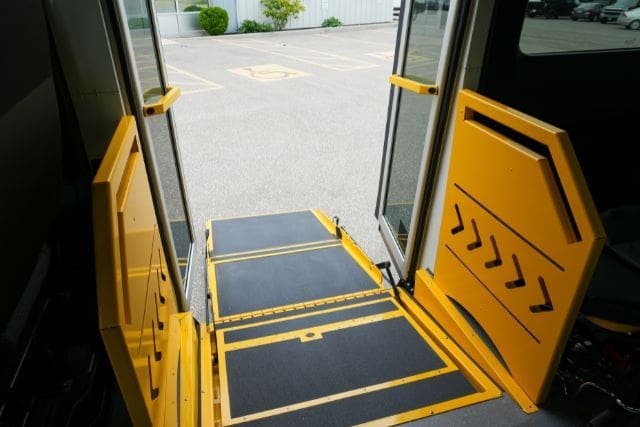
Another big risk is overloading the ramp or lift in your wheelchair van. Mobility scooters, especially larger or bariatric models, can be heavier than they look. Add the rider’s weight, and you can easily exceed the equipment’s safe limit.
When a ramp or lift is overloaded, it can:
- Fail mid-use: This can cause injuries and damage the equipment.
- Wear out faster: Overloaded lifts break down more often, leading to costly repairs.
- Delay service: A lift failure can put your van out of service and disrupt your program schedule.
Most ramps and lifts are rated for 600–1,000 lbs, but always check the exact rating of your equipment before use. Your team should know how to identify a scooter that might be too heavy for the lift and how to handle those cases safely.
Risk #3: Lack of staff training
Even the best wheelchair van and equipment cannot prevent issues if the staff doesn’t know how to use them correctly. A common risk for organizations is assuming that a quick demonstration is enough.
Without proper training, mistakes can happen:
- Incorrect loading: Scooters positioned wrong on ramps can roll or tip.
- Improper securement: Staff may miss critical tie-down steps.
- Poor communication: Passengers may feel unsafe if staff seem unsure.
Training should be hands-on and ongoing. New staff should practice loading and securing scooters under supervision, and refresher training should occur regularly to keep skills sharp.
Investing in training reduces risks; it also shows passengers and your community that safety is a top priority in your program.
Risk #4: Ignoring passenger comfort and safety
A mobility scooter can be secured perfectly, but if the passenger isn’t comfortable or feels unsafe, the trip becomes stressful. For organizations serving seniors or clients with health conditions, this can be a serious issue.
Risks tied to passenger comfort include:
- Tight spaces: Some vans may not have enough interior room for scooters, leading to cramped rides.
- Poor ride quality: Rough roads or poor suspension can make the ride uncomfortable.
- Temperature concerns: Vans without proper heating or cooling can create unsafe conditions, especially for seniors.
Your program should focus on both safety and dignity. That means selecting a van layout with enough space, ensuring good climate control, and choosing suspension systems that reduce bumps. A comfortable passenger is a safer passenger, and a more confident one.
Risk #5: Overlooking legal requirements
Another risk is forgetting about the rules that apply in Canada. Safety is important, but your program also needs to meet legal standards.
Common issues include:
- ATPDR rules: These say how mobility scooters must be handled during transport.
- Vehicle certification: Vans should meet Transport Canada’s Marque nationale de sécurité normes.
- Paperwork problems: Training, maintenance, and incident records should be kept up to date.
If your program doesn’t follow these rules, it can cause legal trouble, hurt funding, or affect your insurance. Staying compliant shows your passengers and community that you take safety and trust seriously.
How can you train your team for safe mobility scooter transport?
Your wheelchair van and equipment are only as safe as the people using them. Proper training ensures your staff can load, secure, and transport passengers confidently. Here’s a step-by-step training plan you can apply right away.
Step 1: Understand the rules
Start with the basics: your team must know the laws that apply. The ATPDR outlines how mobility aids, like scooters, must be handled in Canada.
Training should include:
- Identifying mobility aids: Staff should recognize the types of scooters they may transport.
- Knowing legal securement requirements: These aren’t suggestions, they’re mandatory.
- Understanding liability: Mishandling scooters can lead to legal and financial consequences.
Hold a short test or sign-off after reviewing the rules. This creates a record that your staff has read, understood, and committed to following these standards.
Step 2: Practice loading and unloading
This step is about safety for both the passenger and the operator. Every staff member should practice using the ramp or lift at least five times before transporting passengers.
Key actions include:
- Check weight rating: Most ramps/lifts handle 600–1,000 lb.
- Position the scooter correctly: Centered on the platform with safety barriers raised.
- Secure the scooter: Lock the brakes before lifting or lowering.
- Guide smoothly: Move slowly to avoid sudden jerks.
A good training drill is to practice with scooters of different sizes. That includes compact ones, mid-size, and heavy-duty, so staff are ready for real-world situations.
Step 3: Secure the scooter correctly
This step keeps the scooter stable during transport. Staff should follow a clear securement process every time.
Training points:
- Four-point securement: Attach tie-down straps to solid parts of the scooter frame.
- Check tension: Straps should be tight, with no slack.
- Rider restraint: If the passenger stays on the scooter, apply a lap and shoulder belt.
In training, have staff secure and unsecure a scooter multiple times until they can do it without hesitation. Inspect securement as a group to confirm it’s correct.
Step 4: Communicate with the passenger
Good communication builds trust and prevents misunderstandings.
Staff should practice:
- Explaining steps: Tell the passenger what will happen before moving or securing their scooter.
- Checking comfort: Ask if they’re comfortable after securement. Adjust if needed.
- Keeping them informed: Let them know when the ramp or lift is moving.
Role-playing is useful here. Have staff practice explaining each step to a “passenger” so it feels natural during actual trips.
Step 5: Prepare for emergencies
Emergency training is about being ready for the unexpected.
Staff should practice:
- Quick release: Learn to release straps rapidly without damaging equipment.
- Evacuation drills: Practice removing a scooter from the van without power.
- Lift/ramp failure protocols: Train on backup methods if equipment fails mid-use.
These drills should happen at least twice a year. A written checklist should be included in the van so staff have quick instructions during an actual emergency.
Got any questions about mobility scooter transportation?
You came to this article because you had a question: Can we safely transport someone in a mobility scooter? You might have felt unsure about the risks, equipment needs, and rules.
Now, you’ve learned:
- What safe transport looks like in a wheelchair van
- The risks to watch for (and how to avoid them)
- Training and equipment steps to keep passengers safe and comfortable
Au MoveMobility, we’ve spent over two decades working with healthcare teams, non-profits, and government programs across Canada to solve these exact challenges. Every wheelchair van we build is designed around real-world use. Our focus is on people, your riders, your staff, and the communities you serve. If you’re ready to take the next step, click below to talk with a mobility expert.
If you’re not ready to talk to a mobility expert yet, we have more resources for you:

 English
  French