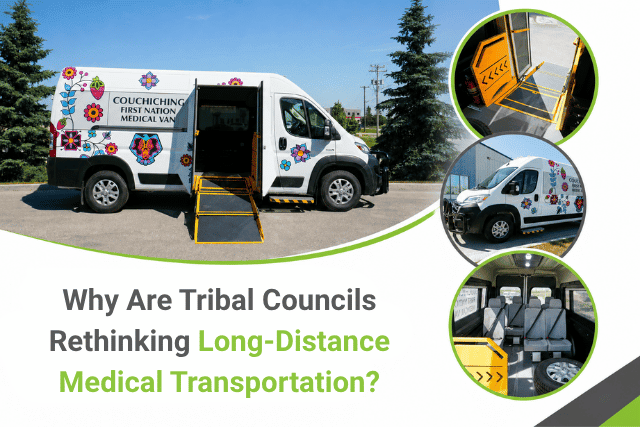
Could long-distance medical transportation be pulling too many people, vehicles, and hours away from your community? In many northern and remote communities across Canada, a medical trip can mean a full day on the road to reach care in Winnipeg, Edmonton, Saskatoon, or Thunder Bay. Statistics Canada reported that 18% of First Nations people living off reserve and 40% of Inuit travelled outside their community for healthcare in the past year. That travel can affect Elders, patients, families, and staff. It can also create a bigger gap. When one vehicle leaves for a four-hour trip, another person may lose their ride to the local health centre.
My name is Aleck Jones, and I’m a Client Partner at MoveMobility. I work with communities across western Canada to help remove barriers to transportation and healthcare. I enjoy helping teams find the right fit, from fourgons accessibles aux fauteuils roulants à unités médicales mobiles.
In this article, we’ll look at:
- Capacity: How one long trip can disrupt local transportation.
- Care: Why repeat travel can wear people down.
- Options: How the right vehicle can help bring care closer to home.
How can long-distance medical transportation disrupt local community transportation?
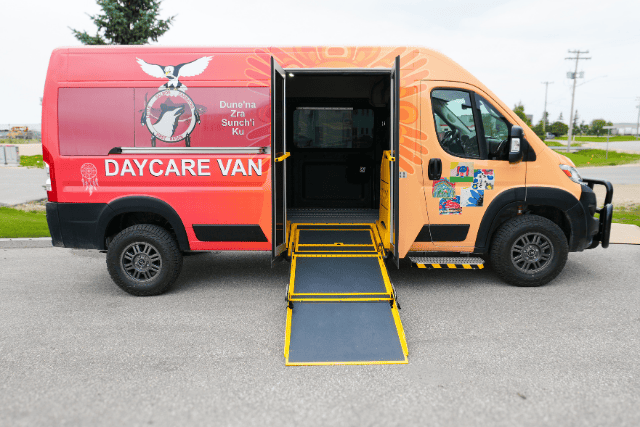
Long-distance medical transportation is being rethought by tribal councils because one long trip can affect transportation for the rest of the community.
From my side, I’ve seen this come up in different parts of Canada. I’ve heard it from Indigenous, First Nations, Metis, and Inuit communities across northeran Alberta and seen the same kind of concern in remote parts of BC, where mountain roads, winter weather, and long travel times can make an already hard trip even harder. I’ve also seen this thinking in Ontario, where some communities are trying to figure out how to keep local transportation available while still helping people get to care farther away.
The common problem is usually the same.
A community has a vehicle that helps people get around locally. Then that same vehicle gets used for a long medical trip. Once it leaves, it’s out of service for everyone else until it comes back.
That’s where the pressure starts.
Let’s say someone needs to travel from the Fort McMurray region to Edmonton for care. That can mean about four hours each way. Add in the appointment, road conditions, fuel stops, and a few extra errands that often come with a trip into the city, and suddenly that one vehicle is tied up for most of the day.
Meanwhile, local needs don’t stop.
An Elder may still need a ride to the health centre. Someone else may need help getting to a local appointment. A person without a personal vehicle may be waiting on that same van to get basic care. If the vehicle is already gone, those people may be left waiting, rescheduling, or trying to find another option.
That’s why this issue is bigger than distance alone. It’s really about capacity.
How can a long-distance medical transportation trip affect the whole day?
When people think about long-distance medical transportation, they often picture the person making the trip. That’s fair. That trip is important.
But what gets missed is what happens back in the community while that vehicle is away.
A local van may be used for several things in one day, including:
- Health centre visits: Short rides to local appointments.
- Elder transportation: Safe and reliable trips for Elders.
- Accessible transportation: Support for people using wheelchairs, walkers, or canes.
- Family support: Rides for people who don’t have a vehicle of their own.
- Community transportation needs: Day-to-day travel that helps people stay connected to care.
When one long trip takes that van out of the schedule, the whole local plan can shift.
Staff may have to move appointments around. Families may have to step in and find another ride. Some people may simply have to wait until the vehicle returns. That can turn a transportation issue into a healthcare access issue pretty fast.
This is one reason some communities are taking a closer look at services de transport de patients and asking if their current setup is putting too much strain on one vehicle.
To me, that’s the core question.
It’s not just, “Can we get one person to care?”
It’s also, “What happens to everyone else while that trip is happening?”
Why does local transportation feel stretched when one vehicle does everything?
In many communities, transportation resources are already limited. There may be one main vehicle doing a lot of the work. There may be a small team managing rides. Additionally, there may also be a long list of people who rely on that transportation every week.
So when long-distance medical transportation gets added into the mix, the schedule can get stretched pretty quickly.
I’ve seen that concern come up in places where the roads are long and flat, and I’ve seen it in areas where the roads wind through mountains or face winter closures. The geography looks different, but the strain feels very similar.
Here’s a simple example.
A community van is booked for a long trip out of town. At the same time, an Elder needs to get to the local clinic, and another community member needs a ride for a follow-up appointment in the community. The team now has to choose how to juggle those needs with one vehicle already gone.
That’s a hard spot to be in.
Nobody wants to feel like helping one person means another person has to wait. But when one van is expected to handle both local and long-distance medical transportation, that’s often the reality.
That’s also why some teams start asking if there’s a better way to protect local transportation access. Our article on 5 big problems with using personal vehicles for patient transport touches on related issues, but the local gap here is very specific.
The real hidden cost is the local service the community loses while the van is away.
That lost service can look like:
- Delayed rides
- Missed local appointments
- Longer wait times
- More pressure on staff
- More stress for families
That’s why more tribal councils are rethinking long-distance medical transportation. They’re looking at what one trip takes away from local access, and they’re asking how to keep transportation working for the whole community, not just for one route on one day.
How can long-distance medical transportation wear people down?
Long-distance medical transportation can be hard on anyone. But for people with problèmes de mobilité, it can feel even harder when the only available option is a personal vehicle.
I’ve heard this come up in conversations with communities. Sometimes, when a community vehicle isn’t available, people rely on family vehicles, staff vehicles, or whatever ride they can find. That may get someone to the appointment, but it doesn’t always make the trip safe, comfortable, or dignified.
Picture someone who uses a wheelchair travelling four hours to care, then four hours back. If they have to transfer into a cramped car, that can mean sitting in a position that doesn’t support their body well. Their wheelchair may be folded up or stored in the back. They may have limited room to move. They may not be able to stretch, adjust, or rest in a way that feels comfortable.
That’s a long time to feel stuck.
And if that person is travelling for dialysis, surgery follow-up, or a specialist appointment, they may already be tired before the ride even starts. The trip home can feel even longer.
A personal vehicle may seem like a quick fix, but it can create real problems:
- Confort : The person may be stuck in a tight seat for hours.
- Dignity: Transfers in and out of the vehicle can feel awkward or unsafe.
- La sécurité : Wheelchairs and medical equipment may not be secured properly.
- Fatigue: A long ride can drain someone before or after care.
- Family pressure: Loved ones may feel responsible for solving the ride problem.
This is one reason many communities are taking a closer look at patient transport vehicles and asking if personal vehicles are carrying too much of the burden.
To me, the question is simple:
Should someone have to ride eight hours in a cramped car just to access healthcare?
Most people would say no.
That’s why long-distance medical transportation is becoming a bigger conversation. It’s about more than getting from one place to another. It’s about helping people travel in a way that respects their comfort, their safety, and their dignity.
How can the right vehicle solve these problems?
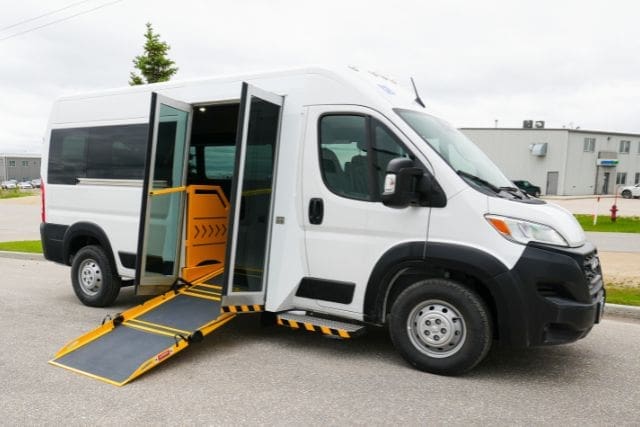
This is where the conversation starts to shift.
Instead of asking, “How do we keep making personal vehicles work?” some communities are asking, “What kind of patient transportation vehicle would actually fit this need?”
That’s an important question.
A long-distance medical transportation vehicle should be built around the trip, the passenger, and the care needed. It should give people enough space to sit comfortably, travel safely, and avoid painful transfers when possible.
For a person who uses a wheelchair, that may mean staying in their wheelchair during the ride instead of transferring into a cramped seat. For someone using a walker or cane, it may mean easier entry via a rampe ou ascenseur, more headroom, and a layout that doesn’t make every stop feel like a wrestling match with gravity.
A better-suited vehicle may help with:
- Wheelchair access: Passengers can enter and ride with proper securement.
- Passenger comfort: More space can make long rides easier to handle.
- Safe transfers: Ramps or lifts can reduce awkward movement in and out.
- Caregiver support: Staff or family can travel with the person when needed.
- Reliable scheduling: The vehicle can be planned around medical travel needs.
The right vehicle makes transportation more dignified
This kind of vehicle doesn’t remove every challenge. Long trips are still long trips. A four-hour ride is still a four-hour ride, even with a better seat and a decent cupholder. But the right setup can make the trip safer, more comfortable, and more respectful.
For some communities, the better fit may be a dedicated accessible vehicle for transport médical. For others, it may be a patient transport van that can support people using wheelchairs, mobility devices, or stretchers. Some communities may need a vehicle that can travel between remote communities and regional healthcare centres without taking the local-use vehicle out of service every time.
The key is matching the vehicle to the real problem.
If people are riding long distances in cramped personal vehicles, the issue is comfort, safety, dignity, and access to care. If the community vehicle is being pulled away for full-day trips, the issue is also local transportation capacity.
That’s why more tribal councils are rethinking long-distance medical transportation. They’re asking how to reduce the strain on patients, families, and local teams while still helping people get the care they need.
As this article series continues, I’ll walk through the types of vehicles that can support long-distance medical transportation, including what each one is built for, where it fits best, and what questions your community should ask before choosing one.
Ready to plan smarter long-distance medical transportation?
You likely came to this article because long-distance medical transportation is starting to pull too much from your community. One trip may help someone reach care, but it can also leave others waiting for a ride closer to home.
After reading this article, you’ve seen how:
- Local access can be disrupted: One long trip can take a community vehicle out of service for the day.
- Repeat travel can wear people down: Long rides in cramped personal vehicles can be hard on comfort, safety, and dignity.
- Better planning can protect more people: The right transportation setup can support out-of-community care without leaving local needs behind.
Au MoveMobility, we work with communities across Canada that are trying to solve real transportation gaps, not just buy another vehicle. Our team helps organizations think through passengers, routes, medical needs, accessibility, road conditions, and long-term service plans before recommending a path forward.
We build vehicles, yes, but the deeper work is helping people who help people. That’s why communities come to us when they need practical, reliable transportation that supports care with dignity. If you have questions, click the button below to talk to a mobility expert.
If you’re not ready to talk to a mobility expert, the next article in this series is a good place to keep learning.
When should your Indigenous, Metis, or Inuit community consider a dedicated medical transport van? This next article in the series delves deeper into some considerations you should keep in mind to help you determine if a medical transport van is the right next step.
 English
  French