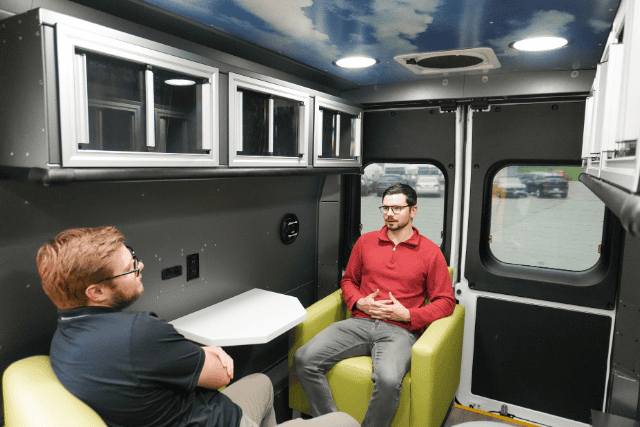
20% of Canadians will face a mental health challenge this year alone. If you work in a mental health organization, you feel the weight of that number. More groups are using Mobile Counselling Vans to bring help to people in rural towns and city neighborhoods. But here’s the gap: many leaders worry about safety in a Mobile Counselling Van for their staff.
Think about it. Your team may work alone at night, park in an unfamiliar area, or meet someone in crisis. These moments can feel risky and add stress. If safety is overlooked, staff may feel uneasy, and programs may not grow. But when safety is built in, you reach a better place, a service that protects your staff and still supports your community.
At MoveMobility, we’ve spent over 20 years building vehicles for healthcare networks, non-profits, and governments across Canada. We listen to your goals and design vans around them. Our focus is always on reducing barriers to care and making mobile health programs possible. We know we’re not the only manufacturer, but we’ve worked with teams from coast to coast, and we stand with them long after the van is on the road.
In this article, you’ll learn practical ways to improve safety in a Mobile Counselling Van, including. By the end, we hope you’ll feel more confident about the safety of your team.
How can you prepare for client crises in a Mobile Counselling Van?
Your team is probably aware that going through a crisis or a stressful situation can sometimes cause clients to lash out. It’s not because they are bad people, it’s because pain, fear, or confusion can come out in hard ways. In the rare chance that someone does become aggressive or violent, your staff needs to know what steps to take to stay safe.
This section will walk you through what to consider so your team feels prepared, calm, and confident if a difficult moment ever happens inside your Mobile Counselling Van.
1. Cameras outside and inside the van
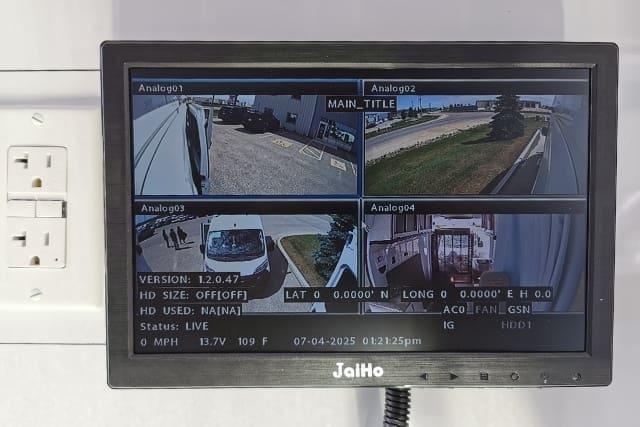
One of the most effective ways to improve safety in a Mobile Counselling Van is with cameras. Let’s start outside the van. External cameras give your staff a chance to see how a client is acting before they ever step inside. This can make a huge difference in how safe your team feels.
Imagine this: Your staff member pulls up for a session in a small town in northern Saskatchewan. The client approaches the van, but on the external camera, they notice the person pacing, yelling, or acting erratically. Because the staff is trained to read body language, they can decide to keep the doors locked and wait until the client calms down or call for help if needed. That one step can prevent a risky situation from happening inside the van.
Outside cameras help with:
- Spotting unusual behavior before opening the door
- Giving staff time to prepare for how to handle a client
- Reducing surprise or shock when someone approaches unexpectedly
Now let’s talk about the inside of the van. Internal cameras can record what happens during a session. While these cameras should be set up in a way that respects privacy, they can still act as a safety net. Staff may feel more secure knowing that if something goes wrong, there’s a record of the event. It also shows accountability, which can protect both staff and clients.
Inside cameras can:
- Provide evidence if a difficult situation occurs
- Offer peace of mind for staff working alone
- Support training by showing how real scenarios unfold
Cameras outside and inside the van don’t replace human judgment, but they give staff extra tools to stay safe, calm, and confident during mobile mental health work.
2. Alert buttons for quick help
When your staff is working in a Mobile Counselling Van, they need a fast way to call for help if things get tense. That’s where alert buttons come in. Think of them like the emergency buttons you see in elevators or schools. They’re easy to reach, simple to use, and designed for quick action.
Picture this: Your staff member is meeting with a client in a van parked in a quiet area outside Thunder Bay. The conversation gets heated, and the client starts acting unpredictably. Instead of fumbling for a phone, the staff member taps an alert button tucked under the desk. That silent signal goes straight to a supervisor, security team, or even local police, depending on how it’s set up. Within seconds, help is on the way.
Why are alert buttons important?
- Quick access: A single press sends out a signal without drawing attention.
- Peace of mind: Staff can focus on helping clients, knowing backup is ready if needed.
- Flexible setup: Buttons can be placed near desks, seating areas, or even by the driver’s seat.
Organizations sometimes choose wearable alert devices, like a pendant or wristband. This gives staff freedom to move around the van and still have that safety backup close by.
Adding alert buttons shows your team that their safety is just as important as the work they’re doing. It builds confidence, reduces stress, and helps create an environment where they can focus on supporting clients instead of worrying about what might go wrong.
3. Separating the cabin with a locked door
Another smart way to boost safety in a Mobile Counselling Van is by separating the driver’s cabin from the counselling space with a locked door. This creates a secure zone where staff can retreat if they sense things are getting out of hand.
Imagine your staff member is meeting a client in the van in downtown Winnipeg. The session is going well, but then the client suddenly becomes upset and starts raising their voice. Because the staff has been trained to recognize early warning signs, like clenched fists, pacing, or sudden mood shifts, they know it’s time to step away. With a locked door between the counselling area and the cabin, they can quickly move into the driver’s seat, shut the door, and keep themselves safe until the situation calms or help arrives.
Benefits of a locked cabin door include:
- Safe retreat: Staff can remove themselves from a tense situation quickly.
- Controlled access: Clients stay in the counselling space while staff move to safety.
- Extra time: Gives staff a moment to call for support without feeling trapped.
Of course, this feature only works when paired with proper training. Your team needs to know what warning signs to look for and when it’s the right moment to use the locked door. With practice, this becomes a calm and confident response rather than a rushed reaction.
Separating the cabin with a locked door may seem simple, but it gives staff an important layer of security while still allowing them to serve clients with compassion.
4. Non-violent crisis intervention training
Even with the best safety tools in place, nothing replaces good training. For staff working in a Mobile Counselling Van, learning non-violent crisis intervention can make all the difference. This training teaches your team how to recognize when a situation might turn unsafe and how to respond without using force.
Think of a counsellor in a van parked outside a community center in Halifax. A client begins shouting and pacing, clearly overwhelmed. Without training, the staff might freeze or respond in a way that makes the situation worse. But with crisis intervention skills, they can stay calm, use de-escalation techniques, and guide the client toward a safer outcome.
What non-violent crisis intervention training offers:
- Early recognition: Spot the signs of stress or aggression before they escalate.
- De-escalation skills: Use calm words, tone, and body language to reduce tension.
- Confidence under stress: Staff know how to act instead of panicking.
- Safer outcomes: Both staff and clients are less likely to get hurt.
Some programs also include practice scenarios, so your team learns what to do in real-life situations. This hands-on approach helps staff feel prepared when emotions run high.
Investing in this training sends a clear message: your staff’s safety matters as much as the care they give. It also creates a more supportive environment for clients, who feel respected and understood instead of confronted.
With the right training, your team can focus on what they do best, helping people through tough moments while staying safe inside the van.
5. GPS tracking and location sharing
A simple but powerful safety tool for a Mobile Counselling Van is GPS tracking. This allows supervisors or support staff to know exactly where the van is at any time. For your team, it means an added layer of security. They know someone can see where they are if a session feels uncomfortable or starts to get tense.
Picture a counsellor meeting a client in a small town in northern Ontario. The area is quiet and isolated. With GPS tracking, the staff member can focus on the session, knowing their location is visible to a supervisor back at the office. If the staff member notices warning signs of stress or agitation from the client, the supervisor can quickly dispatch help or even check in with a call.
What are the benefits of GPS tracking and location sharing?
- Real-time awareness: Supervisors know the exact location of the van.
- Faster support: Staff can get help quickly if something unexpected happens.
- Peace of mind: Staff feel safer and more confident while working alone.
- Planning routes: GPS helps staff choose safer parking spots or adjust routes if needed.
Some systems even allow staff to send a quick “check-in” alert with just one button, as we discussed in the second tip. This can reassure both staff and supervisors that everything is going smoothly, without interrupting the session.
6. Clear protocols and check-ins
Another key way to improve safety in a Mobile Counselling Van is having clear protocols and regular check-ins. These are simple routines that help staff and supervisors stay connected and aware of what’s happening during each session.
Imagine a counsellor parked outside a community center in Calgary. Before starting, they send a quick text or tap a check-in app to confirm they’ve arrived safely. During longer sessions, staff can send a short update, like “session going well,” without interrupting the client. After the session ends, they check in again to let the office know everything is okay. If a check-in is missed, supervisors know to follow up immediately.
Why are protocols so important?
- Consistency: Staff always know what steps to take before, during, and after sessions.
- Quick response: Missed check-ins signal that help may be needed fast.
- Confidence: Staff feel safer knowing someone is aware of their location and situation.
- Reduced stress: Knowing there’s a system in place allows staff to focus on clients instead of worrying about safety.
Clear protocols can also include written steps for handling difficult situations, like how to use an alert button, retreat to the locked cabin, or call for backup. When staff practice these routines regularly, it becomes second nature.
7. Safe parking practices
Where your Mobile Counselling Van is parked can make a big difference in staff safety. Choosing the right spot helps prevent tense situations and gives your team peace of mind while meeting clients.
Think about a counsellor in rural Alberta. Parking on a dark side street late at night could feel risky. Instead, they choose a well-lit lot near a library or community center. The area has foot traffic and is easy to see from the road. This simple choice can reduce stress for staff and make clients feel more comfortable, too.
Tips for safe parking:
- Choose visible areas: Well-lit spots with regular foot or vehicle traffic are safer.
- Avoid isolated locations: Parking behind buildings or in empty lots increases risk.
- Plan ahead: If possible, scout areas during the day to know where staff can park safely at different times.
- Stay near resources: Parks, libraries, or community centers often have staff nearby if help is needed.
Safe parking isn’t just about avoiding danger. It also helps staff feel confident and relaxed, so they can focus on delivering care instead of worrying about their surroundings. Over time, these habits become routine, making mobile mental health work smoother and safer.
Small choices, like where to park, combine with tools like cameras, alert buttons, and proper training to create a strong safety plan. When your team feels secure, they can focus fully on helping clients and providing the care that matters most.
Got any questions about the Mobile Counselling Van?
You came here because you care about your staff and their safety while providing mobile mental health services. It’s a big responsibility, and sometimes it can feel stressful knowing a session could turn tense. This article has shown ways to keep your team safe while still providing compassionate care.
Here’s what you learned:
- Spot warning signs early to prevent escalation
- Use cameras and alert buttons to monitor situations
- Lock the cabin when needed for a safe retreat
- Train staff in non-violent crisis intervention
- Choose safe parking spots to reduce risk
At MoveMobility, we design and build mobile counselling and medical vans that are safe, reliable, and tailored to your unique needs. Our focus is on making your work easier, helping you reach more people safely, and supporting staff every step of the way. We know every community is different, and we listen first so the solutions fit your program. If you have questions or want to talk through your options, click the button below to connect with a mobility expert.
If you’re not ready to chat yet, we have a few other resources you can check out to learn more.
Start with our article on how to apply for funding for mobile medical vehicles. This is especially helpful if you have trouble securing funding for a Mobile Counselling Van.
After that, you might also be curious about the warranty on these vans. Check out our article on that to learn more.

 English
  French