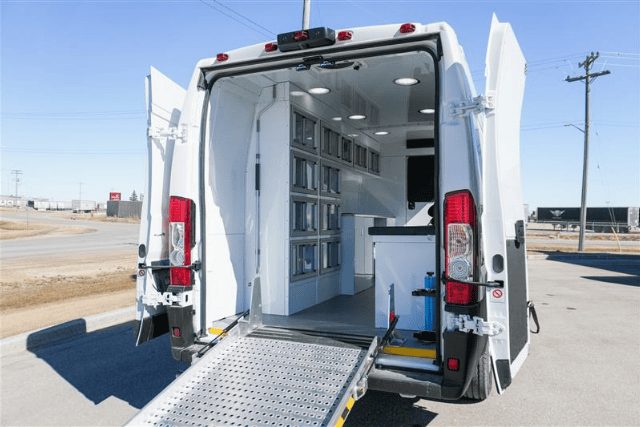
Yes, the Mobile Clinic Van can be made wheelchair accessible. And if you serve patients with mobility challenges, that one sentence can take a big weight off your shoulders.
You might be feeling stuck right now. You want to bring care closer to people, but you also know this: if someone can’t get inside your mobile clinic, your program still leaves them behind. That’s a hard gap to sit with. It can mean missed appointments, delayed treatment, and frustrated families.
It can also put your team in awkward situations where staff try to “make it work” in a parking lot. That’s stressful, and it’s not the dignified care experience you’re aiming for. You’re here because you’re likely looking for a wheelchair accessible mobile clinic that people can enter safely, move around in, and use with privacy. If you want to learn how that works in real life, you’ll want to keep reading.
At MoveMobility, we’ve been building accessible vehicles for over 20 years. In the past 3 years alone, we’ve manufactured over 480 wheelchair vans and 180 mobile medical units for organizations across Canada, including partners like Quest Community Health Centre. We hold Ford Pro Upfitter and Stellantis QPro certifications, and our vehicles carry the National Safety Mark. We’ll also be straight with you: we know we’re not the only option out there, so this guide is built to help you make a confident, informed decision.
In this article, you’ll learn more about what customizations are possible to make your mobile clinic wheelchair accessible.
How do you make a mobile clinic wheelchair accessible?
Making a mobile clinic wheelchair accessible starts with one clear goal. A patient using a wheelchair or other mobility device can enter, receive care, and leave safely without barriers.
If that sounds simple, it’s because it should be. In practice, it takes planning.
A wheelchair accessible mobile clinic is designed around patient mobility. That means thinking through entry points, interior space, emergency exits, and patient flow before the build begins.
Let’s walk through what that actually involves.
Choosing the right entry system for your mobile clinic
The most important part of any mobile clinic build is how a patient gets inside.
There are two main options:
Side ramp

In most cases, we recommend a side ramp for a wheelchair accessible mobile clinic.
Here’s why:
- Shared entry point: Patients and staff use the same doorway.
- Simple flow: Entry and exit happen through one clear path.
- Two exits remain available: Both side and rear doors can still function as egress points.
From a safety standpoint, this matters. You maintain greater flexibility in an emergency because the rear doors remain accessible.
From a patient standpoint, it feels natural. There’s no separate loading area. No waiting at the back of the vehicle. Just a straightforward entrance like anyone else.
Imagine a senior in rural Saskatchewan arriving for blood pressure monitoring. They roll up the side ramp, enter calmly, and settle in. No repositioning. No crowding around the rear doors. It feels respectful.
That experience shapes how people view your program.
Rear wheelchair lift

On the other hand, a mobile clinic can also include a wheelchair lift installed at the rear. In certain environments, this may make sense.
However, there’s an important tradeoff:
- Rear doors become blocked: Once the lift is installed, that rear access point no longer functions as an emergency exit.
- One primary exit remains: The side door becomes your only egress route.
This doesn’t automatically create a safety issue. It simply changes your planning. Interior layout and emergency procedures must account for having one main exit.
Rear lifts are sometimes used where curb space is tight or when site access limits side ramp deployment. In some dense urban areas, this can influence design decisions.
Still, for many programs across Canada, the side ramp offers more flexibility and preserves more exit options.
Interior layout in a wheelchair accessible mobile clinic
Entry is the first step. Movement inside the mobile clinic is next.
A wheelchair accessible mobile clinic needs clear floor space so patients can maneuver comfortably.
That includes a wheelchair pathway inside the vehicle and enough room to position the wheelchair in the exam area.
If a patient cannot position themselves properly, care becomes harder for everyone involved.
Picture a young adult in Ontario who uses a power chair coming in for a respiratory check. If the pathway is too tight, they may need to reverse multiple times. That creates stress and delays. Now, picture a layout designed for proper turning space. They enter, pivot once, and park comfortably. That difference feels small on paper. In real life, it changes the whole tone of the appointment.
Accessibility inside the mobile clinic is about removing friction.
Securing the wheelchair safely during care
In some programs, patients remain seated in their wheelchairs during portions of care. In others, they transfer to an exam surface.
Your wheelchair accessible mobile clinic should account for both possibilities.
Key considerations include:
- Wheelchair securement systems when needed
- Stable flooring with slip resistance
- Clear anchor points that do not obstruct movement
Everything must stay structurally secure during travel and during care delivery. Modifications must align with federal vehicle safety standards in Canada.
Weight distribution also matters. Adding ramps or lifts changes how the vehicle handles. A properly engineered mobile clinic build factors that in from the beginning.
Safety and egress planning in your mobile clinic
Safety cannot be an afterthought in a mobile clinic.
If you install a rear wheelchair lift, remember that rear exit access is lost. That means your side door becomes the primary escape route.
If you install a side ramp, you preserve both:
- Side door access
- Rear door access
This flexibility supports safer emergency planning.
In colder provinces like Manitoba or Northern Quebec, you must also consider snow and ice. Ramps need traction surfaces. Lift systems must function in freezing temperatures. Accessibility has to work in January, not just in July.
Every region across Canada brings different site conditions. A wheelchair accessible mobile clinic must handle urban curbside stops and remote gravel roads alike.
What’s the benefit of a wheelchair accessible mobile clinic?
Let’s step back for a moment.
When your mobile clinic is wheelchair accessible, you remove a silent barrier that many patients face daily.
Statistics Canada reports that about 27 percent of Canadians aged 15 and older live with at least one disability. Many experience mobility challenges. If your clinic cannot accommodate them, access gaps remain.
When accessibility is built in, you see real impact:
- An elder in a First Nations community can attend chronic disease screening without arranging complex transportation.
- A veteran in Atlantic Canada can receive follow-up care close to home.
- A parent using a wheelchair in Alberta can bring their child for immunization and receive care themselves in the same visit.
Appointments happen sooner. Missed visits decrease. Care feels fair.
Your team also benefits. When entry and movement are properly designed, staff are not improvising solutions on the fly. That lowers stress and supports smoother operations.
Accessibility becomes part of your program’s identity. It signals inclusion.
Plan accessibility from the start
Retrofitting a mobile clinic after construction to make it wheelchair accessible is challenging, and it often costs more and limits design flexibility.
Planning for a wheelchair accessible mobile clinic from the beginning allows you to:
- Preserve multiple exit points
- Design clear interior pathways
- Balance vehicle weight properly
- Align patient flow with care delivery
Accessibility works best when it’s integrated from the first sketch.
When you close the mobility gap, you move closer to your desired state. A clinic that truly reaches everyone you aim to serve.
Next, we’ll look at how regional realities across Canada can shape your mobile clinic design even further.
What does a wheelchair accessible mobile clinic look like in different Canadian settings?
A mobile clinic doesn’t operate in a vacuum. It operates in real communities, with real weather, real roads, and real people who depend on it.
A wheelchair accessible mobile clinic in downtown Toronto looks different from one serving a remote First Nations community in Northern Ontario. The goal stays the same. Safe entry. Clear movement. Dignified care. But the design details shift depending on geography.
Let’s walk through what that means.
1. Urban Canada: Tight streets and busy curbside stops
In cities like Toronto, Vancouver, or Montréal, space is limited. Curbside parking is tight. Traffic moves quickly. Sidewalks may slope toward the street.
In this setting, a mobile clinic needs:
- A ramp that deploys efficiently without blocking traffic
- Clear, visible entry points for pedestrian safety
- Interior layouts that support steady patient flow
A side ramp often works well in urban areas because it allows everyone to enter through the same door while preserving rear exit access. Staff can manage one main entrance without juggling multiple access points.
Think about a patient using a manual wheelchair arriving at a busy intersection in downtown Vancouver. Cars are passing. People are walking by. A smooth, quick ramp deployment reduces stress. They enter confidently, rather than feeling rushed or exposed.
Urban accessibility is about safety and dignity in public spaces.
2. Rural Canada: Long distances and gravel roads
Now picture rural Saskatchewan or parts of Nova Scotia. Roads may be gravel. Parking lots may be uneven. Distances between communities are large.
A wheelchair accessible mobile clinic here must handle:
- Uneven terrain during ramp deployment
- Stable flooring that stays secure during travel
- Reliable entry systems that work after long road trips
A side ramp still works well in many rural settings, but the surface it lands on matters. Gravel and packed dirt require a stable footing. Anti-slip ramp surfaces become essential.
Consider an older adult in rural Manitoba waiting in a community hall parking lot. They have limited transportation options. When the mobile clinic arrives, it must function smoothly the first time. A ramp that wobbles or struggles on uneven ground adds anxiety to an already vulnerable moment.
Rural accessibility is about reliability and preparation.
3. Northern Canada: Snow, ice, and extreme cold
Winter changes everything.
In provinces like Alberta, Manitoba, and Northern Quebec, snow and ice are routine. In some northern regions, freezing temperatures last for months.
A mobile clinic serving these areas needs:
- Ramps with traction surfaces
- Lift mechanisms rated for cold weather if used
- Clear interior pathways that allow bulky winter clothing
If you install a rear lift in a wheelchair accessible mobile clinic, you must account for snow accumulation at the back of the vehicle. Rear lifts also eliminate that exit point, so side door planning becomes even more important in icy conditions.
Now imagine a patient in Northern Ontario arriving for dialysis follow-up in January. Snowbanks line the parking lot. Ice patches sit underfoot. The ramp must feel solid. Staff must feel confident assisting. That sense of stability builds trust.
Northern accessibility is about durability in harsh climates.
Indigenous communities: Respect, space, and connection
Across Canada, many mobile clinic programs serve First Nations, Inuit, and Métis communities. These settings often involve remote travel, limited infrastructure, and strong community relationships.
Accessibility here is deeply tied to dignity.
A wheelchair accessible mobile clinic in a remote community may need:
- Flexible parking orientation based on available space
- Clear interior space for caregivers or family members
- Smooth entry that supports elders with mobility challenges
In some communities, elders are central figures. When an elder arrives for screening or chronic disease management, the experience must feel respectful. A narrow path or rushed entry can send the wrong message.
Picture an elder in a northern community arriving for blood pressure monitoring. They approach slowly, supported by family. The side ramp lowers steadily. They enter calmly. Inside, there is enough space to position comfortably. That moment carries meaning beyond the appointment itself.
Accessibility in these settings supports cultural respect as much as physical access.
Why do design choices change based on geography?
You might wonder why we emphasize regional differences.
Because a mobile clinic that works beautifully in Calgary may struggle in rural Newfoundland if climate and terrain are ignored.
Here’s how geography shapes decisions:
| Setting | Accessibility priority |
| Urban | Compact ramp deployment and visible entry |
| Rural | Stable ramp footing on uneven surfaces |
| Northern | Cold-rated systems and traction safety |
| Remote Indigenous | Flexible setup and space for family presence |
The foundation stays the same. Safe entry. Clear movement. Emergency planning that accounts for exit points. But the details must reflect where you serve.
A wheelchair accessible mobile clinic is not about checking a box. It is about asking, “What does accessibility look like here?”
Check out our article on the Trail Edition upgrade and see how it can give your mobile clinic the extra boost it needs to navigate all weather and terrain.

Accessibility and dignity travel together
At the heart of every setting is the same truth.
When your mobile clinic works smoothly in that community’s environment, patients feel seen. They feel included. They feel like the service was designed with them in mind.
A properly designed wheelchair accessible mobile clinic closes that gap. It reaches downtown cores and remote roads alike, performs in snow and sun, and adapts to gravel lots and city streets.
When accessibility reflects the realities of the people you serve, your program moves from functional to meaningful.
Ready to move forward with a wheelchair accessible mobile clinic?
You came here because you needed a clear answer. Can a mobile clinic be made wheelchair accessible, and can it truly serve patients with mobility challenges across Canada? You likely started with a concern that someone might arrive at your clinic and face a barrier at the door.
Now you know that a wheelchair accessible mobile clinic is possible, practical, and powerful when it’s designed with intention.
Here’s what you’ve learned:
- Entry matters: Side ramps often preserve more exit points, while rear lifts change emergency planning.
- Layout matters: Clear pathways and turning space shape the patient experience.
- Geography matters: Urban streets, rural gravel lots, and northern winters all influence design.
- Dignity matters: Accessibility directly impacts how patients feel when they receive care.
At MoveMobility, we’ve spent over two decades working alongside healthcare teams, community organizations, and Indigenous partners across Canada to remove mobility barriers. Our vehicles are engineered in Canada, built to meet national safety standards, and shaped around real-world conditions from Vancouver’s Downtown Eastside to remote Prairie communities.
We collaborate closely during planning, so your mobile clinic reflects your region, your patients, and your mission. At the end of the day, our work is about helping you bring care closer to people who deserve access without compromise. If you’re ready to explore what a wheelchair accessible mobile clinic could look like for your organization, click the button below to talk to a mobility expert.
If you’re not ready to speak with a mobility expert yet, that’s okay. We’ve gathered a few helpful resources below to guide your next step.
Recommended next reads
- 7 costly mistakes to avoid when customizing a mobile clinic: Learn what to watch out for during planning so your accessibility investment works the first time.
- How much does a mobile medical van cost in 2026? Understand pricing factors so you can budget confidently for your wheelchair accessible mobile clinic.
- What equipment can you install in a Mobile Clinic Van? Learn what equipment you can customize your mobile clinic with to plan accordingly.

 English
  French