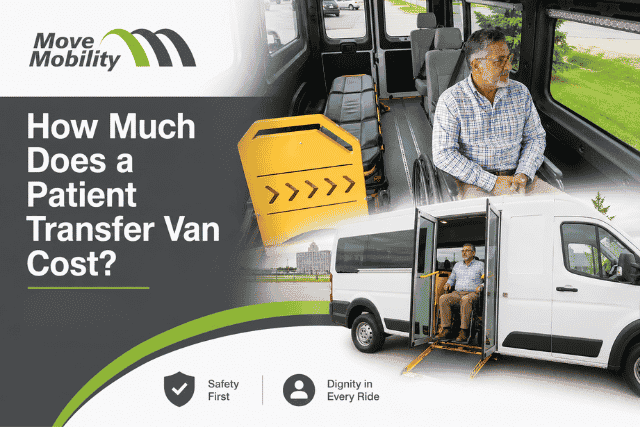
What does patient transfer van cost really look like when your team is trying to plan safe, reliable transportation for patients across Canada?
If you’re managing a healthcare program, seniors service, non-profit, or community transport team, that question can feel frustratingly vague. One quote from one organization says one thing, another says something wildly different, and suddenly your budget starts sweating more than you are. Meanwhile, delayed decisions can mean missed appointments, longer hospital stays, and people waiting longer for the care they need. In places like Northern Ontario, rural Manitoba, or coastal British Columbia, that gap gets even bigger when transportation options are limited.
Your goal is simple: Dependable patient transport services that protect dignity, improve access, and actually fit your budget. That’s where clarity is so important.
At MoveMobility, we’ve spent over 20 years helping organizations across Canada remove barriers to healthcare and transportation. In the past three years alone, we’ve built more than 480 wheelchair vans and 180 mobile medical units. We’re Ford Pro Upfitter certified, Stellantis QPro certified, carry the National Safety Mark, and were honoured with the 2026 DARE Innovation Award. We’ve also partnered with organizations like Quest Community Health Centre and Transdev. That said, we know we’re not the only manufacturer out there, and honest answers matter more than sales pitches.
In this article, you’ll learn:
- Typical patient transfer van cost ranges in Canada
- What changes the final price
- How to budget for the right fit
*All prices in this article are estimates and subject to change without notice.
What patient transfer van cost options do you have in Canada?
When you’re wondering what a patient transfer van costs, the first thing to know is this: You have options.
That’s important because every organization moves people differently. A seniors transportation program in Toronto has very different needs than a First Nations health team in Northern Manitoba. A non-emergency patient transport service in Calgary won’t need the same setup as a hospital outreach team in rural Nova Scotia.
Some teams need wheelchair access and flexible seating. Others need stretcher transport, medical storage, or room for attendants to support patients during travel. The right vehicle depends on the people you serve and how your patient transport services work day to day.
That’s why there isn’t one standard answer for patient transfer unit cost. The van has to fit your program, not the other way around.
At MoveMobility, we offer a few patient transport solutions, but four of the most popular options for Canadian organizations are:
- P4 3-in-1
- P4
- Mobile Response Van
- Dialysis Patient Transport Van
Each one solves a transportation gap in a different way.
Some help reduce the need for multiple vehicles, some make city driving easier, and some create space for medical support during transport. All of them are built to improve access, dignity, and reliability for the people counting on you.
Let’s start with one of the most flexible options available: The P4 3-in-1.
P4 3-in-1 patient transfer van cost
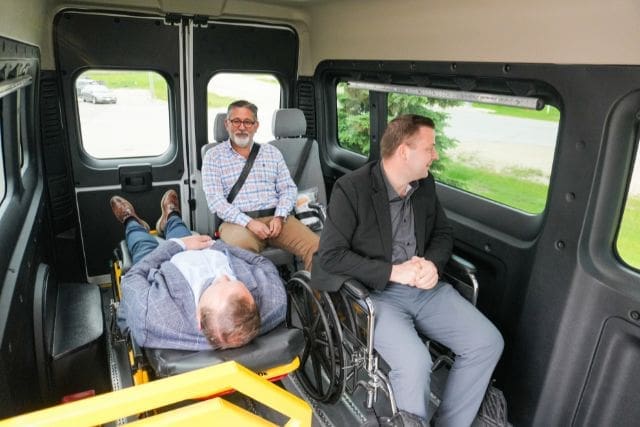
The P4 3-in-1 Van ranges between $162,000 to $220,000.
It’s designed for organizations that need flexibility without adding more vehicles to the fleet.
It supports three types of transportation in one unit:
- Ambulatory passengers
- Wheelchair passengers
That’s where the name comes from. One van. Three jobs. Fewer scheduling headaches.
For many healthcare teams, that flexibility solves a major gap.
Let’s say you manage a community healthcare service in Northern Ontario. In the morning, you need to bring a wheelchair user to a specialist appointment in Thunder Bay. Later that afternoon, another patient needs stretcher transport after discharge.
Without the right setup, you’re calling around for a second vehicle, delaying care, and asking your staff to perform miracles before lunch.
The P4 3-in-1 helps remove that problem.
With stretcher mounts added, the van quickly shifts between patient types without needing separate vehicles for each job. That means faster response times and less stress for both your team and your patients.
And honestly, your scheduler may finally stop giving you that look.
Why do organizations choose the P4 3-in-1?
The biggest advantage is simple: efficiency.
Instead of purchasing one wheelchair van and one stretcher transport unit, you can often meet both needs with one properly configured vehicle.
That can help reduce:
- Purchase costs
- Insurance costs
- Staff training complexity
- Vehicle downtime from scheduling conflicts
It also gives your patient transport service more room to adapt as demand changes.
Some weeks, your focus may be hospital discharge transport. Other weeks, it may be mobility support for outpatient care. This van helps you handle both without rebuilding your whole operation.
Best fit for:
The P4 3-in-1 is often a strong fit for:
- Community healthcare providers
- First Nations health programs
- Non-emergency patient transport services
- Medical outreach teams
- Hospitals managing discharge transport
- Seniors and disability support organizations
If your transportation needs change day to day, this is often where the best value lives.
From there, some organizations need a simpler accessible transport setup with more passenger capacity. That brings us to the P4.
P4 cost
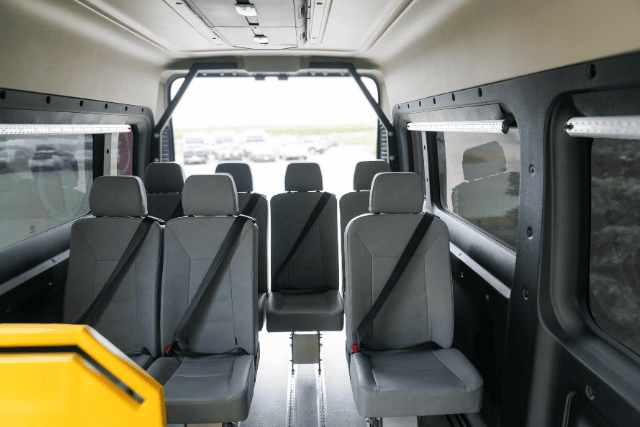
The P4 ranges between $155,000 to $259,000 and is one of the most popular accessible transportation options for organizations across Canada.
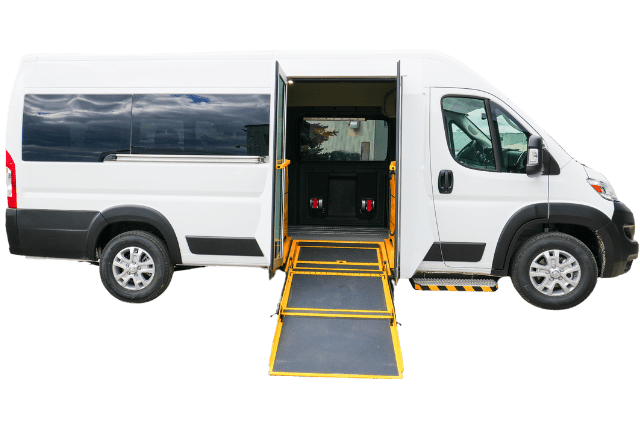
It’s built on the RAM ProMaster 159″ Wheelbase High Roof chassis and is often chosen by teams moving away from larger cutaway buses.
Why?
Because bigger doesn’t always mean better.
A large bus may work well for some fleets, but for many patient transport services, it creates new problems:
- Harder city driving
- Higher fuel use
- Limited parking access
- More maintenance costs
- Difficult winter handling
The P4 offers a more flexible alternative.
It gives you strong passenger capacity while keeping a smaller footprint that works better in urban centres and tighter routes.
What can the P4 carry?
The P4 can be configured for:
- Up to 10 ambulatory passengers
- Up to 3 wheelchair positions
- A combination of both
It also comes with:
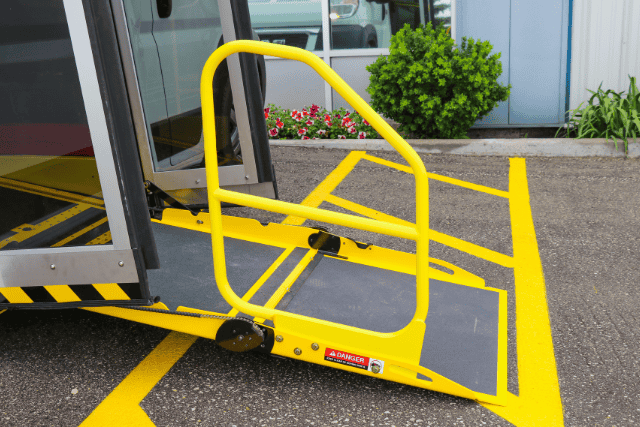
- Side-entry or rear-entry ramp access
- High ground clearance
- No lowered floor
- Front-wheel drive for better traction on snow and ice
- Backup camera for easier reversing
- 3.6L Pentastar V6 engine
- CMVSS & D409 certification
That high ground clearance matters more than people think.
If your team operates in places like Winnipeg, Sudbury, or rural Alberta, winter roads can make low-floor vehicles frustrating fast. Snowbanks don’t exactly respect your route schedule.
The P4 handles those conditions better while still keeping accessibility front and centre.
Why do organizations choose the P4?
The P4 is often chosen because it balances capacity and practicality.
You can transport multiple passengers safely without moving into a full bus platform. That helps organizations stay efficient while protecting passenger dignity and comfort.
It’s especially popular for:
- Adult day programs
- Community living organizations
- Hospital shuttle programs
- Seniors transportation services
- Accessible transit providers
- Healthcare organizations downsizing from larger buses
If your goal is dependable daily patient transport with easier driving and lower operating complexity, the P4 often checks the right boxes.
For organizations that need more medical functionality built into the vehicle itself, the next option makes more sense.
Mobile Response Van cost
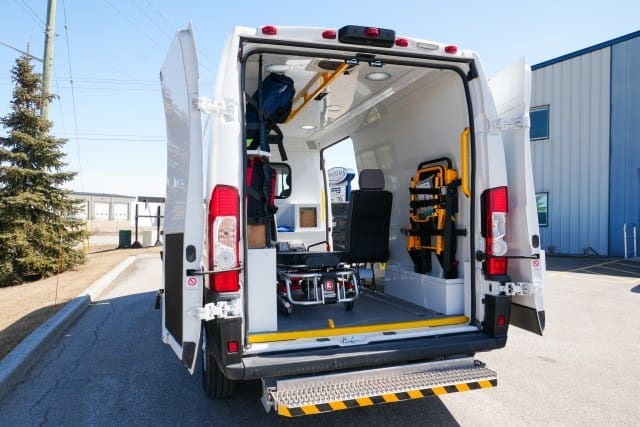
The Mobile Response Van ranges between $180,000 to $235,000. It’s also called the MR Model, and it’s built for non-emergency medical transportation where care and transport need to happen together.
It’s available on both:
- RAM ProMaster chassis
This model creates a simplified treatment environment that feels similar to an ambulance setup.
Important note: This is not a certified ambulance.
That distinction matters.
If your organization needs emergency response certification, this isn’t the right fit. But if your goal is non-urgent transport with medical support space, it can be exactly what you need.
What makes the MR Model different?
This vehicle is designed for situations where transportation and treatment overlap.
That could include:
- Mobile nursing support
- Patient discharge transportation
- Remote care access
- First responder support
- Non-emergency medical transport
The interior can include:
- Durable aluminum cabinetry
- Quick-access slider storage
- Wipe-clean medical finishes
- Bright clinical interior space
- Stretcher and attendant seating
- AutoFloor for flexible layouts
- Oxygen bottle holders
- Spine board storage
- AED and defibrillator storage
- First aid and responder kit storage
- Medical glove storage on rear doors
This makes the vehicle useful long after the drive itself.
A team serving remote communities in Northern Saskatchewan may need to transport a patient while also carrying medical supplies, oxygen, and response equipment. A standard accessible van may not support that workflow well.
The MR Model helps bridge that gap.
Why do organizations choose the Mobile Response Van?
The biggest reason is operational efficiency.
Instead of using separate transport and support vehicles, your team can often handle both functions in one mobile unit.
That helps improve:
- Response time
- Staff workflow
- Equipment access
- Patient comfort
- Community reach
It also creates a more professional care environment for patients who may already be anxious, unwell, or far from traditional healthcare access.
That matters more than most spec sheets ever will.
Dialysis Patient Transport Van cost
The Dialysis Patient Transport Van ranges between $200,000 to $250,000.
It’s designed for organizations that need to transport dialysis patients safely, comfortably, and consistently.
And consistency matters here.
Many dialysis patients travel to treatment three times a week. For patients living in rural or remote communities, that can mean a long drive to the clinic, hours in treatment, and another tiring ride home.
That’s a lot to ask of someone already dealing with serious health challenges.
The Dialysis Patient Transport Van helps make that trip easier.
It’s built on the RAM ProMaster 2500 chassis and can be configured with reclining passenger seats, wheelchair access, flexible floor layouts, and comfort features that support frequent medical travel.
What makes the Dialysis Patient Transport Van different?
This van is designed around the patient experience.
A standard patient transport van may get people from point A to point B. This vehicle is built to make repeated dialysis trips safer, warmer, easier, and more dignified.
It can include:
- Large reclining seats with armrests
- AutoFloor for flexible seating layouts
- Wood grain flooring
- Dual-floor level heating
- USB charging
- Enhanced sound system
- Starlink Wi-Fi
- Eye-level tinted windows
- Side-entry powered ramp
- Wheelchair securement system
- Trail Edition upgrade for rural roads
That flexibility can make a major difference.
One day, your team may need to transport several ambulatory patients. The next day, you may need room for a wheelchair user who needs extra support after treatment.
With the right layout, staff can adjust the vehicle around the people riding in it, not the other way around.
Why do organizations choose the Dialysis Patient Transport Van?
The biggest reason is patient comfort over repeated trips.
Dialysis transportation is not just about getting someone to an appointment. It’s about helping them get there without adding more stress, discomfort, or risk.
That can help improve:
- Patient dignity
- Accessibility
- Staff workflow
- Ride comfort
- Schedule reliability
- Rural transportation access
It’s especially useful for communities where patients may travel long distances over rough roads, snow-covered routes, or areas with limited transportation options.
Because after four hours of treatment, the ride home should not feel like round two.
Best fit for:
The Dialysis Patient Transport Van is often a strong fit for:
- First Nations health programs
- Rural healthcare providers
- Community health organizations
- Non-emergency patient transport services
- Hospitals and dialysis programs
- Seniors transportation services
- Remote medical outreach teams
If your patients need frequent dialysis travel, this van is built to make those trips safer, easier, and more comfortable for everyone involved.
By now, you’re probably wondering why the same type of patient transport van can have very different pricing. Let’s look at what actually drives the final patient transfer van cost.
What drives patient transfer van cost in Canada?
At this point, you’ve probably noticed that patient transfer van cost can vary a lot, even when two vehicles look nearly the same from the outside.
That’s because the real cost comes from how the van is built to serve your patients, staff, and daily operations.
A basic wheelchair-accessible transport van will cost less than a fully equipped vehicle with stretcher transport, attendant seating, and medical storage. Same chassis, very different job.
Think of it like buying winter boots. They may all look like boots, but there’s a big difference between walking to the mailbox and working outside in January in Winnipeg.
The same idea applies to patient transfer unit cost.
Here are the biggest factors that affect pricing.
1. Conversion type and chassis affect the patient transfer van cost the most
The type of conversion is usually the biggest cost driver.
A simple patient transport service may only need:
- Wheelchair access
- Passenger seating
- Securement systems
A more advanced setup may need:
- Stretcher mounts
- Attendant seating
- Medical cabinetry
- Equipment storage
The more specialized the vehicle, the more labour and equipment are involved.
That’s why one organization may spend far less than another, even if both are buying a patient transport van.
2. Flexible floor track systems add versatility
Some vans include a flexible floor track system like AutoFloor.
This allows your team to:
- Move seats
- Add or remove wheelchair positions
- Adjust for stretcher transport
- Change layouts as needs shift
This increases patient transfer van cost, but it also helps one vehicle do more jobs.
For organizations with changing schedules, that flexibility can save money long term.
3. Wheelchair access equipment: Ramp or lift
The type of wheelchair access equipment also affects pricing.
The two most common options are:
- Ramp access
- Hydraulic lift access
Ramps are often simpler, faster, and require less maintenance.
Lifts are helpful for:
- Larger wheelchairs
- Higher weight capacities
- More complex transfers
Lift systems usually cost more because they involve more equipment and installation.
The best choice depends on the people you serve, not the cheapest option.
4. Interior finishing changes comfort and durability
Interior paneling, insulation, and finishes affect both patient comfort and long-term use.
This includes:
- Flooring
- Wall panels
- Insulation
- Ceiling finishes
- Medical-friendly surfaces
Good insulation matters during Canadian winters and summer heat. Medical-friendly finishes also make cleaning easier for patient transport services.
Comfort and cleanliness play a bigger role than many buyers expect.
5. Removable seating and wheelchair securements
Removable seating helps your van adapt.
Some days you may need more ambulatory seating. Other days you may need more wheelchair positions.
That flexibility adds cost upfront but improves daily operations.
Wheelchair securement restraints are also a major factor.
These systems protect passengers during transport and may include:
- Manual restraints
- Powered securement systems
- Additional accessibility supports
This is one area where cutting corners usually creates bigger problems later.
6. Safety equipment and entry assists
Safety features affect both pricing and peace of mind.
This can include:
- Backup cameras
- Emergency lighting
- Grab poles
- Fire extinguishers
- Slip-resistant flooring
- Entry and exit assists
Grab poles may seem small, but they make a huge difference for seniors and patients with limited mobility.
Sometimes the smallest features create the biggest comfort.
7. Heating, cooling, and custom medical equipment add to the patient transfer unit cost
In Canada, heating and air conditioning systems are essential.
Patients may be elderly, recovering from treatment, or medically fragile. Reliable climate control protects comfort and safety year-round.
Custom medical equipment can also raise the final cost, including:
- Oxygen bottle holders
- AED storage
- Spine board compartments
- First aid kit storage
- Medical cabinetry
- Stretcher systems
These features are common in advanced patient transport services and Mobile Response Vans.
The goal is simple: build a vehicle that supports your team without creating new problems.
Because at the end of the day, the right patient transfer van isn’t about spending less. It’s about spending wisely.
Ready to plan your patient transfer van cost with confidence?
You came to this article because pricing felt unclear, and you needed real answers about patient transfer van cost, not vague estimates or sales talk. You wanted to understand what your organization should budget for, what affects the final number, and how to avoid choosing the wrong vehicle for the people who rely on you.
Now, you have a clearer picture.
- Different patient transport services need different vehicle setups
- Options like the P4, P4 3-in-1, and Mobile Response Van solve different transportation gaps
- Features like ramps, lifts, AutoFloor, stretcher access, and medical storage all affect patient transfer unit cost
- The right investment is the one that improves access, dignity, and daily operations for your team and patients
Our team at MoveMobility builds vehicles that actually work in the real world, from urban hospital systems to remote First Nations communities. Our team listens first, asks better questions, and helps you find the right fit instead of pushing the most expensive option. We’ve worked with organizations like Transdev in non-emergency medical transportation because reliable access to care changes lives. At the end of the day, these vehicles help people get to treatment, return home safely, and stay connected to the care they deserve, and that’s work we’re proud to stand behind.
If you have questions about your patient transfer van cost, click the button below to talk to a mobility expert.


 English
  French