Updated: February 27, 2026
How do you know if a fourgon complet pour fauteuils roulants or a wheelchair accessible minivan is the right fit for you?
You might be asking yourself:
- Your budget is under $100,000. Can you still make a full size wheelchair van work?
- You need to transport two wheelchairs and three passengers. Will a minivan realistically handle that?
- You want your clients, residents, or community members to feel respected and comfortable. Which option supports that best?
These are smart questions. They are the right questions.
At MoveMobility, we talk with organizations across Canada every day who are trying to close a gap. The gap between where people are today and where they need to be. The gap between missing medical appointments and getting there on time. The gap between isolation and connection.
Choosing the right wheelchair van plays a bigger role in that than most people expect.
Selon le Statistique Canada, millions of Canadians live with a disability. Transportation remains one of the top barriers to work, healthcare, and community life. That is not a vehicle problem. It is a mobility gap.
In this article, you’ll compare a full size wheelchair van and a minivan across the five biggest differences that matter to organizations like yours.
Fourgon complet pour fauteuils roulants ou monospace : quelle est la différence ?
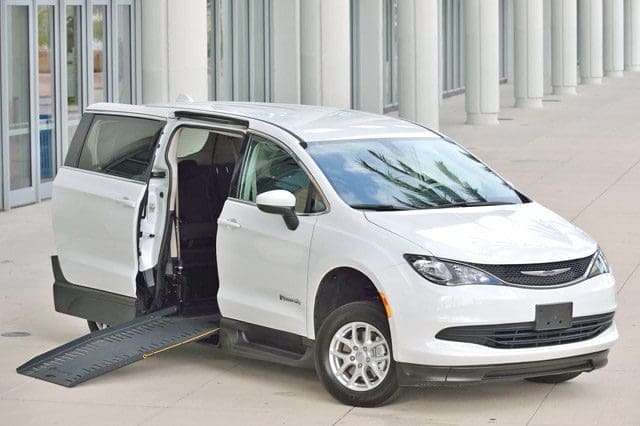

Il existe cinq différences majeures entre un fourgon de taille normale et un monospace, que l'on peut utiliser pour comparer les deux :
- Capacité
- Prix
- Parking
- Flexibilité
- Confort du conducteur et des passagers
Ces cinq différences vous aideront à choisir l'option qui vous convient le mieux, en commençant par la capacité.
1. Capacity
When you compare a full size wheelchair van and a wheelchair accessible minivan, capacity is usually the first thing to look at.
Capacity means two things:
- How many wheelchairs you can safely transport
- How many passengers can ride comfortably
This is where many organizations feel the gap.
You might think a minivan is enough. Then six months later, your program grows. Now you are scheduling two trips instead of one. Staff time increases. Fuel costs climb. Clients wait longer. That gap between demand and vehicle space starts to show.
Let’s break it down clearly.
How many wheelchairs can a wheelchair van carry?
Wheelchair capacity:
- Wheelchair accessible minivan: Typically transports 1 to 2 wheelchairs
- Full size wheelchair van: Typically transports 1 to 3 wheelchairs
If you run a small adult day program or provide one-on-one transportation, a wheelchair accessible minivan can work well. It is compact, easier to park, and often more familiar for drivers.
If you regularly transport multiple mobility devices at once, a full size wheelchair van gives you more flexibility. Fewer trips. Less reshuffling. Less stress on your schedule.
Accessible transportation is one of the biggest barriers for Canadians with disabilities. When capacity is too tight, access becomes inconsistent. That impacts healthcare, employment, and quality of life.
How many passengers can a full size wheelchair van or minivan carry?
Capacité en passagers:
- Wheelchair accessible minivan: Generally up to 4 passengers
- Full size wheelchair van: Generally up to 10 passengers
This is where programs often underestimate their needs.
Imagine you’re transporting two wheelchair users and support staff to a medical appointment. In a minivan, you may already be at your limit. In a full size wheelchair van, you still have room for additional riders.
More seats mean more opportunity. Community outings. Group appointments. Social inclusion. The ability to say “yes” instead of “we’ll need a second trip.”
At MoveMobility, we always encourage you to think one step ahead. Where will your organization be in two years? If your services expand, will your wheelchair van grow with you?
2. Price
Tandis que prix ne devrait pas être le facteur décisif dans le choix d'un fourgon ou d'une fourgonnette, nous comprenons qu'il s'agit d'un élément important du processus de prise de décision.
Voici donc une fourchette générale de prix pour les deux options.
| Monospaces | Fourgonnettes |
| $100 000 à $119 000 | $155 000 à $259 000 |
N'oubliez pas qu'il s'agit de fourchettes générales et qu'elles peuvent être modifiées à tout moment sans préavis.
3. Parking
Parking is one of those factors that feels minor until it isn’t.
When choosing between a full size wheelchair van and a wheelchair accessible minivan, you need to think about where you park every day. Urban hospital lots. Rural health centres. Community centres. Long-term care homes. Your environment matters.
Can a full size wheelchair van fit in a parkade?
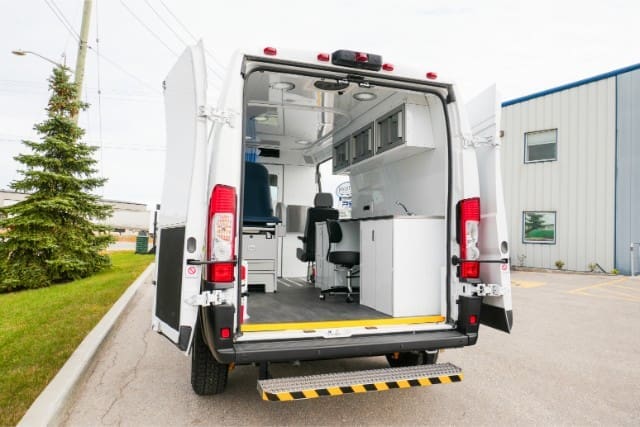
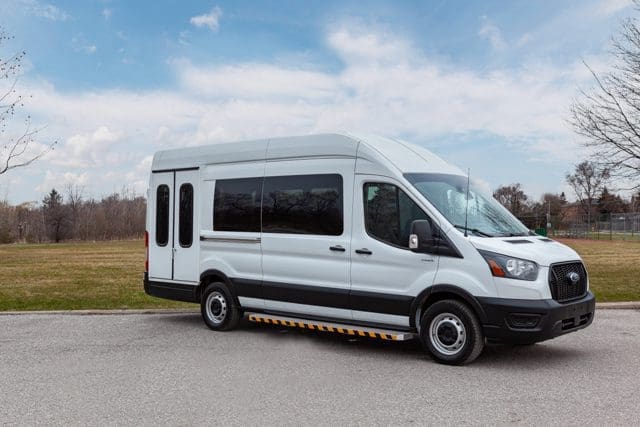
A full size wheelchair van is taller. That extra height gives you the interior space needed for comfortable wheelchair transport and easier maneuvering inside the vehicle. It also means many standard parkades may be too low.
Across Canada, typical underground parking clearance often ranges between 1.9 and 2.1 metres. High-roof full size vans often exceed those limits.
If your daily routes include underground hospital parking in larger cities, that is something to factor in.
That said, many organizations operate primarily with surface parking. Rural clinics, community facilities, First Nations health centres, and adult day programs often have open lots. In those settings, a full size wheelchair van parks comfortably and gives you the added benefit of interior space.
Is parking easier with a wheelchair accessible minivan?
In tight urban environments, yes.
A wheelchair accessible minivan is smaller and lower. It fits into standard stalls and most parkades. Drivers who are newer to accessible vehicles sometimes feel more confident navigating compact spaces with a minivan.
If your team frequently parks in:
- Downtown cores
- Underground medical facilities
- Residential parkades
A minivan may align better with that daily routine.
Here is the key. This isn’t about which option is better. It’s about which one fits your routes. You need to answer this simple question: Where will this vehicle spend most of its time?
4. Flexibility
The next factor to think about is flexibility.
This is where many organizations discover a gap after the vehicle is already in service. Your needs shift. Your client mix changes. A new program launches. Suddenly, the layout that worked last year feels tight.
When we talk about flexibility in a wheelchair van, we mean one simple thing. How easily can you adjust the interior to match the people you are serving that day?
How flexible is a wheelchair accessible minivan?
A wheelchair accessible minivan is designed with a fixed layout. It is compact and efficient, which works well for predictable routes and consistent passenger numbers.
If you typically transport:
- One wheelchair user
- One or two support staff
- The same client mix each day
A minivan may meet your needs comfortably.
The trade off is space. Because the interior is smaller, you usually cannot reconfigure seating positions or wheelchair placements in different ways. What you see is generally what you get.
For many programs, that simplicity is a benefit. For others, it becomes limiting as demand grows.
What flexibility does a full size wheelchair van offer?
A full-size wheelchair van often includes a flexible floor and seating track system, such as an AutoFloor configuration.
This type of system uses floor tracks that allow seats and wheelchair securement positions to move. That means you can create different layouts depending on the day’s schedule.
For example, you might configure:
- One wheelchair and multiple passengers for a group outing
- Three wheelchairs for medical transport
- Primarily ambulatory seating for community events
That flexibility gives you room to adapt.
If your organization runs multiple programs, transports different mobility devices, or anticipates growth, this adaptability can close the gap between today’s operations and tomorrow’s demand.
At the end of the day, flexibility is about saying yes more often. Yes to another rider. Yes to a new initiative. Yes to serving your community without having to rethink your vehicle every time your program evolves.


Nous venons de couvrir beaucoup d'informations. Voici donc un aperçu de tout ce que vous avez appris jusqu'à présent :
| Fauteuils roulants | Fourgonnette | Fourgonnette |
|---|---|---|
| 1 fauteuil roulant | ✔ | ✔ |
| 1-2 fauteuils roulants | ✔ | ✔ |
| 1-3 fauteuils roulants | ✘ | ✔ |
| Passagers | ||
| Jusqu'à 4 | ✔ | ✔ |
| Jusqu'à 10 | ✘ | ✔ |
| Caractéristiques de flexibilité | ||
| Système de plancher et de siège flexible AutoFloor | ✘ | ✔ |
5. Driver and passenger comfortability
Le dernier facteur à prendre en compte est le confort du conducteur et des passagers.
Confort du conducteur
The final factor to think about is comfort. Comfort affects safety. It affects confidence. It affects how people feel when they arrive.
Chez MoveMobility, nous entendons souvent nos chauffeurs parler de la façon dont confortable Nos fourgonnettes de grande taille le sont, et la sensation n'est pas très différente de celle que l'on a en étant assis dans une voiture normale.
Il est important de toujours prendre en compte le confort de votre conducteur, car c'est lui qui conduira la camionnette toute la journée.
Ask yourself things like, how confident do drivers feel in larger vehicles? How long are your typical routes? Who will be driving the van?
Confort des passagers
Passenger comfort is equally important.
In a full size wheelchair van, passengers benefit from good visibility. The windows are large enough to see outside clearly. That helps the ride feel open and connected.
In a wheelchair accessible minivan, the space is smaller, which may work well for fewer passengers and shorter trips.
Think about the people you are transporting.
Arriving at a medical appointment, adult day program, or community event feeling calm and respected makes a difference. Transportation plays a role in that experience.
Now that you understand how to compare capacity, parking, flexibility
Fourgon complet pour fauteuils roulants ou monospace : à qui s'adresse chaque option ?
Parfois, le facteur décisif pour les entreprises ou les particuliers qui choisissent un monospace ou un fourgon se résume à une seule question : combien de passagers allez-vous transporter ?
Une fois que vous avez déterminé vos besoins en termes de capacité, ce choix devient beaucoup plus simple. Voici un bref récapitulatif de toutes les informations que nous avons abordées dans cet article :
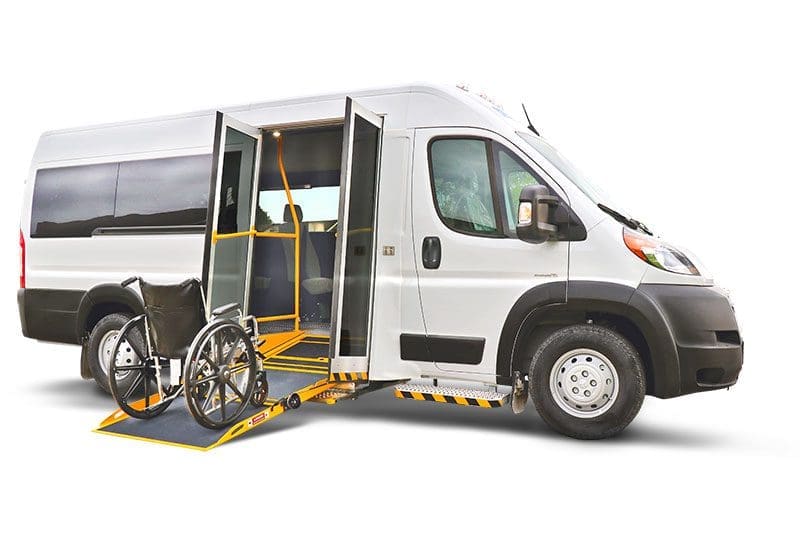
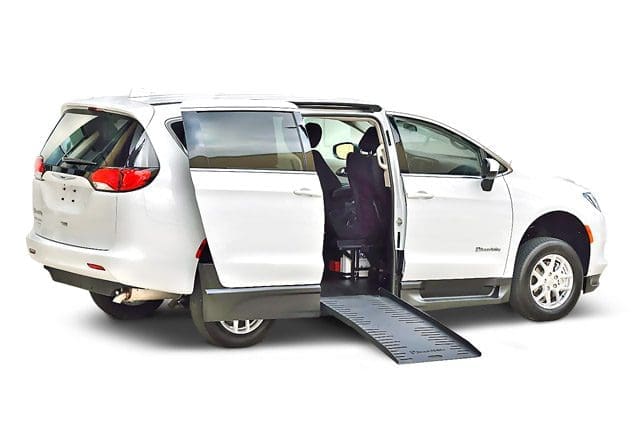
| Les fourgonnettes de grande taille conviennent parfaitement : | Les monospaces conviennent parfaitement : |
| Les organisations qui transportent plus d'un fauteuil roulant, telles que les garderies pour adultes et les maisons de soins. | Clients qui n'ont besoin de transporter que 1 ou 2 fauteuils roulants |
| Les organisations qui fournissent un service de transport, comme les taxis accessibles et Handi-Transit | Les clients qui préfèrent budgétiser une option moins coûteuse |
| Les communautés éloignées des Premières nations, en particulier celles qui conduiront la camionnette sur des routes hivernales difficiles. | Les utilisateurs personnels, tels que les familles, qui souhaitent un véhicule accessible parce qu'ils ont un membre de la famille ayant des problèmes de mobilité. |
Vos prochaines étapes pour choisir entre un fourgon ou une fourgonnette pleine grandeur pour fauteuils roulants
Vous avez consulté cet article pour savoir si un fourgon ou une fourgonnette est fait pour vous.
Vous connaissez maintenant les cinq différences entre les deux options, ce qui peut vous aider à prendre la bonne décision.
Si vous n'êtes pas encore sûr de la fourgonnette qui vous convient le mieux, parler à un expert MoveMobility maintenant.
Vous pouvez également consulter les articles suivants pour en savoir plus :
- Rampes ou élévateurs : Qu'est-ce qui convient le mieux à votre fourgonnette pleine grandeur pour fauteuils roulants ?
- Fourgonnettes à accès arrière ou à accès latéral pour fauteuils roulants (avantages et inconvénients)
- Service de fourgonnettes pour fauteuils roulants au Canada - Que peut-on attendre de MoveMobility ?

 English
  French