

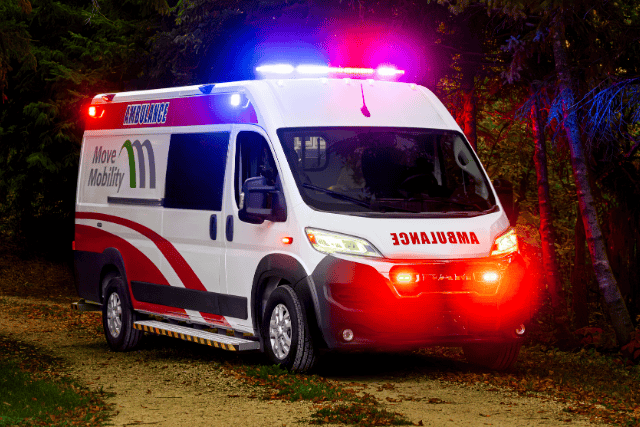
Did you know Canada sees more than 16 million emergency room visits each year? Emergency medical services support many of those calls, and you feel that pressure every day.
As an emergency medical services organization, you see:
- Call volumes rising
- Response times stretching
- Crews serving massive regions with outdated tools
It leaves you wondering how long your team can keep pushing through gaps that keep growing. When those gaps widen, people wait longer, stress climbs, and your team feels the weight of every minute that passes. You want an EMS system that reaches people fast, runs smoothly, and has EMS vehicles that are built for the demands in your area. That future feels a lot closer when you understand the meaning behind emergency medical services and how the right support brings your community back to a safer place.
MoveMobility has been helping Canadian health teams for more than 20 years. We build mobile medical units with safety and dignity in mind. Our team holds Ford QVM certification, Stellantis QPro certification, and the National Safety Mark. We’ve supported partners like Quest Community Health Centre and many others across the country. We know we’re not the only option, so our focus here is to guide, not persuade.
In this article, you’ll learn the basics of emergency medical services, how EMS works in Canada, the benefits for communities, and the EMS vehicles used today.
What are emergency medical services all about?
Emergency medical services are the system that answers when someone in your community calls for urgent help. When people think about emergency medical services, they usually picture an ambulance with lights and sirens. The bigger picture involves a little more than that. It’s the people, the EMS vehicles, the tools, and the plans that work together so care reaches someone in places like Moose Jaw, Thunder Bay, or Iqaluit when things go wrong.
At its core, the emergency medical services meaning is simple. It is organized medical help that comes to the patient instead of waiting for the patient to come to a clinic or hospital. That help might be for a broken leg at a hockey rink, chest pain at home, a mental health crisis in a shelter, or a fall in a seniors lodge. EMS emergency medical services are there to assess what is going on, start care, and connect that person with the wider health system.
Emergency medical services usually include:
- Dispatch: The team that answers 911 and sends help.
- Responders: Paramedics and medical staff who attend the call.
- Support staff: Leaders, trainers, and logistics teams who keep things moving.
- EMS vehicles: The vans and units that bring people and equipment to the scene.
- Systems: Protocols, radios, and records that tie everything together.
When people are seriously injured, they often search for things like “emergency medical services near me” and think only about speed. You have to think about much more. It’s also about safety, dignity, and how it feels for a scared parent in a small town when help finally pulls into the driveway. You think about how EMS fits with local clinics, regional hospitals, First Nations health services, and community outreach teams.
Understanding EMS emergency medical services in simple terms
So, when we talk about the emergency medical services meaning in Canada, we’re talking about a full network, not a single vehicle. It’s the bridge between a moment of crisis and the next step in care. Once you are clear on what EMS is, it becomes easier to talk about how emergency medical services work in real life and where the gaps are in your own region.
How do emergency medical services work?
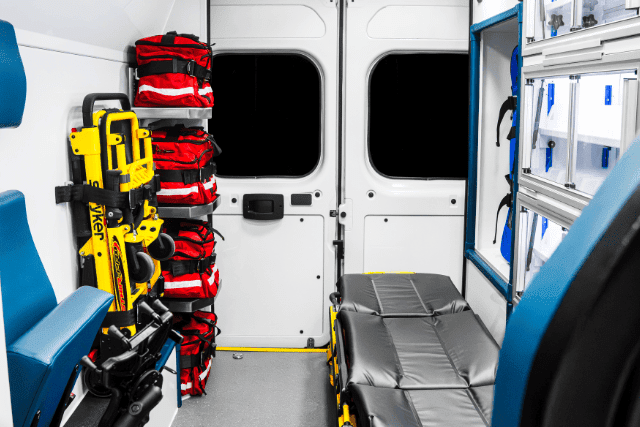
Now that you know what emergency medical services are, let’s walk through how they actually work in Canada. From the moment someone dials 911 to the time your crew hands a patient over at the hospital, there is a clear chain of steps.
Think of it as a relay. Each part has to work well so your EMS emergency medical services feel safe, fast, and dependable in your region.
Step 1: Someone calls 911 for medical help
Everything starts with a 911 call.
A person in trouble, or someone with them, calls for help. That might be:
- A stroke in Sudbury
- A snowmobile crash outside Thompson
- A mental health crisis in downtown Vancouver
First, a 911 operator answers and sends the call to the right service. For medical calls, that usually means an ambulance communications centre.
There, an ambulance communications officer or emergency medical dispatcher takes over.
They ask focused questions about:
- Location
- What happened
- Main symptoms
- Age and condition of the person
Many centres in Canada use the Medical Priority Dispatch System (MPDS), which sorts calls into levels based on how serious they are.The information your caller gives shapes everything that follows, from how fast EMS vehicles are sent to what kind of team shows up.
Step 2: Dispatch decides what kind of help to send
Next, the dispatcher uses the answers to pick the right response.
With MPDS and similar systems, calls are sorted into categories, such as:
- Life-threatening emergencies
- Serious but stable cases
- Minor injuries or illnesses
This helps dispatchers decide:
- How fast EMS vehicles should travel
- How many units to send
- What level of paramedic is needed
In British Columbia, for example, the provincial ambulance service dispatches crews based on priority, and about 70% of transports are non-emergency, meaning no lights and sirens. That’s where something like an NEMT van could fill in.
So when someone searches “emergency medical services near me” in their city, what they get is a response that has already been carefully triaged long before the ambulance turns onto their street.
Step 3: Paramedics and EMS vehicles arrive on scene
Once dispatched, paramedics and EMS vehicles head to the scene.
Canada has more than 30,000 licensed paramedics, and their role keeps growing as more care moves into the community. In Ontario alone, over 8,000 paramedics work in 61 EMS providers.
When your crew arrives, they:
- Check scene safety
- Introduce themselves and calm the person and family
- Do a quick first look to spot life threats
- Gather a short medical history
On-scene assessment usually includes:
- Airway and breathing: Can this person breathe well?
- Circulation: How is their pulse, skin colour, and blood pressure?
- Consciousness: Are they alert, confused, or unresponsive?
- Pain or injury check: Where does it hurt, and how bad is it?
From there, paramedics provide care that fits their training level and your local protocols. That might be oxygen, medications, bandaging, a 12-lead ECG, or CPR.
For the person on the floor of their kitchen in Saskatoon or in a remote cabin near Whitehorse, emergency medical services become very real at this moment. Your team is the first calm voice they hear.
Step 4: Decide where the patient should go
Once the first treatment starts, your team makes a key choice.
Do they:
- Treat on scene and leave the person at home with advice?
- Transport to the nearest emergency department?
- Transport to a more specialized centre (for example, a stroke or trauma centre)?
Paramedics use tools like the Canadian Triage and Acuity Scale (CTAS) to rate how sick someone is and pick the most appropriate destination.
In Quebec’s Outaouais region, about 40% of hospitalized people are brought in by ambulance, which shows how central EMS is to getting patients into the system.
Key factors your team weighs:
- How sick the person is
- Distance to nearby hospitals
- Weather and road conditions
- Local protocols and medical direction
This is where the gap really shows up if EMS vehicles are not matched to your community. Long distances, tight city streets, or frequent bariatric or high-acuity transports all change what “the right vehicle” means.
Step 5: Handover, documentation, and reset
At the hospital or other destination, your crew hands the patient over.
That handover usually includes:
- A clear verbal report to the nurse or doctor
- Written or electronic patient care records
- Details about what happened, what treatment was given, and how the patient responded
After that, the team:
- Cleans and restocks the EMS vehicle
- Finishes documentation
- Returns to service for the next call
Across Canada, this cycle repeats thousands of times a day. In big centres like Toronto, the ambulance communications centre alone handles over 350,000 emergency medical calls each year.
When you look at emergency medical services as a full chain instead of a single response, it becomes easier to see where your own system feels strong and where the gaps show up. Those gaps can be in staffing, training, or in the EMS vehicles and mobile units that support your crews.
Next, we’ll look at the benefits of a strong EMS system for Canadian communities and how that shows up in real life.
Five benefits of emergency medical services for Canadian communities
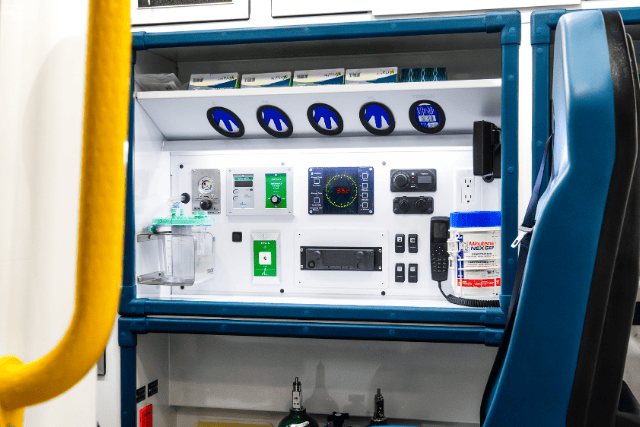
Emergency medical services play a huge role in how safe and supported people feel in your community. When someone searches “emergency medical services near me,” they’re hoping for fast, calm help that shows up when things feel scary. Strong EMS emergency medical services create that sense of safety. They also support hospitals, long-term care homes, schools, First Nations communities, and countless local programs.
Below are five benefits of emergency medical services that shape everyday life in Canada. Each one speaks directly to the gaps you see in your own region and the outcomes you want for the people you serve.
1. Emergency medical services give people fast help when every minute matters
Response time shapes outcomes. You see this every day throughout EMS teams in Canada.
A stroke in London. A heart attack in Prince George. A severe asthma attack in Nunavut. When EMS teams arrive quickly, patients get the help they need before their condition gets worse. Treatments such as oxygen, CPR, airway support, and medication are initiated immediately.
Canadians rely on this speed more than most people realize. Communities spread across huge distances depend on fast medical help to fill the gap between home and hospital. Many smaller towns might be more than an hour from the nearest emergency department. Without strong emergency medical services, that gap would feel frightening for families.
What does quick emergency medical service mean for your community?
- Fewer long delays: Care begins at the patient’s side.
- Better outcomes: Early treatment improves survival.
- More trust: People feel confident calling for help.
You know the pressure that puts on your team. When EMS vehicles are reliable, well-equipped, and designed for your local needs, crews can move faster and safer. That makes every call feel more manageable.
2. Emergency medical services connect patients to the right place for care
EMS is the link between the moment something goes wrong and the help someone needs next.
Think about a trauma case in rural Alberta. The closest hospital may not have a trauma surgeon or a CT scanner. The paramedics stabilize the patient, then transport them to a centre that can help. The same thing happens for stroke, cardiac events, pediatric emergencies, and mental health crises.
Emergency medical services serve as a vital link between all aspects of healthcare. For many Canadians, EMS is the first point of entry into the system. This connection enables people to access the right care quickly and reduces the risk of delays.
This helps your community because:
- Patients avoid unnecessary transfers.
- Hospitals get people who match their resources.
- Families know the person is going to the right place.
EMS gives direction in moments when families feel confused or scared. That clarity matters more than most people realize.
3. Emergency medical services support rural, remote, and northern communities
This is one of the biggest Canadian realities. Many communities sit far from urgent medical help.
Northern Manitoba, the interior of BC, northern Quebec, and most of Nunavut rely on emergency medical services to reach homes, traplines, winter roads, fishing cabins, and fly-in communities. Without EMS emergency medical services, the distance between someone in trouble and the care they need would be huge.
This is important because:
- Travel barriers are removed: Your team brings care directly to the patient.
- People get help where they live: Not everyone can travel far or fast.
- Local programs feel supported: Indigenous health teams, nursing stations, and community clinics depend on the EMS partnership.
You know the challenges remote work brings. Weather shifts fast. Roads can be unpredictable. Communication signals drop. Good EMS vehicles and clear local protocols make a major difference in safety and performance.
4. Emergency medical services reduce pressure on emergency rooms
As we mentioned earlier, Canada’s emergency departments see more than 16 million visits each year. Without emergency medical services, hospitals would face even more overcrowding.
Strong EMS systems help reduce this pressure in a few ways:
- Treating some cases at home when it’s safe to do so.
- Transporting patients to the right level of care instead of defaulting to the nearest hospital.
- Sharing clear information with emergency staff to make handovers faster.
When paramedics assess and stabilize patients, it helps emergency teams plan for what’s coming in. This makes the whole system smoother.
You feel this impact in your own region. When your EMS emergency medical services run well, emergency rooms are less overwhelmed, staff have more time, and patients spend less time waiting.
5. Emergency medical services strengthen community safety and preparedness
Emergency medical services go far beyond medical calls. EMS teams help communities stay strong during tough moments.
Think about:
- Wildfire evacuations in Alberta or BC
- Floods in Manitoba
- Ice storms in Ontario
- Large cultural events
- School emergencies
- Multi-vehicle accidents in winter
Your team steps in when the community needs coordination, calm leadership, and quick decision-making. EMS vehicles become mobile command posts, treatment areas, and safe spaces for people in distress.
Stronger EMS means:
- More readiness: Crews respond smoothly when something big happens.
- More confidence: People feel safer knowing support is close.
- More protection: EMS prevents small emergencies from becoming bigger ones.
You see this every time your team handles a busy weekend on the highway or assists during a community crisis. EMS brings structure to chaos.
When you look at all five benefits together, one theme stands out. Emergency medical services help people feel safe and cared for in moments they cannot handle on their own. They close the gap between fear and stability. They bring dignity to situations that feel overwhelming.
Now that these benefits are clear, the next step is to look at the EMS vehicles that support all this work.
Got any questions about emergency medical services in Canada?
You came to this article because you wanted a clearer picture of emergency medical services and how they support safety in your community. You may feel the pressure of rising calls, long transport times, or the strain on the people on your team. Now you have a better understanding of how EMS works and why it plays such a central role across Canada.
Here’s what you learned:
- What emergency medical services mean in Canada: The full network that brings care to people when they need support fast.
- How EMS emergency medical services work: The step-by-step flow from the 911 call to handover at the hospital.
- 5 benefits of emergency medical services: The key benefits that help communities stay safe, connected, and supported.
Our team at MoveMobility has spent more than two decades working with Canadian health teams, paramedic programs, and community leaders like you who want safer, more reliable options for emergency care. We design vehicles that make your work easier and give your patients dignity during stressful moments.
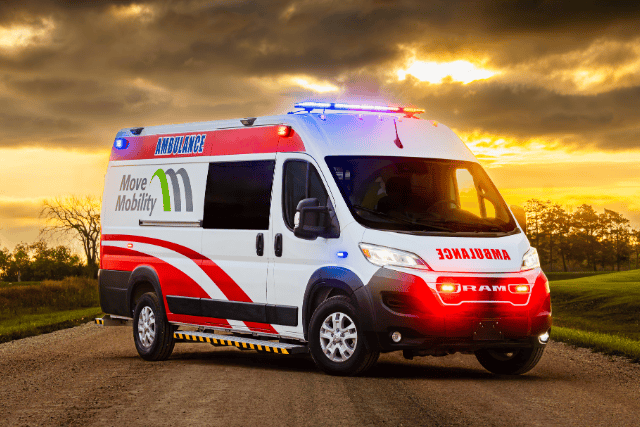
Our team understands what it takes to support remote regions, busy cities, and everywhere in between. We’re in the final stages of developing a new Type Two ambulance for release in 2026, built with the needs of Canadian EMS teams in mind. If you’d like updates or would like to register your interest, click the button below to speak with an ambulance expert.
If you’re not ready to talk to someone yet, here are a few articles that can guide you further and help you explore your next steps:
Recommended next reads
- Mobile Response Van vs. Ambulance: Which is right for your organization? This helps you compare NEMT and EMS vehicles so you can decide what fits your team the best.
- How do mobile medical vans reduce the strain on emergency rooms? Helpful if you want to see how mobile care supports hospitals and improves flow in your region.
 English
  French