

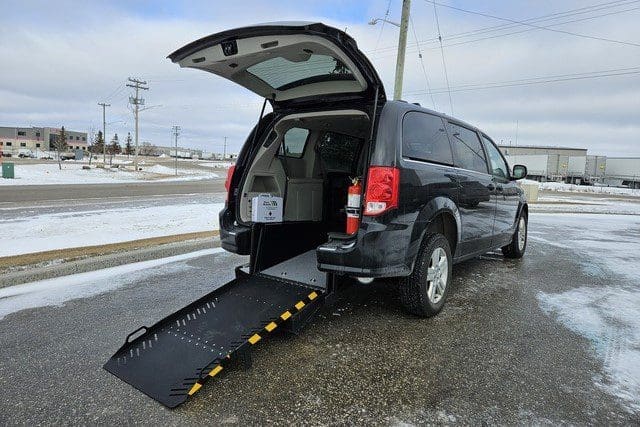
Picking the right commercial-grade wheelchair minivans for your fleet is the best way to make sure your clients never feel stuck. Around 8 million Canadians live with at least one disability today. Imagine a driver in a snowy spot like Barrie trying to lower a ramp that just won’t move. It’s a scary feeling when you can’t help someone get to their doctor.
This gap in your service hurts the people who trust you most. Using a consumer-grade wheelchair accessible minivan for a busy business can lead to fast wear and tear. You want to provide dignity and freedom. If your van breaks down, you lose that connection with your community. It’s hard to feel like a leader when your tools let you down.
MoveMobility has been a leader in this industry for over 20 years. We’ve partnered with organizations like yours and Loft to bring reliable transportation your clients can count on every time. Our team holds the National Safety Mark and certifications from Ford Pro and Stellantis. We want to provide clear facts so you can make the best choice for your team. Our mission is all about supporting yours by providing vehicles that help you remove barriers to healthcare and transportation.
In this article, you’ll learn all about the big differences between consumer-grade and commercial-grade wheelchair accessible minivans. Here’s a list of what we will talk about:
- Door openings
- Ramp styles
- Safety interlocks
- Grab handles and lighting
- Price
What are the five biggest differences between consumer-grade and commercial-grade wheelchair minivans?
When your organization is in the market for a new wheelchair accessible minivan, it helps to know the differences between consumer-grade and commercial-grade ones. Let’s take a look at five of the biggest differences between these options.
1. Door openings
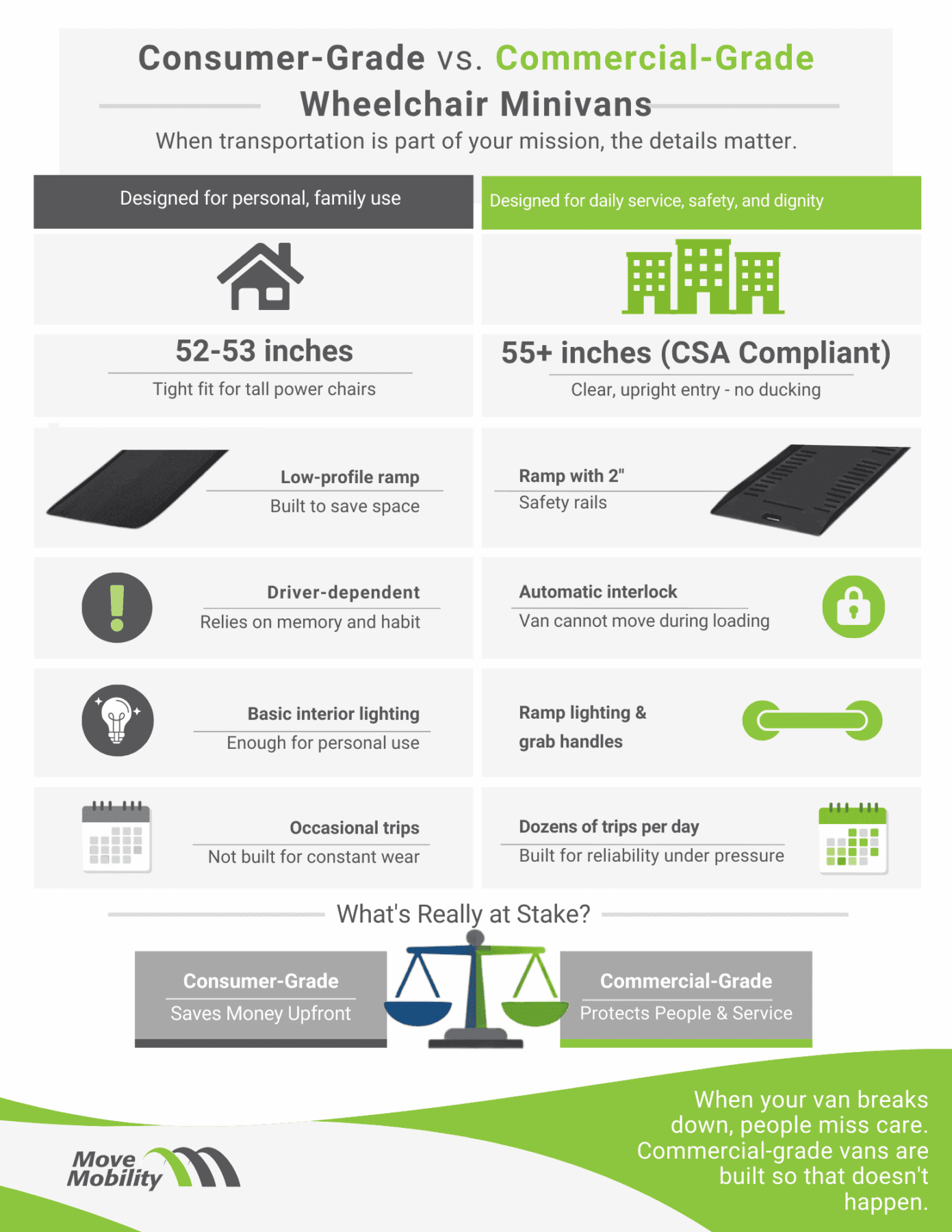
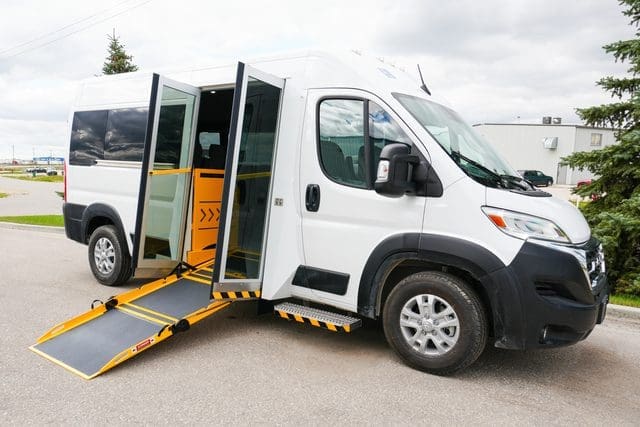
When you look for a wheelchair minivan for sale, the door height is likely the first thing you’ll notice. It might seem like a tiny detail. For a person in a tall power chair, those few inches are everything. In Canada, we have a set of rules called CSA D409 standards. These rules say that a commercial-grade wheelchair minivan must have a door opening that’s at least 55 inches high. This rule exists to keep people safe and comfortable while they travel.
Many folks start their search by looking at a consumer-grade wheelchair accessible minivan. These are the vans you’ll often see in driveways for personal use. They’re great for families. However, these personal vans often have a door opening of only 52 or 53 inches. That’s a big gap for your business. If you run a transit group in a place like Red Deer or Kelowna, you meet all kinds of people. Some riders have tall headrests. Some sit very high in their chairs. A short door makes these riders feel like they have to duck. It takes away their dignity. They have to worry about hitting their head every time they go to the grocery store.
Think about the feeling of trying to walk through a doorway that’s too short for you. You have to crouch down. It feels awkward. Now imagine having to do that while sitting in a heavy chair you can’t move. It’s a scary feeling. A commercial-grade wheelchair minivan removes that fear. It offers a clear path. Your riders can sit up straight. They can look out the window and feel like a person. They don’t feel like a piece of cargo being shoved into a box.
Here’s why those extra inches matter:
- Safety: Tall doors stop head injuries before they happen. Your drivers will feel much better, too. They won’t have to stress about a rider bumping their forehead on the way in. This helps your staff stay calm and focused on the road.
- Dignity: Riders feel respected when they can enter a van easily. They don’t want to be a bother. A big door makes the whole process fast and smooth. It shows that you care about their comfort.
- Compliance: Sticking to the 55-inch rule is vital for many businesses. If you provide rides for a government contract, they often require this height. Choosing wheelchair accessible minivans that meet these rules keeps your business running without legal hiccups.
- Weather: In Canada, we wear big hats and thick coats for many months of the year. This adds extra height and bulk to a person. A consumer-grade wheelchair accessible minivan might feel okay in the summer. When winter hits in Regina or Saskatoon, that tight space feels even smaller. The extra room in a commercial van makes a world of difference when everyone is bundled up.
When you look at different wheelchair accessible minivans, bring a tape measure with you. See the difference for yourself. You’ll see that the extra height is about making sure every person you serve feels seen and safe. This simple choice helps you build a stronger bond with your community. You’re giving them a way to get out and enjoy life without any barriers.
Next, we’ll talk about ramps in consumer and commercial-grade wheelchair minivans.
2. Ramps
The ramp is the bridge that connects your client to the world. It’s one of the most important parts of any wheelchair accessible minivan. If a ramp is hard to use or feels shaky, it can make a rider feel very nervous. We want your clients to feel like they’re on solid ground. Choosing the right vehicle and ramp design shows your team cares about safety and dignity.
In a commercial-grade wheelchair minivan, the ramp must follow the CSA D409 standards. One of the big rules for these vans is the height of the ramp’s side rails. These are the edges that keep the wheelchair from slipping off the side. To be compliant, these edges have to be at least 2 inches high. It’s a small change that makes a massive difference for someone in a chair.
A consumer-grade wheelchair accessible minivan is built a bit differently. These vans are made for personal use, so they try to save as much room as possible inside. Because of this, the sides of the ramp are often very small. This might make the van look a bit sleeker, but it can be a problem for a busy transit team. If you’re helping someone in a hurry or in bad weather, you need that extra safety.
For example:
Imagine a driver named Sam in Winnipeg on a rainy afternoon. He’s helping Mrs. Higgins, who uses a heavy power chair, get to her doctor’s appointment. The ground is slippery, and the wind is blowing. Because Sam is using a commercial van with 2-inch side rails, he doesn’t have to worry about Mrs. Higgins’ wheels slipping off the ramp’s edge. Mrs. Higgins feels safe and stays calm. Without those high edges, both Sam and Mrs. Higgins would be much more stressed. This safety feature allows them to focus on the trip instead of the fear of a fall.
Here’s a quick look at how these ramps compare:
- Safety edges: These 2-inch rails are a must for commercial work. They act as a guide for the wheels. This is very helpful when you’re working on uneven ground or in the dark.
- Space saving: Consumer ramps have lower sides to fit in tighter spots. While this saves a bit of room, it removes the safety net that a commercial team needs.
- Durability: Commercial ramps are built to be used dozens of times every day. They’re tough enough to handle the weight of heavy power chairs over and over again.
- Peace of mind: Riders feel more confident on a ramp with clear borders. It helps them feel empowered and independent as they enter the vehicle.
| Ramp feature | Consumer-grade | Commercial-grade |
| Side rail height | Often under 2 inches | At least 2 inches |
| Primary goal | Saving interior space | Meeting safety rules |
| Usage level | Light personal use | Heavy daily use |
The right ramp shows respect to your riders. It tells them that their safety is your top priority. When barriers like steep or narrow ramps are gone, your clients can get to their appointments with a smile. This is how you help people stay connected to their community.
3. The interlock system
When you’re helping someone get into a van, the last thing you want to worry about is the vehicle accidentally rolling away. This is where the interlock system comes in. It’s like a smart safety guard that talks to the van’s transmission to make sure everything stays put.
How does it work?
A commercial-grade wheelchair minivan is required to have a transmission shifter interlock. This is a bit of technology that links the ramp and the doors to the gears of the van.
If the ramp is down or the door is open, the interlock physically stops the driver from shifting the van out of “Park.” It also won’t let the ramp move unless the van is safely parked and the emergency brake is set. This creates a “fail-safe” environment so the person in the wheelchair can focus on getting inside without any fear of the van moving.
While this system is a must-have for commercial work, it’s not found in consumer-grade wheelchair accessible minivans. Here’s a quick look at how they differ:
- Shift lock: commercial vans prevent the van from moving while the ramp is in use. This is a huge safety net for busy teams.
- Driver reliance: Consumer minivans rely on the driver to remember to stay in Park. There’s no backup system to stop the van from shifting into gear if someone makes a mistake.
- Safety rules: Commercial vans must meet CSA D409 standards for interlocks. These rules are there to protect the public and organizations.
When a person uses an accessible van, they should feel empowered and safe. Having a system that guarantees the van won’t move while they’re on the ramp removes a major worry from their day.
It allows the passenger to enter with dignity, knowing the vehicle is built to protect them. In the world of professional transport, where different drivers might use the van every day, this automated safety is a lifesaver. It’s about making sure every trip starts with a feeling of total security.
4. Grab handles and lighting
When you’re helping someone enter a vehicle, small details like a sturdy handle to hold or a bright light to see where you’re stepping make a massive difference. This is the fourth big difference between the two types of vans.
In a commercial-grade wheelchair van, the doorways must be adequately lit. This isn’t just a “nice-to-have” feature; it’s a requirement. These lights usually turn on automatically as soon as the door opens, making sure the ramp and the floor are easy to see, even on a dark or rainy night.
Consumer-grade minivans often skip this extra lighting. While they have standard interior lights, they aren’t always bright enough to clearly light up the ground outside or the entire ramp area. This is usually done to keep the cost of the van lower for individual families.
Another requirement for commercial vans is having grab handles right in the door openings. These give people who are walking, or caregivers helping someone in a chair, something solid to grip for balance.
Consumer vans typically don’t have these extra handles installed. Since they aren’t required by law for personal use, they’re also often left out to save money.
5. The price difference
At first glance, the price tag of a wheelchair van is usually the first thing people notice. There is a big gap between what you pay for a consumer-grade van and a commercial-grade van, and it all comes down to how they are built.
Consumer-grade minivans are often tens of thousands of dollars cheaper than commercial ones. This is because they require far fewer modifications to get them ready for the road. They’re designed for one family to use, so they don’t have to meet the same heavy-duty rules as a van used by a business or a hospital.
While that lower price sounds very appealing, it’s important to look at what is missing. To keep costs down, these vans often skip the rugged structural reinforcements and automated safety tech that commercial vans use every single day.
Choosing a van isn’t just about a budget; it’s about the person inside. A lower price might save money today, but it can lead to potential safety issues or a van that is much harder to use over time.
When a vehicle is built to the highest safety standards, it provides freedom and peace of mind. Passengers feel empowered because they aren’t just settling for a cheaper option; they are riding in a vehicle designed to offer the most secure and comfortable experience possible. Investing in a commercial-grade van is an investment in the long-term dignity and safety of everyone who climbs aboard.
Pick the right wheelchair minivans for your team’s needs
You likely started reading this because you noticed a massive price difference between vans and wanted to know if a cheaper personal van could work for your organization. It’s a common question when you’re trying to balance a tight budget with the need to provide safe, reliable rides for your community.
- Commercial vans are built for safety: You now know that features like 55-inch door openings, 2-inch ramp rails, and transmission interlocks are required by law to protect your riders.
- Investment means dignity: While consumer vans cost less, they lack the specific modifications that allow passengers to enter with pride and total peace of mind.
At MoveMobility, we’ve spent years listening to the struggles of transit managers and healthcare providers across Canada. We’re here to be your partner in breaking down the walls that keep people from getting the transportation they deserve. Our team lives and breathes innovation, constantly refining our designs to ensure that every person, regardless of their mobility, is treated with the utmost respect. We’re leaders in this industry because we focus on the human connection that happens every time a ramp or lift is lowered. If you have any questions at all about how to better serve your riders, click the button below to talk to a mobility expert.
If you’re not ready to talk to a mobility expert yet, we have a few other resources you should check out to learn more.
Recommended next reads
- How to choose a wheelchair van (11 steps): This guide walks you through the entire decision-making process so you don’t miss any important details for your specific program.
- 5 potential problems with choosing a low-cost wheelchair van: It’s important to understand the long-term risks and hidden costs that come with picking a cheaper, non-commercial vehicle.
- Wheelchair van vs. bus: Everything you need to know: If you’re wondering if a minivan is big enough or if you need to step up to a larger bus, this article clears up the confusion.

 English
  French