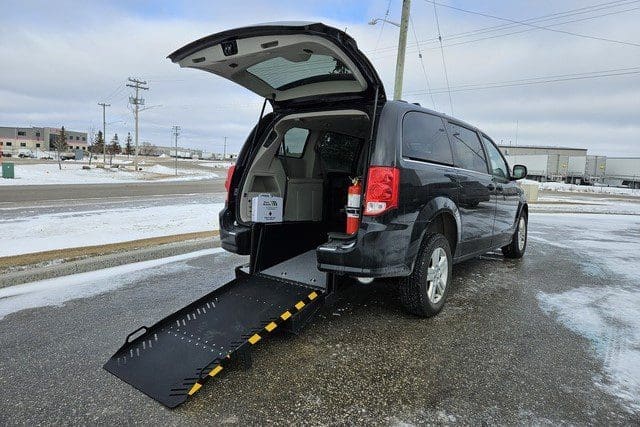
You want people to reach medical appointments with dignity. It’s tough watching someone miss care because they can’t get a ride. A consumer-grade wheelchair accessible minivan can look like a quick fix. The price seems reasonable, and you might even find a wheelchair minivan for sale that fits your budget.
But the wrong vehicle can create new problems. Some wheelchair accessible minivans lack key safety features required for daily service. That can lead to loading challenges, safety risks, or even trouble meeting provincial accessibility standards. What starts as a cost-saving choice can become a barrier for the people who depend on your program.
At MoveMobility, we’ve worked alongside organizations like yours for more than 20 years. In the past three years alone, we’ve built over 480 wheelchair vans and 180 mobile medical units across Canada. Our vehicles carry the National Safety Mark, and we hold Ford Pro Upfitter and Stellantis QPro certifications. We’ve partnered with organizations such as Corner Brook Transit, and our work recently earned the 2026 DARE Innovation Award. Many companies build accessible vehicles. Our goal is simple. Help you understand the facts so you can make the right choice.
In this article, you’ll learn the key risks organizations face when choosing a consumer-grade wheelchair accessible minivan:
- Door height: Why 52 inches often falls short of safe loading standards.
- Ramp safety: How small ramp edges increase the risk of wheelchairs slipping.
- Safety locks: Why transmission interlock systems protect passengers.
- Lighting and handles: Small features that make boarding safer.
- Real costs: Why a lower purchase price can lead to bigger expenses later.
5 risks associated with purchasing a consumer-grade wheelchair accessible minivan
Let’s look at a few risks related to buying a consumer-grade wheelchair van.
1. Door height
When you look at a consumer-grade wheelchair accessible minivan, the door height may seem like a small detail. In reality, it can create one of the biggest risks for your program.
Commercial accessibility standards in Canada often follow CSA D409 guidelines, which require a minimum door opening of 56 inches. Many consumer wheelchair accessible minivans only provide 52 to 53 inches of clearance.
Three inches may sound minor. In daily service, it matters a lot.
Why is door height so important when loading passengers?
Think about a typical day for your program. A support worker is helping a client board the van. The client uses a powered wheelchair, which sits higher than a manual chair.
Now picture the ramp unfolding.
With a consumer-grade wheelchair accessible minivan, the lower door opening creates a tighter space. The passenger may need to lean forward or tilt slightly to fit through the doorway. Staff may have to guide the wheelchair slowly while watching the top clearance.
That situation can create several risks:
- Head clearance: Taller passengers may come close to hitting the door frame.
- Staff strain: Workers often crouch or adjust positions while loading someone.
- Wheelchair limitations: Some powered chairs struggle with the smaller opening.
Over time, those small challenges add up.
How does door height impact daily program operations?
A commercial accessible van built for service usually includes the 56-inch D409 compliant door opening. That extra space improves loading in several ways.
- Passenger comfort: Clients can enter with less bending or tilting.
- Staff safety: Workers have more room to guide the wheelchair safely.
- Wheelchair compatibility: Larger powered chairs fit more easily.
Imagine running a transportation program in Northern Ontario during winter. A client arrives wearing a heavy coat and winter gear. A lower door opening suddenly feels even tighter.
Staff move slower. Clients feel less confident boarding.
These moments may seem small, yet they shape the experience people have with your program.
When organizations search for a wheelchair minivan for sale, door height is rarely the first thing they compare. Price, availability, and delivery timelines usually come first.
Yet that 2 to 3 inch difference between consumer and commercial wheelchair accessible minivans can affect safety, comfort, and long-term usability.
That gap between what looks affordable today and what actually works every day is where many organizations feel the risk later.
Next, let’s look at another important difference that affects passenger safety: ramp design.
2. Ramp safety
Ramp design is one of the most important safety features on any consumer-grade wheelchair accessible minivan. It’s also one of the areas where the differences between consumer and commercial vehicles become very clear.
Under CSA D409 accessibility standards, commercial accessible vans must have ramp side edges that are at least 2 inches high. These raised edges act like guardrails. They help prevent a wheelchair from rolling off the side while entering or exiting the vehicle.
Many consumer wheelchair accessible minivans are built differently. To save space and keep the ramp compact, the side edges are often much smaller or almost flat.
At first glance, that may seem convenient. The ramp folds neatly and takes up less room inside the vehicle. Yet that design choice can introduce real risks when people rely on the vehicle every day.

Why are ramp edges so important for passenger safety?
Picture a typical pickup during a busy morning.
A staff member arrives at a client’s home. The ramp unfolds. The client begins moving up the ramp in a powered wheelchair.
Now imagine a few common situations:
- A small steering correction: The wheelchair drifts slightly toward the ramp edge.
- Uneven pavement: The ramp sits at a slight angle.
- Rain or snow: The ramp surface becomes slippery.
With low ramp edges, there is little protection to guide the wheelchair back to the centre of the ramp.
With 2-inch safety edges, the ramp provides a physical barrier that helps keep the wheelchair aligned.
Those small rails act like lane markers on a road. They help keep everyone moving safely in the right direction.
Small ramp differences can lead to big problems
Programs that transport passengers often load and unload people many times each day. That means ramps are used constantly.
A ramp with minimal side protection can create several challenges:
- Wheel slip risk: Wheels may roll off the ramp edge during loading.
- Staff stress: Workers must stay extremely alert to guide the chair.
- Passenger confidence: Clients may feel nervous using the ramp.
Now imagine operating a community shuttle in Winnipeg during winter. Snow piles up near the curb. The ramp angle becomes steeper than usual.
Without strong ramp edges, the loading process can quickly feel unstable.
That’s where the gap becomes clear.
A consumer-grade wheelchair-accessible minivan may seem like a practical option when browsing wheelchair minivans for sale. Yet ramp design built for family use can struggle with the demands of daily service.
Commercial wheelchair accessible minivans include higher ramp edges because they are designed for programs that transport people every day.
Next, let’s look at another safety feature that many organizations don’t notice until it’s missing: transmission interlock systems.
3. Transmission interlock systems
A consumer-grade wheelchair accessible minivan may look very similar to a commercial one from the outside. The ramp works. The wheelchair fits. The vehicle drives normally.
Yet one safety feature often separates consumer vehicles from commercial wheelchair accessible minivans. That feature is the transmission shifter interlock.
A transmission interlock prevents the vehicle from shifting into gear while the ramp door is open.
Commercial accessible vans designed for passenger programs are required to have this system. It acts as a built-in safety check during boarding and unloading.
Many consumer vans converted for wheelchair use do not include this protection.
Why is a transmission interlock so important?
Loading a wheelchair into a van involves several steps. The driver parks the vehicle, opens the ramp door, deploys the ramp, and helps the passenger board.
During that process, the vehicle must stay completely still.
A transmission interlock helps protect everyone involved.
When the ramp door is open:
- The vehicle cannot shift into drive
- The vehicle cannot move forward or backward
- The driver must close the ramp door first
This simple system removes the risk of accidental movement.
Without it, the situation depends entirely on human attention.
What does the risk look like in real life?
Imagine a transportation program running pickups across rural Alberta.
A driver is helping a passenger board using the ramp of a consumer-grade wheelchair accessible minivan. The passenger moves slowly because they use a powered wheelchair.
At the same time:
- Another passenger is asking a question
- Traffic is building behind the vehicle
- The driver feels pressure to move quickly
If the vehicle could shift into gear while the ramp door remains open, there is a small chance the van could move before loading is complete.
That situation is rare, yet safety standards exist to remove that possibility completely.
Why do commercial vans include this protection?
Commercial wheelchair accessible minivans used by organizations often include a transmission interlock because passenger safety depends on it.
The system helps:
- Protect passengers during loading
- Reduce stress for drivers
- Create a safer boarding process
When organizations search for a wheelchair minivan for sale, this feature is easy to miss because it is not visible.
Yet in daily transportation programs, that hidden safety system plays a critical role.
The fourth risk in purchasing a consumer-grade wheelchair accessible minivan is the lack of grab handles and doorway lighting.
4. Grand handles and lighting
Grab handles and doorway lighting are features that don’t get the attention they deserve when organizations are looking for a new wheelchair van. These small features can make a big difference in daily safety. This is another area where a consumer-grade wheelchair accessible minivan can fall short.
Commercial accessible vans used for passenger programs must include adequate doorway lighting and grab handles at entry points. These features help passengers stabilize themselves while entering or exiting the vehicle.
Many consumer wheelchair accessible minivans do not include these upgrades. Manufacturers often leave them out to keep the price lower.
At first, this might seem like a minor detail. Over time, the impact becomes clearer.
How do grab handles make a difference during boarding?
Not every passenger enters the van the same way. Some use wheelchairs. Others may walk slowly with a cane or walker.
Grab handles provide a stable support point during boarding.
Without them, passengers may rely on:
- The door frame
- The seat edge
- A staff member’s arm
Those options are less stable and can increase the chance of slips.
Grab handles help passengers:
- Maintain balance when stepping up
- Steady themselves while turning into the seat
- Feel more confident entering the vehicle
That sense of confidence matters more than many people realize.
Does lighting make boarding safer?
Doorway lighting also plays a key role. Commercial wheelchair accessible minivans include lighting to clearly illuminate the entry area.
Consumer vans often rely only on standard interior lights.
This difference becomes important during real-world use.
Imagine a community program operating in Northern Saskatchewan during winter. Pickups happen early in the morning when it is still dark.
Without proper doorway lighting:
- Staff may struggle to see the ramp edges
- Passengers may miss a step
- Wheelchair positioning becomes harder
Lighting helps everyone see exactly where they are stepping or rolling.
These two extra features can seem like minor add-ons. In reality, they’re everyday safety tools.
Commercial vehicles include them because accessible transportation must support people with different levels of mobility.
A consumer-grade wheelchair accessible minivan may meet basic transportation needs. Yet missing features like grab handles and proper lighting can create extra risk during boarding.
Lastly, we’ll look at one of the biggest reasons organizations consider consumer vans in the first place: price.
5. Price
One of the biggest reasons organizations consider a consumer-grade wheelchair accessible minivan is the price. The difference can be significant. In many cases, consumer vehicles can be tens of thousands of dollars cheaper than commercial accessible vans.
At first glance, that lower price looks like a smart decision. Budgets are tight. Funding can take time. Finding a wheelchair minivan for sale that fits the numbers feels like a win.
Yet the price gap exists for a reason.
Consumer wheelchair accessible minivans usually require fewer structural changes during the conversion process. That keeps the purchase price lower. It also means the vehicle may not include the same safety features required in commercial accessible vehicles.
Why do consumer vans cost less?
A consumer wheelchair accessible minivan is typically designed for personal family use. The vehicle may be used occasionally to transport one passenger who uses a wheelchair.
Commercial vehicles used by organizations are built for a very different purpose. They are expected to transport multiple passengers, operate daily, and meet stricter safety expectations.
Because of this, commercial accessible vans often include features such as:
- Higher door openings that improve wheelchair clearance
- Safer ramp designs with protective edges
- Transmission interlock systems that prevent vehicle movement during loading
- Grab handles and doorway lighting that improve passenger stability
These features require additional engineering, installation, and testing.
That work increases the cost.
When does the lower price create a gap?
Now imagine a small community program in rural Manitoba that needs a vehicle to bring seniors to medical appointments.
A consumer-grade wheelchair accessible minivan appears online for a price that fits the program’s budget. The decision seems straightforward.
After a few months of daily use, the staff begin noticing challenges.
- Loading takes longer because the door opening is tighter.
- Staff must guide wheelchairs carefully along a narrow ramp.
- Passengers feel nervous entering the vehicle without proper grab handles.
The vehicle still works, yet the experience becomes harder for everyone involved.
What’s the real cost of a cheaper vehicle?
A lower purchase price can feel like the safest financial choice at first. Over time, the gap between consumer wheelchair accessible minivans and commercial accessible vehicles becomes clearer.
The difference often appears in:
- Safety features
- Ease of loading passengers
- Daily usability for staff
When organizations rely on transportation to connect people with healthcare, programs, or social services, those details matter.
The goal is not simply buying a van. The goal is giving people a safe and dignified ride every time.
Got any questions about consumer-grade wheelchair accessible minivans?
There’s a good chance you came here because you’re considering a consumer-grade wheelchair accessible minivan and want to avoid costly mistakes. You care about giving people safe, dignified transportation, and you want confidence that the vehicle you choose supports that mission.
After reading this article, you now understand several risks organizations face when choosing a consumer vehicle instead of a commercial one. At MoveMobility, we spend every day working with organizations across Canada that want to remove barriers to healthcare and mobility. Our team listens closely to how your program operates, then helps you evaluate vehicles that truly support the people you serve.
Many clients come to us after realizing transportation decisions affect safety, independence, and peace of mind. Seeing communities gain reliable access to care is why our work matters. If you have questions about your options, click the button below to speak with a mobility expert who can help guide you through the process.
If you’re not ready to talk with a mobility expert yet, we have a few other resources that can help you keep learning.
Recommended next reads
- How to choose a wheelchair van (11 steps): A practical guide that walks through the most important factors to evaluate before purchasing a wheelchair accessible vehicle.
- Full Size Wheelchair Van or Minivan: Which is Right for You? Compare full size wheelchair vans to minivans to figure out the right option for your program.
- 5 potential problems with choosing a low-cost wheelchair van: Explore the hidden challenges organizations sometimes encounter when a lower price becomes the main deciding factor.

 English
 French