If you’re deciding between an SUV ambulance and a Type II ambulance, you’re likely feeling the weight of that choice already. You’re responsible for response times, crew safety, budgets, and patient dignity, all at once. When the vehicle doesn’t match the reality on the ground, crews feel cramped, transfers take longer, and stress rises on calls that already carry enough pressure.
When your organization is focused on saving lives, you want a vehicle that supports your team, fits your geography, and helps care move forward with less friction.
We’ve spent more than 20 ans helping organizations close gaps like these. At MoveMobility, we’ve built over 180 mobile medical units for communities like yours and Première nation Liard across Canada. We’re certified under Ford Pro Upfitter and Stellantis QPro programs, and our vehicles carry the National Safety Mark. Our focus stays on removing barriers to healthcare and transportation while respecting that we’re not the only manufacturer in this space.
Dans cet article, vous apprendrez
- The biggest differences between a Type II ambulance and an SUV ambulance
- The pros and cons of each option
- How to decide which option is the best fit for your organization
Let’s break it down together so you can move forward with clarity.
What are the differences between Type II and SUV ambulances?
When you compare a Type II ambulance to an SUV ambulance, the differences show up in how care feels, how crews move, and how the vehicle fits your service area. On paper, both can support transport des patients. In real life, the gap appears during long shifts, winter roads, tight scenes, and extended transfers.
This section focuses on how these two vehicle types differ in day-to-day use.
Interior space and working room
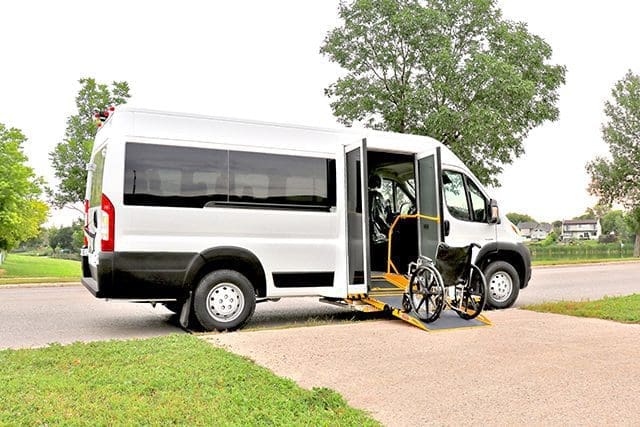
A Type II ambulance is built on a full-size van chassis. That gives crews more interior room to stand, turn, and work. Many builds offer near stand-up height, which changes posture and visibility during care. Tasks like starting an IV, checking vitals, or adjusting equipment feel more natural when you can stay upright.

An SUV ambulance has a more compact interior. Care usually happens from seated positions, with less room to move around the patient. That layout can work well for shorter calls or lower-acuity transport. Over longer transfers, the limited space becomes more noticeable for crews and patients.
What’s different inside the vehicle?
- Ambulance de type II : More room to move and reposition
- SUV ambulance: Tighter workspace with a fixed layout
How the vehicle handles on the road
An SUV ambulance feels smaller behind the wheel. It’s easier to park, turn, and navigate narrow streets. That matters in dense urban areas like downtown Toronto, Vancouver, or older neighbourhoods in Halifax. Drivers might feel less tension during busy shifts compared to bigger vehicles.
A Type II ambulance takes up more road space. It may need extra room to turn or back up in tight areas. On highways and rural roads, the longer wheelbase often feels steady and predictable. That stability matters during long transports between communities.
Driving differences you’ll notice:
- SUV ambulance: Quicker turns and easier parking
- Ambulance de type II : Stable handling over distance
Patient experience during transport
A Type II ambulance often feels calmer inside. The open layout can reduce feelings of confinement. This can help patients who are anxious, in pain, or facing long rides to hospital. Crews can also move more freely to monitor and reassure patients.
An SUV ambulance feels more focused on transport. For quick trips, that can be fine. During longer rides, the smaller space may feel more clinical and contained, especially for patients who need frequent checks.
From the patient’s perspective:
- Ambulance de type II : More open and less restrictive
- SUV ambulance: Compact and transport-focused
Equipment layout and storage
A Type II ambulance allows for more onboard storage. Equipment can be placed where hands naturally reach, with clear walkways. This supports smoother teamwork when two providers are working side by side.
An SUV ambulance carries essential gear efficiently, but space limits how much can stay inside at once. Crews often rely on careful loading or external storage to stay organized.
How equipment is handled:
- Ambulance de type II : More room for organized storage
- SUV ambulance: Streamlined loadout with limited space
Fit for different service areas
A Type II ambulance is often used across mixed environments. Urban calls, rural transfers, and long-distance transport can all happen in the same unit. Interior layouts may be adjusted to match how care is delivered in different regions.
An SUV ambulance is commonly used for targeted roles. These can include rapid response, community paramedicine, or shorter transfers. Its size and layout suit services with frequent stops and quick turnarounds.
How geography plays a role:
- Ambulance de type II : Broad use across regions
- SUV ambulance: Focused use in specific settings
Reliability and servicing across Canada
Both vehicle types rely on OEM platforms with established service networks. That matters in Canada, where units may operate far from major cities. Access to parts and familiar service centres keeps downtime predictable.
A Type II ambulance often benefits from widespread van service support. An SUV ambulance shares many components with common fleet vehicles, which can also simplify servicing.
Why are these differences important?
The difference between a Type II ambulance and an SUV ambulance isn’t about which one is better. It’s about how each vehicle fits your calls, your crews, and your geography. When that fit is right, stress drops and care feels more controlled.
Next, we’ll look at the pros and cons of each option to help you decide which one aligns best with your service goals.
What are the pros and cons of Type II ambulances and SUV ambulances?
Every EMS organization in Canada balances the same tension. You want vehicles that support crews, respect patients, and stay realistic on budgets and geography. Both a Type II ambulance and an SUV ambulance can play valuable roles. The differences show up in how those roles feel over time.
This section walks through the pros and cons of each option so you can decide what’s best for your organization.
What are the pros of a Type II ambulance?

A Type II ambulance is often chosen for services that handle a wide range of calls. It’s designed to support care inside the vehicle, not just transport from point A to point B.
One of the biggest strengths of a Type II ambulance is how it supports crews during care. The interior space allows providers to stand, move, and reposition without constant adjustment. Over a long shift, this reduces physical strain and mental fatigue. When crews feel less worn down, they stay sharper and more confident.
Patient experience is another area where this platform shines. The open interior feels calmer, especially during long transports from remote communities. Patients often feel less confined, which helps during stressful or painful moments. That sense of dignity matters, even if it’s hard to measure on paper.
A Type II ambulance also handles complexity well. More storage space supports a wider range of equipment without clutter. Two providers can work side by side without bumping into each other. That flow supports teamwork during high-pressure calls.
Common advantages teams notice:
- Crew comfort: Better posture and movement during care.
- Patient dignity: More open, calming environment.
- Care flexibility: Space supports varied call types.
- Operational stability: Predictable performance on long routes.
This platform often fits services that cover both urban and rural areas, where one vehicle may need to do many jobs well.
What are the cons of a Type II ambulance?
A Type II ambulance does come with tradeoffs. Its larger size can feel a bit more challenging than an SUV in dense urban settings, though it’s still smaller and easier to navigate than the Type III ambulance. Tight parking, narrow streets, and crowded hospital bays require more attention from drivers. That can add stress in busy downtown cores.
Operating costs may also be higher. Fuel use tends to increase compared to smaller platforms, especially during frequent short trips. While maintenance is predictable, it still reflects the size and complexity of the vehicle.
For services focused mainly on short transports or rapid response, the full capabilities of a Type II ambulance may not always be needed. In those cases, some space and features may go unused.
Potential limitations to consider:
- Urban handling: Less agile in tight spaces.
- Fuel use: Higher consumption over time.
- Scale: More vehicle than some roles require.
What are the pros of an SUV ambulance?
An SUV ambulance is often chosen for speed, simplicity, and focused deployment. It’s designed to move quickly and fit easily into busy environments.
The most noticeable benefit of an SUV ambulance is how it drives. It feels familiar and manageable behind the wheel. Parking, turning, and navigating narrow streets takes less effort. That helps in dense areas like downtown Toronto or Vancouver, where space is limited, and calls stack quickly.
Operating costs are often lower. Fuel efficiency is usually better, and maintenance aligns closely with standard fleet vehicles. For organizations watching budgets closely or piloting new programs, that can offer breathing room.
This platform works well for targeted roles. Rapid response, community paramedicine, and short-distance transport fit naturally into the SUV format. Crews can move quickly and reset fast between calls.
Where SUV ambulances often fit best:
- Urban response: Easier navigation and parking.
- Focused roles: Clear purpose and quick turnaround.
- Cost control: Lower fuel and servicing demands.
What are the cons of an SUV ambulance?
The compact size of an SUV ambulance brings limits. Interior space is tighter, which affects how care happens inside the vehicle. Providers often work from seated positions, with less room to reposition. Over longer transports, that can increase fatigue.
Patient comfort can also be impacted during extended rides. The smaller interior may feel more restrictive, especially for patients who are anxious, larger-bodied, or need frequent monitoring.
Equipment capacity is another consideration. Storage space is limited, which means careful planning around what stays onboard. That can add friction when call types vary widely.
Common challenges teams report:
- Interior space: Less room for movement during care.
- Long transports: Tighter environment over distance.
- Equipment limits: Reduced onboard storage.
Which option should your organization choose?
There’s no universal answer here, and that’s an honest truth many buyers appreciate hearing. A Type II ambulance and an SUV ambulance solve different problems. The right choice depends on how your service actually operates day to day, not how a vehicle looks on a spec sheet.
When would a Type II ambulance make more sense?

A Type II ambulance tends to fit services that need flexibility and endurance. If your calls vary widely, or if long transports are common, this platform supports care that happens inside the vehicle, not just movement between locations.
Think about services covering large geographic areas. A transfer from a remote Northern Ontario community to a regional hospital can take hours. During that time, crews need space to move, monitor, and stay comfortable. Patients benefit from a calmer, more open environment. That’s where a Type II ambulance often earns its keep.
This option also fits organizations that want one vehicle to handle many roles. Urban calls one day. Rural transfers the next. Complex patients who need regular checks during transport. The interior space and layout support those shifts without constant compromise.
A Type II ambulance may fit your organization if:
- You handle longer transports on a regular basis
- Crews provide ongoing care during transport
- One vehicle must serve multiple call types
- Patient comfort and dignity during longer rides matter
For many Canadian services, this platform becomes the backbone of the fleet because it adapts well as needs change.
When would an SUV ambulance make more sense?
An SUV ambulance often shines when agility is the priority. If your service focuses on quick response, short transports, or targeted programs, the smaller footprint can feel like a relief.
Picture a dense urban service responding to frequent calls in tight neighbourhoods. Narrow streets, limited parking, and busy hospital bays are part of every shift. An SUV ambulance moves through those spaces with less effort. Drivers feel more relaxed. Turnarounds happen faster.
This option also works well when full ambulance capability isn’t required. Some programs don’t need stretcher transport, large equipment storage, or extended onboard care. Community paramedicine, rapid response units, and low-acuity transport often fit comfortably into the SUV format.
An SUV ambulance may suit your service if:
- Most transports are short and predictable
- Agility and parking ease are top concerns
- You run focused or specialized programs
- A full ambulance build exceeds your needs
In these cases, simplicity supports speed and clarity rather than limiting care.
Need help deciding on the right ambulance?

You came to this article because choosing between a Type II ambulance and an SUV ambulance feels bigger than a vehicle decision. It affects your crews, your patients, and how well your service holds up under pressure. When the wrong platform is in play, the stress shows up fast on long shifts, tight calls, and stretched budgets.
After reading this guide, you now have clarity on a few key things:
- The differences: How a Type II ambulance and SUV ambulance function day to day.
- The tradeoffs: Where each option supports care and where limits appear.
- The fit: How geography, call volume, and transport length shape the right choice.
Au MoveMobility, we don’t start with vehicles; we start with how care happens in your community, then design around that reality. Our team has supported EMS providers, Indigenous communities, health centres, and transport programs across the country with vehicles built to reduce barriers, protect dignity, and support life-saving work.
That experience is why organizations trust us to guide them through complex decisions without pressure. If you have questions or want to talk through your situation, click the button below to connect with an ambulance expert who understands your world.
If you’re not ready to talk to an ambulance expert yet, here are a few other resources worth your time.
Lectures recommandées
- Mobile response van vs. ambulance: Which is right for your organization? This will help you clarify when a full ambulance is needed and when a response van may fit better.
- Quel type d’ambulance est le meilleur pour une intervention urbaine ? Learn what the best type of ambulance is for urban response.
- 8 caractéristiques distinctives de l’ambulance de type II de MoveMobility: Take a first look at MoveMobility’s new Type II ambulance.


 English
  French