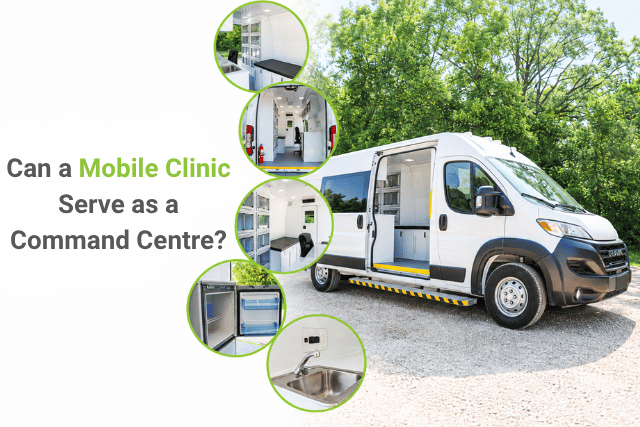
Could your mobile clinic also serve as a command centre during a wildfire, flood, public event, or local emergency? If you’re asking this question, you may be trying to get more value from one vehicle without making it too crowded or complex. That balance matters. If the layout, power, or communications are wrong, your team could lose valuable space for patient care. The goal is a vehicle that works well for daily health services and can shift into a small field command role when plans change.
MoveMobility has spent more than 20 ans solving this type of space and workflow problem. That matters here because a clinic bed, radios, screens, staff seating, sinks, fridges, and storage all compete for the same limited space. In the past three years, we’ve built more than 180 unités médicales mobiles, including vehicles for organizations such as Liard First Nation. We also hold Ford Pro Upfitter et Stellantis QPro certifications, and our vehicles carry the Marque nationale de sécurité. MoveMobility was also named a 2026 DARE Innovation Award recipient. We know other manufacturers build mobile units too, so this article will help you judge the idea based on your program.
You’ll learn:
- Operating modes: How clinic, command centre, and first-response roles can work together.
- Vehicle planning: How space, power, communications, and workflow affect the design.
- Trade-offs: When one vehicle makes sense and when two may work better.
Can a mobile clinic really work as a command centre?
Yes, a mobile clinic can work as a mobile command centre, but only if the vehicle is planned for more than one role from the start. The key is to design the space around how your team will use it each day.
A dual-purpose mobile clinic could support routine care, community paramedicine, first-response support, and on-site coordination. For example, a health team in northern Ontario may use the vehicle for scheduled visits during the week. During a flood, wildfire, or local event, that same vehicle could become a small command point for staff, radios, maps, and updates.
Le Fourgonnette de clinique médicale mobile is one example of a platform that can be planned around changing care needs.
But there are limits. A mobile clinic doesn’t become an ambulance because you add radios or emergency gear. It also cannot replace a large emergency operations centre with several teams and workstations.
A useful mobile command vehicle needs the right balance of:
- Space: Enough room for staff, patients, and equipment.
- Power: Enough capacity for medical and command systems.
- Communications: Reliable access to radios, internet, and charging.
- Payload: Enough capacity for added equipment.
- Workflow: A clear plan for changing from clinic use to command use.
The goal is flexibility without making either role harder to perform.
When does a multi-use clinic and command vehicle make sense?
A multi-use clinic and command centre makes the most sense when your team already provides regular services but also needs to respond when plans change.
For some organizations, a dedicated command vehicle may sit parked for much of the year. That can make it hard to justify the cost. A multi-use medical van can be different. It may support health services most days, then take on a command or first-response role during an emergency, public event, or joint agency response.
The key is to avoid making the vehicle do every job at the same time. One day, it may support scheduled care. On another, it may work as a mobile incident command post. That gives your team more value from the vehicle while keeping each role clear.
This can be especially useful in rural and remote parts of Canada. A team serving northern Manitoba, northern Ontario, or a remote First Nation may travel long distances between communities. Bringing familiar staff, equipment, and communications with you can reduce delays and help your team respond with more confidence.
Before you choose a floor plan, you need to decide which role matters most. That primary job should guide the layout, storage, seating, and power needs.
Organizations that may benefit
A clinic and command centre setup can work well for:
- Community paramedicine and EMS programs
- Municipal emergency management teams
- Indigenous health and emergency-response departments
- Fire and public safety services
- Rural health authorities
- Industrial safety providers
For community paramedicine teams, it can help to first understand how community paramedicine works. That makes it easier to decide which daily care tasks should stay at the centre of the design.
Three practical operating modes
Scheduled clinic mode
In clinic mode, the vehicle focuses on planned care.
- Assessments: Teams can provide screenings, wellness checks, and other non-emergency services.
- Vie privée : The space can support private talks and basic clinical work.
- Routine use: This may be the main role of a community paramedicine vehicle during a normal week.
Command mode
In command mode, the focus changes from patient care to coordination.
- Communication: Staff can manage radios, updates, and incoming information.
- Planning: The vehicle can offer a small work area for team leads.
- Coordination: It can act as a compact emergency command centre during a local response.
First-response support mode
A first responder vehicle may also support teams at the scene without acting as an ambulance.
- Equipment staging: Supplies can be kept close to the response area.
- Responder support: Staff can rest, regroup, or prepare equipment.
- Basic care: Teams may provide approved on-site care within their scope.
The best setup gives your team clear options. It should change with the job, without creating confusion about what the vehicle can safely do.
How can one interior support clinical care and command operations?
A strong mobile clinic command centre starts with people and workflow, not a long equipment list.
Before choosing cabinets, screens, radios, or seating, map out how your team will move through the vehicle. Ask how many people will be inside, what each person needs to do, and what equipment they need within reach.
This matters because a dual-purpose mobile clinic may serve very different jobs on different days. A nurse may need privacy for a patient visit in the morning. Later, the same space may need to support radios, laptops, maps, and staff coordination.
Clear zones can help prevent those roles from getting in each other’s way.
Clinical zone
The clinical area should protect privacy and keep care simple.
It may include:
- A patient bed or exam area

- Handwashing and infection-control features

- Space for private talks and patient records

- Secure storage for medical supplies

The goal is to keep the care area calm and usable, even if the rest of the vehicle supports another role.
Command zone
The command area should support quick decisions and clear communication.
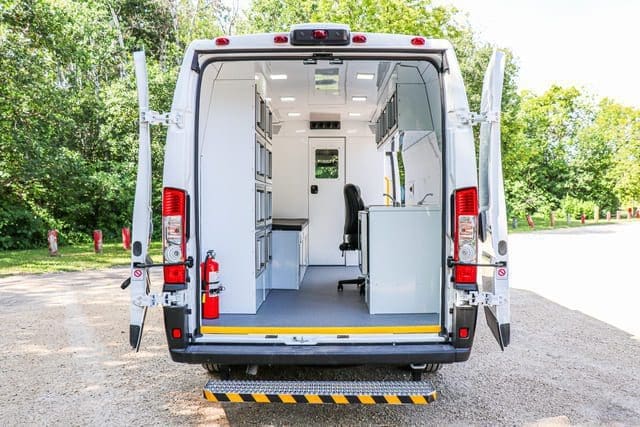
A useful command centre van layout may include:
- A work surface for laptops, radios, and maps

- Screens or whiteboard space for updates
- Charging points and communication controls
- Lockable storage for radios and other equipment
This part of the vehicle may act as a small mobile command post during an event or local emergency.
Shared transition zone
Some parts of the van can serve more than one role.
Fold-away tables, removable seats, or modular parts can help your team change the space without rebuilding it each time. You can review common mobile medical van customisation options when planning this type of flexible setup.
A shared area may include:
- Modular seating
- A work surface that serves more than one use
- Equipment that can be secured while driving
- A clear process for changing from clinic mode to command mode
A simple three-column plan can also help. Compare what the van needs in clinic, command, and first-response mode. This makes conflicts easier to spot before production begins.
You should also check door access, aisle width, seating, equipment reach, and emergency exits. In some cases, clinical and command staff may need different doors or different operating times.
That level of planning is what turns a customizable mobile command vehicle into a space your team can actually use.
What command centre systems would the vehicle need?
A command centre works because people can communicate, share information, and keep key equipment powered. Adding more screens or radios does not automatically turn a mobile clinic into a command vehicle.
Start with the systems your team already uses. A fire department, health authority, and First Nation emergency team may use different radios or networks. Your mobile command centre equipment should work with those systems instead of forcing staff to learn a second setup during an emergency.
It also helps to separate what you truly need from features that would be nice to have.
Communications and connectivity
Reliable communication will be one of the most important parts of the vehicle.
Your setup could include:
- Radio support: Safe mounting locations and power connections for the radios your team already uses.
- Internet access: Cellular or satellite internet can support email, online records, maps, and video calls.
- Wi-Fi: A local connection can help several staff members work from laptops or tablets.
- Charging: Easy-to-reach outlets can keep phones, radios, and computers powered.
- Cable planning: Antenna and wiring routes should be considered before cabinets and walls are installed.
Check out our article to learn more about options for internet in a mobile medical van.
Independent and backup power
A mobile operations centre may use more power than a clinic working in its normal daily role.
Think about everything that could run at once. That could include lights, outlets, laptops, medical equipment, communications gear, and heating or cooling.
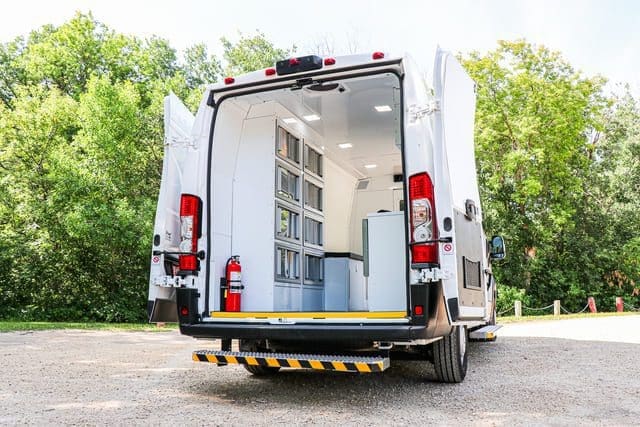
MoveMobility mobile clinics already use a separate conversion power system for the equipment inside the clinic. Shore power can recharge that system and run equipment when a suitable connection is available. Our guide to the mobile clinic electrical system explains how that setup works.
For a command role, you should also decide which systems must keep working if one source of power becomes unavailable.
Incident information and coordination
Your command workstation does not need to look like something from a disaster movie.
A simple workspace may be more useful. It could include:
- A desk for laptops and paperwork
- A screen for maps or updates
- A whiteboard for tracking tasks
- Secure storage for devices and records
- Charging points close to the work area
This keeps information in one place and gives team leads somewhere to work.
Exterior operations
Some work may happen outside the emergency communications vehicle.
Exterior lighting can help staff work safely after dark. An awning may provide some weather cover when appropriate. Easy access to storage can also help crews reach equipment without moving through the patient area.
The bigger goal is simple: build around how information, people, and power will move through the vehicle. It is also smart to leave reasonable access to wiring and controls. Radios, internet tools, and other technology will change long before the van reaches the end of its useful life.
Which clinical and first-response functions must remain usable?
A command centre setup should never make the clinical side of the vehicle harder to use. If your team provides care most days, those services should stay at the centre of the design.
Start by listing the work your staff will do most often. That may include community paramedicine visits, health checks, screenings, or public-event support. Those tasks should guide the space before command equipment is added.
Clinical areas may still need cleanable surfaces, good lighting, privacy, ventilation, and handwashing space. Medical supplies should also be stored away from radios, laptops, and other command gear. You can review common mobile clinic equipment to see how these needs can affect the layout.
Command workstations should also be easy to protect or pack away during patient care. A laptop, radio, or map station should not block an exam area or create clutter around a patient.
A clear reset plan helps, too. Staff should know what needs to be moved, cleaned, stored, or powered down when the vehicle changes roles.
What could the vehicle support?
A mobile clinic for first response may support several types of work.
- Community paramedicine: Teams can provide planned visits and basic health services in the community.
- Assessments and screenings: Staff can carry out non-emergency health checks.
- Public events: The vehicle may support basic medical care and staff coordination.
- Responder support: It may serve as a first-response support vehicle for staging or rest.
- Community emergencies: A clinical command vehicle can provide a small space for care and on-site coordination.
What must be evaluated separately?
Some roles bring very different rules and safety needs.
- Emergency patient transport
- Lights and sirens
- Critical-care equipment
- Ambulance certification
- Care for unstable patients while the vehicle is moving
A mobile clinic or emergency response van doesn’t become an ambulance because it carries medical equipment.
Before making any final operating plan, your team should also review the rules in your province and confirm what staff are allowed to do within their professional scope.
Does a mobile clinic command centre need AWD?
An AWD mobile clinic can make sense in some parts of Canada, but you may not need it. AWD can help with traction on snow, gravel, and some unpaved roads. It doesn’t mean the van is ready for every off-road condition.
That difference matters if you’re planning a mobile command vehicle for remote communities. AWD, 4WD, extra ground clearance, all-terrain tires, and suspension upgrades all solve different problems. They’re not the same thing.
For example, a rural emergency response vehicle in northern Ontario may spend most of its time on paved highways and maintained gravel roads. Another team in northern Manitoba may deal with deeper snow, rough access roads, or long stretches between services. Those programs may need very different setups.
It’s also worth looking beyond the drivetrain. Turning radius, vehicle height, payload, weight balance, and fuel use can all affect how the van works in the field.
Drivetrain options can change based on the chassis, model year, and final conversion. Before you plan around a specific AWD mobile command centre van, it’s important to confirm what setup is available with MoveMobility.
Le Trail Edition rough-road upgrade is another option to look at. It’s built for rougher road conditions, but it shouldn’t be called AWD unless the selected chassis actually has AWD.

Questions to answer before selecting AWD
Before you consider AWD to the plan, ask:
- Winter roads: Are the roads your team uses cleared and maintained?
- Road type: Will you be driving on gravel, rough roads, or true off-road routes?
- Payload: How much medical and command equipment will you carry?
- Ground clearance: Would more clearance help more than a different drivetrain?
- Chassis fit: Can your planned conversion work on the AWD chassis you’re considering?
The best choice comes down to where the vehicle will actually go and what your team needs it to do.
When is a combined clinic and command vehicle a good fit?
A combined mobile clinic and command centre can make sense when your team wants one vehicle to handle different jobs at different times.
The biggest question is simple: can one vehicle support your real day-to-day work without making either role harder?
If the answer is yes, a combined setup may give you more value from the vehicle. If the answer is no, two separate vehicles may save your team time, space, and frustration.
When would a combined vehicle be a good fit?
A small mobile command vehicle can work well when clinic use stays as the main purpose and command duties happen from time to time.
It may be a good fit when:
- Command use is occasional: Your team may support emergencies, public events, or larger responses a few times each year.
- You need a small coordination point: A few staff may need space for radios, laptops, maps, and updates.
- Clinic work comes first: Most days are still focused on health services, screenings, or community paramedicine.
- Your team is small: Staff and equipment can fit inside without making the space crowded.
- You want one active vehicle: A multi-use vehicle may be easier to justify than a command unit that spends most of its time parked.
- A smaller footprint helps: A van may be easier to park, drive, and move through smaller communities.
When would separate vehicles be better?
Two dedicated vehicles may make more sense when both roles need a lot of space or need to happen at the same time.
That may be the better option when:
- Several agencies need workstations: A van can get crowded quickly when multiple teams are working inside.
- Command work is frequent: A dedicated communications or dispatch team may need a permanent setup.
- Patient care happens at the same time: Privacy and active incident coordination can be hard to manage in one compact space.
- You need large equipment: Radio racks, storage, meeting space, and extra screens can take up a lot of room.
- Deployments last a long time: A larger command truck or trailer may be more comfortable for extended use.
- Ambulance certification is required: That brings a separate set of rules and design needs.
A combined vehicle works best when flexibility solves a real problem. If combining the roles creates more limits than benefits, two vehicles may be the simpler choice.
What should your team decide before designing the vehicle?
Before you start your mobile command centre design, get the right people around the table.
That may include staff from clinical care, EMS, emergency management, fleet, IT, and purchasing. Each person will see the vehicle from a different angle. A nurse may focus on privacy. IT may worry about connectivity. The fleet may be thinking about weight, roads, and service access.
Those conversations are much easier to have before cabinets are bolted to the floor.
Start by ranking the vehicle’s jobs as primary, secondary, and occasional. If daily clinic work is the main job, the layout should protect that role first. Your mobile clinic command post can then be planned around the space and systems that remain.
It’s also worth mapping what happens when the vehicle changes roles. List the staff, equipment, seating, work surfaces, and storage needed in each mode.
Public Safety Canada notes that emergency teams may need to communicate across different agencies and levels of government. That makes communication planning especially important if your vehicle may support several organizations during the same response.
Your planning team should also review:
- Power needs: Add up the demand from medical equipment, radios, computers, lighting, and heating or cooling.
- Payload: Check how people, supplies, batteries, and equipment affect the vehicle’s weight.
- Vie privée : Plan where patient talks, records, and clinical work will happen.
- Storage: Decide what needs to be locked, cleaned, or kept away from clinical supplies.
- Road conditions: Review weather, road surfaces, drivetrain, ground clearance, and local service options.
- Future technology: Leave room to service or replace communications equipment as systems change.
If you’re still deciding which basic platform fits your program, you can compare the types of mobile medical vans before moving deeper into incident command vehicle planning.
Suggested design-brief questions
Before approving a customizable mobile clinic, ask your team:
1. What will the vehicle do during a normal week?
2. What changes when it becomes a command centre?
3. How many people need to work inside?
4. Will patient care and command work happen at the same time?
5. Which radio, cellular, or satellite systems must work together?
6. Which equipment must run without shore power?
7. What roads and weather will the vehicle face?
8. Does the program require patient transport?
9. Which provincial rules and internal policies apply?
10. Which job can never be compromised?
That last question may be the most important. A flexible vehicle works best when everyone agrees on what it must do well before deciding what else it could do.
Frequently asked questions about mobile command centres
Q: What is a mobile command centre?
A : A mobile command centre is a vehicle-based workspace used to coordinate people, communications, and information during an incident or event. It can give team leads a place to work with radios, laptops, maps, and updates while staying close to the response area.
Q: Can a mobile clinic be used as a mobile incident command post?
A : Yes, if the layout, power, and communication systems are planned for that role. A mobile incident command post works best for a small team. The number of staff and agencies involved will affect how practical the setup is.
Q: Can an AWD mobile command centre handle rough roads?
A : AWD can help with traction on snow, gravel, and some unpaved roads. It doesn’t make the vehicle ready for every off-road condition. Chassis availability and conversion limits also affect which AWD mobile command centre setups are possible.
Q: Is a mobile clinic command centre an ambulance?
A : No, unless it’s built, equipped, and certified to meet the ambulance rules that apply in your province. Adding medical supplies or command equipment doesn’t give the vehicle emergency patient transport authority.
Q: How does mobile command centre power work?
A : Power may come from shore power, auxiliary batteries, or other planned power systems. The full electrical load should include medical equipment, radios, computers, lighting, and heating or cooling.
Q: How many people can work inside a mobile command van?
A : Mobile command van capacity depends on the floor plan, seating, equipment, payload, and daily use. A van used for patient care will usually have less room for command staff than a vehicle built mainly for coordination.
Is a multi-use mobile clinic right for your team?
You likely came to this article because your team needs more from one vehicle. You may want a mobile clinic that supports regular care but can also help your team coordinate during an emergency or public event.
The main takeaway is that a multi-use mobile clinic can work well when each role is planned from the start.
- Start with the main job: Decide which role the vehicle will perform most often.
- Plan around real use: Think about staff, space, power, communications, payload, and road conditions.
- Know the limits: A mobile command vehicle can support field coordination, but it can’t replace every ambulance, command truck, or emergency operations centre.
Au MoveMobility, we’ve worked with healthcare teams, First Nations, municipalities, and community organizations across Canada that face very different access and service challenges. That experience has taught us that the best vehicle usually starts with good questions, not a long list of equipment. Our team listens to how your program works before looking at what should go inside the vehicle. That approach helps create a solution that supports the people you serve instead of asking your team to work around the vehicle.
If you have questions about your program, click the button below to talk to a mobility expert. We’ll help you look at your goals, operating area, and day-to-day needs to see if this type of vehicle makes sense.
If you’re not ready to talk with a mobility expert yet, these resources can help you take the next step.
What should you read next?
- 5 steps to buying a mobile medical van: Learn what happens from early planning through choosing and ordering the right mobile medical unit.
- Quels sont les coûts et les possibilités de personnalisation d'un fourgon médical mobile ?: See how different layouts and equipment choices can affect what your vehicle can do and what it may cost.
- How to prepare for your MoveMobility Discovery Call: Learn what information to gather before talking with our team so you can get clearer answers faster.

 English
  French