Does a Type II ambulance give your paramedics enough room to work during real calls, or will the space feel tight when care gets urgent? That’s a fair question. If you’re choosing an ambulance for a Canadian EMS, community paramedicine, or interfacility transport program, interior room affects patient care, crew comfort, storage, and workflow.
A few inches can matter when your team is reaching for oxygen, moving around a cot, or loading a patient during a cold Manitoba morning or a busy Ontario transfer. The gap is simple: you need a vehicle that’s compact enough for tight streets, rural roads, and hospital bays, but still practical enough for your crew to work with confidence.
Au MoveMobility, we’re a Canadian-based ambulance manufacturer with over 20 years in business. We’ve manufactured vehicles for organizations like Quest Community Health Centre and Transdev for non-emergency medical transportation. We’re also a recipient of the Prix d'innovation DARE 2026, which celebrates innovation and impact.
After reading this article, you’ll feel much more confident in how much space the Type II ambulance actually provides.
How much space does a Type II ambulance have?
A Type II ambulance gives your paramedics more working room than many people expect, especially when it’s built on a high-roof extended van platform. That’s important because your team isn’t stepping into an empty vehicle. They’re stepping into a care space with a cot, a patient, oxygen, bags, seating, lighting, restraints, storage, and sometimes more than one crew member working at the same time.
That’s where space gets real.
Inside our Type II ambulance, your crew gets 6’2″ of stand-up headroom. A typical Ambulance de type III is often closer to 5’7″ of head clearance. That means this Type II ambulance gives your team about 8.5% more head clearance compared to many traditional Type III layouts.
That extra height helps your paramedics work in a more natural position. They can stand more upright, reach supplies with less strain, and move around the cot without feeling like the ceiling is part of the call. Nobody wants to duck their neck under a ceiling for hours while trying to focus on a patient.
The goal isn’t to make the inside feel massive (though most who step inside say it feels a lot bigger than it looks from the outside). It’s to make the space feel useful. Your crew needs enough room to move with purpose, reach what they need, and provide care without fighting the layout around them.
How does Type II ambulance headroom help your crew work?
Headroom is one of the first things your paramedics will feel when they step inside the Type II ambulance. If the ceiling feels low, the whole space can feel tight before the call even starts.

With 6’2″ of interior standing height, many crew members can work closer to upright while they’re beside the stretcher. That can help reduce awkward bending during repeated tasks, such as checking vitals, adjusting patient position, or reaching for equipment.
Think about a crew in northern Manitoba during a winter transfer. They’re wearing jackets, carrying gear, and may be loading from snow, ice, or a tight hospital bay. In that moment, extra headroom doesn’t feel like a luxury. It feels practical.
That added height can support your team when they’re:
- Checking vitals: Crews can work beside the cot with less hunching.
- Accessing airway equipment: Supplies can be reached with smoother movement.
- Moving around the patient: Better clearance can reduce awkward twisting.
- Chargement et déchargement : More height helps the care area feel less boxed in.
- Working longer shifts: Less bending can help reduce physical strain over time.
One call with tight space may be manageable. A full week of ducking, twisting, and working around poor layout can wear on your team. Your ambulance should support the people delivering care, not make their work harder.
Headroom is a strong start, but floor space also plays a major role in how the patient compartment feels.
How much usable floor space does the Type II ambulance provide?

This Type II ambulance provides your team with about 6,062 square inches of usable floor space. A typical Type III floor plan is around 6,008 square inches. That gives you about 53 square inches of added usable floor space compared to a traditional Type III layout.
At first, 53 square inches may not sound like much. It won’t fit a recliner, snack cabinet, or coffee machine. Sorry to the night shift.
But ambulance space works differently. A few inches can change how easily a paramedic steps around the cot, turns toward the action wall, reaches storage, or moves between seating positions.
This Type II ambulance also gives your crew about 9.3% more cubic space compared to a traditional Type III layout. That’s the bigger story. Cubic space includes the full usable volume inside the patient compartment, including height, width, and open working room.
That added interior volume can help the space feel less closed in. It can also support cleaner movement during care.
For your crew, that can mean:
- More usable movement: Paramedics have a better chance to move around the cot with purpose.
- Less cramped workflow: The care space feels more open during patient care.
- Better storage planning: Equipment can be placed where it supports the call.
- More patient comfort: The compartment can feel less confined during transport.
This is where many buyers feel the gap. You may assume a Type III ambulance always gives your team more room because it looks larger from the outside. But usable room is about layout, height, access, and workflow. Exterior size alone doesn’t tell the full story.
A well-planned Type II ambulance can give you a compact vehicle while still creating a practical space for patient care.
How does exterior size affect Type II ambulance interior space?

A Type II ambulance has to do two jobs at once. It needs to give your paramedics enough room to work inside, and it needs to stay practical outside.
That balance can help Canadian EMS teams that work in tight spaces. Think about hospital bays in downtown Toronto, narrow streets in Vancouver, smaller community health centres in rural Saskatchewan, or long-term care entrances with limited parking space.
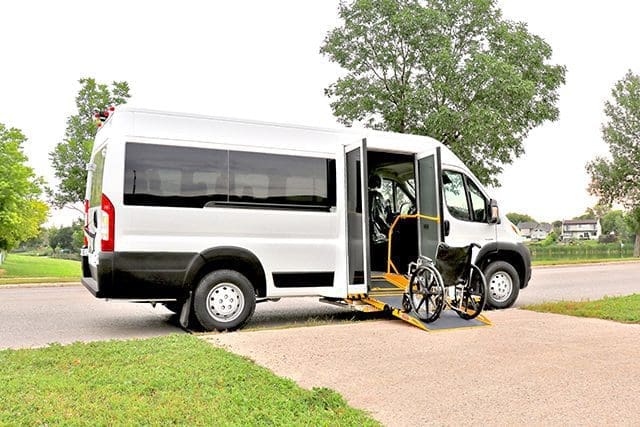
Our Type II ambulance is built on a Ram ProMaster 3500 High Roof Extended platform with a 159-inch wheelbase. The vehicle is about 251 inches long, 98 inches wide with mirrors, and 81 inches wide without mirrors. It also has a 39-foot turning diameter.
That exterior size helps your team access places where a larger vehicle may feel less forgiving.
A more compact footprint can help when your crew is:
- Turning into hospital bays
- Parking near community health centres
- Navigating older urban streets
- Reaching rural homes and driveways
- Moving through tight long-term care lots
- Responding in areas with snowbanks or limited shoulder space
This is one of the biggest reasons organizations consider a Type II ambulance. You don’t want to give up interior working space, but you also don’t want a vehicle that feels oversized for the routes your team runs every day.
That’s the balance your team is really looking for. Enough room to work inside. Enough agility to reach people outside.
How does the Type II ambulance cot space support patient care?
The cot area is the centre of the patient compartment. If that area feels crowded, the rest of the ambulance can feel frustrating fast.
MoveMobility’s Type II ambulance uses a single-cot patient transport configuration with an in-floor cot rail system and a 95-inch floor plate length. It’s also designed to support Stryker powered stretcher compatibility and a floor-mounted fastening system.
That 95-inch floor plate length gives the stretcher a clear place to load, position, and secure. For your crew, that means the cot area feels planned instead of squeezed in around storage, seating, and equipment.
That helps support a familiar EMS workflow. Your crew can load from the rear, secure the cot, and move into position without having to rethink the space on every call.
That familiarity matters when time is tight. Your paramedics shouldn’t have to pause and wonder how the vehicle wants them to work today. The layout should feel clear and intuitive.
The Type II ambulance also includes full-width rear loading access and a passenger-side sliding access door.
That gives your crew more than one way to access the patient compartment. Rear access supports stretcher loading. Curbside access helps when the back of the vehicle isn’t the best entry point.
That can help in real Canadian conditions, such as:
- Urban calls: Curbside entry can help on busy streets.
- Rural transfers: Rear access supports stretcher loading from open areas.
- Winter response: More access options can help when snow or ice limits movement.
- Hospital handoffs: Crews can work around tight ambulance bay layouts.
The right cot space helps your crew move, load, secure, and care with fewer obstacles in the way.
How does working width affect movement?
Width is another key part of the space conversation. A Type II ambulance needs enough room beside the cot for your paramedics to provide care, reach the action wall, and move between seating positions.
This layout gives your crew cot-side working clearance that’s comparable to many traditional Type III layouts. The left-side working width is only about 3 inches narrower than comparable Type III layouts.
That’s an important detail if your team is comparing a Type II ambulance with a Type III ambulance.
You may expect a much larger difference. In practice, the working space can feel more familiar than many buyers assume, especially when the layout is designed around EMS movement.
That cot-side space can support:
- Patient checks during transport
- Access to oxygen and controls
- Movement between the cot and seating
- Reach to medical storage
- Care from the attendant position
Picture an interfacility transfer from a smaller Alberta community to a regional hospital. The drive may be long. The patient may need monitoring. Your crew needs to sit, stand, turn, and reach without feeling pinned in one position.
That’s where usable width becomes more than a number. It becomes part of the care experience.
How does storage protect the working room inside a Type II ambulance?
Interior dimensions are only helpful if the space stays usable during a call. A patient compartment can have good headroom and floor space, but still feel cramped if bags, boards, oxygen, and supplies end up wherever they fit.
That’s why storage design plays a major role in how roomy a Type II ambulance feels.
This layout includes patient compartment storage, rear stair chair and glovebox storage, sliding oxygen storage, an M-cylinder oxygen storage compartment, safety bag and backboard storage, and partition storage for medical équipement. It also includes sliding compartment doors with flip-up or flip-down access.
Good storage helps protect the working aisle and cot-side space. It also gives your team clearer access to the tools they use most.
That can help your crew:
- Find gear faster: Supplies have a clear place.
- Reduce clutter: The floor stays more open.
- Move with less risk: Fewer loose items means fewer trip hazards.
- Protect equipment: Oxygen, bags, and boards stay secured.
- Work with less stress: A clean layout supports a calmer call.
This is especially useful for services that cover mixed routes. Your team might work in a city one day and travel down gravel roads the next. They may handle emergency calls, transfers, community paramedicine visits, ou transport des patients.
The space should support that range without turning the back of the ambulance into a rolling supply closet with lights.
How does seating change the feel of a Type II ambulance?
Seating can change how much working room your crew has inside a the ambulance.
This layout can include a rotating rear-facing attendant seat, dual airway seat configuration, or a two-position bench configuration. The bench configuration can also support a second patient secured on a spine board when required.
That gives your organization flexibility to match the layout to the work your team does most.
| Your service type | Space priority |
| Urban EMS | Fast access to patient and equipment |
| Regional EMS | Comfort and movement during longer calls |
| Interfacility transport | Patient monitoring and crew positioning |
| Community paramedicine | Flexible access and storage |
| Non-emergency medical transportation | Safe patient support and efficient workflow |
A dual airway seat layout may better support certain EMS workflows. A two-position bench may help when your service needs flexible patient support. The right choice depends on how your crew works, how long your transports are, and what kind of calls you handle most.
That’s why the better question isn’t only, “Is a Type II ambulance big enough?”
The better question is, “Is this Type II ambulance laid out for the way our team actually works?”
What does this space mean for your organization?
Let’s do a quick recap of the space in the Type II ambulance.
In this Type II ambulance layout, your crew gets 6’2″ of standing height, about 6,062 square inches of usable floor plan space, 53 square inches of added usable floor space compared to a typical Type III layout, and about 9.3% more cubic space. Your team also gets a 95-inch cot floor plate, cot-side working clearance close to many traditional Type III layouts, and a compact exterior footprint that supports real-world access.
But the real value comes from what that space helps your team do.
It helps paramedics work with less strain. It helps them reach equipment faster. It helps them move around the cot with more confidence. It also helps create a safer and calmer care space for patients who may already feel scared, tired, or vulnerable.
That’s the heart of this decision.
A Type II ambulance may look compact from the outside, but when the interior is planned well, it can give your crew a practical, efficient, and dignified space to care for people across Canada.
Got any questions about the Type II ambulance?
You came here because you needed a straight answer: Can a Type II ambulance actually give your paramedics enough room to work? You may have been worried about tight patient care space, crew strain, storage limits, or choosing a vehicle that looks right on paper but feels wrong during real calls.
Voici ce que vous avez appris :
- Space: A Type II ambulance can offer strong standing height, practical cot-side room, and usable floor space.
- Workflow: Headroom, access points, storage, seating, and cot placement all shape how your crew moves.
- Fit: The right layout helps your team work with more confidence across urban, rural, regional, and community EMS routes.
Au MoveMobility, we build vehicles for organizations that carry a lot of responsibility. Your team isn’t buying an ambulance for the fun of comparing measurements, because that would be a very niche hobby. You’re choosing a care space that supports paramedics, protects patients, and helps your organization reach people with dignity. As a Canadian manufacturer, we design with real Canadian service conditions in mind, from tight city streets to long rural transfers. If you have questions, click the button below to talk to an ambulance expert.
Si vous n’êtes pas encore prêt à parler à un expert en mobilité, voici quelques autres ressources que vous devriez consulter pour en savoir plus.
Que devriez-vous lire ensuite ?
- Quels critères devriez-vous prendre en considération avant de choisir un type d’ambulance ? This is the best next step if you’re still comparing Type I, Type II, and Type III options before making a buying decision.
- Quel type d’ambulance est le meilleur pour une intervention urbaine ? This article helps you connect ambulance size, maneuverability, and workflow to real city response needs.
- 8 standout features of MoveMobility’s Type II Ambulance: This takes you one step closer to purchase by showing the key features that shape safety, space, and day-to-day EMS use.


 English
  French