AutoFloor can sound like a technical add-on, but if you run transit or an adult day program, it touches something much bigger. Let me ask you this.
Have you ever felt that pressure when your van layout doesn’t match the people you’re picking up that day?
One rider uses a power chair. The next needs extra seating for support staff. Your current setup is fixed. Seats stay where they are. Tie-downs take time. Drivers feel rushed. Clients wait in the cold of Winnipeg winters or in the rain of Vancouver. That gap between what your community needs and what your van allows creates stress. It slows your routes. It increases the chance of strain or injury. And over time, it chips away at dignity.
What you want is a van that adapts to each trip. A space that shifts from passenger seating to wheelchair positions without tools or heavy lifting. Calm loading. Confident drivers. Riders who feel respected from curb to curb. That’s where AutoFloor comes in.
At MoveMobility, we’ve spent over 20 years helping organizations across Canada close transportation gaps like this. In the past three years alone, we’ve built more than 480 wheelchair vans and 180 mobile medical units. Our vehicles carry the National Safety Mark, and we’re certified under the Ford Pro Upfitter and Stellantis QPro programs. We’ve partnered with groups like Loft to support seniors with safer transport. We’ll share what we know openly, because we know you have options.
In this article, you’ll learn:
- How AutoFloor actually works inside the van
- How seats and wheelchair positions lock into place
- How the system shifts to match each rider’s needs
How does AutoFloor work in your wheelchair van?
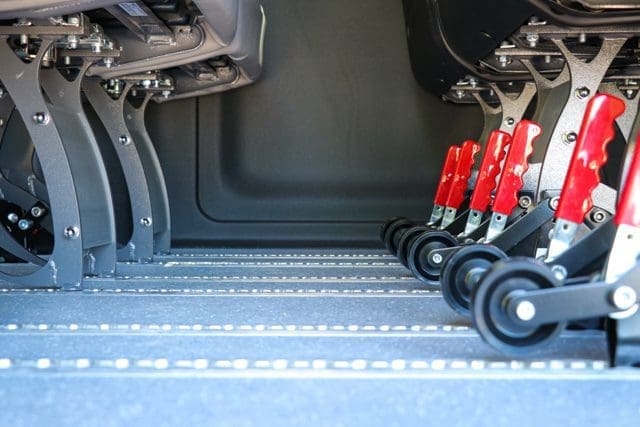
AutoFloor works through a smart tracking system built into the floor of your wheelchair van. That track allows you to move, remove, and lock seats into new positions without tools.
If you’re used to fixed seating, this feels like a big shift. Instead of designing your day around your van layout, your van starts adapting to your riders.
Let’s break it down so you can picture it clearly.
How does AutoFloor let you remove seats safely?
With AutoFloor, each seat is secured into floor tracking using a locking mechanism. To remove a seat, you follow a simple process.
Here’s a quick overview on how it works, which we’ll also look at deeper in the next sections:
- Pull the red pin: It’s located beneath the seat.
- Hold it up: Keep it lifted while you move to the next step.
- Pull the red handle back: You’ll hear a clicking sound.
- Repeat on the opposite side: Both sides must be released.
That clicking sound is important to listen for because it tells you the locking mechanism has disengaged from the floor track.
Now imagine this scenario. It’s a snowy morning in Saskatoon. You planned for two ambulatory passengers. A last-minute call comes in. A rider with a large power chair needs transport. With fixed seats, you’re stuck. With AutoFloor, you release the seats and create space in minutes.
No scrambling, no cancelled rides, and no frustration.
How do seats tilt and roll out with AutoFloor?

Once the red handles are pulled back into the released position, the seat can tilt backward.
Here’s the thoughtful part. The seats have wheels built into them.
That means when you tilt the seat back, you’re not lifting dead weight. You’re guiding it out smoothly.
- Tilt the seat back: Once unlocked.
- Use the wheels: Roll it out of the position safely.
- Store as needed: Depending on your daily setup.
If your team has ever strained their back lifting heavy seats, you understand how important this is. According to the Canadian Centre for Occupational Health and Safety, musculoskeletal injuries remain one of the most common workplace injuries in Canada. Reducing lifting risks protects your staff and keeps operations steady.
With AutoFloor, the system is designed to make reconfiguration manageable and practical.
How do you reposition seats with AutoFloor?
Removing seats is one part of flexibility. Repositioning them is the other.
Let’s say you want to move a seat further back to create extra room between passengers.
Here’s how you do it:
- Line up the front legs: The base legs must sit directly into the floor tracking.
- Check alignment carefully: They must sit properly in the track.
- Push the red handles forward: This locks the seat into position.
When you push the red handles forward, the seat locks back into the tracking system.
There’s no guesswork. When positioned correctly, the mechanism secures the seat in place.
Think of it like sliding furniture into pre-set rails that guide and hold it. Once locked, it becomes part of the vehicle’s structure again.
This matters in real life. A senior centre in Ontario might run group outings on some days and individual medical rides the next. AutoFloor gives you the ability to switch layouts as your program changes.
How does AutoFloor support safer wheelchair positioning?
Flexibility isn’t helpful if safety takes a hit. That’s where the tracking system plays a second role.
When you remove or shift seats, you’re creating defined spaces within the floor track for wheelchair positioning. The track becomes your guide for layout.
The system works together with proper wheelchair securement practices. In our resources, we also provide guidance on safely securing wheelchairs using the floor system.
If you’re thinking about compliance, that’s fair. Canada has strict standards around accessible transportation. Transport Canada outlines safety expectations for modified vehicles and passenger protection.
The goal here is simple. When the seat legs are correctly located in the tracking and locked, the layout remains stable and secure for transport.
What’s a day in the life with AutoFloor look like?

Let’s bring this together.
You manage transportation for an adult day program in Halifax.
Today’s schedule looks like this:
- Morning pickups include two ambulatory seniors.
- Midday appointment requires space for a large wheelchair.
- Afternoon return trip includes three passengers and a support worker.
With a fixed layout, this would mean a compromise. Someone waits. Someone feels squeezed. Staff feel pressure.
With AutoFloor, your driver:
1. Releases and rolls out one seat.
2. Repositions another seat further back.
Locks both into new positions.
3. Total time? Minutes, not hours.
The van adapts to the day instead of forcing the day to adapt to the van.
That shift reduces stress for your team. It creates calmer loading. And it protects the dignity of every rider who boards.
What makes AutoFloor practical for Canadian operations?
Canadian weather and geography create real challenges.
In Yellowknife, space matters a lot when riders wear bulky winter gear. In Vancouver, quick boarding helps during heavy rain, and in rural Manitoba, long travel distances make comfort essential.
AutoFloor supports these realities by:
- Allowing quick seat removal.
- Letting you reposition seating for comfort.
- Giving your team control over interior layout.
The key is the simple mechanism. Red pin. Red handle. Tilt. Roll. Reposition. Lock.
It’s straightforward. No complex tools. No technical gymnastics.
And if questions come up about your flooring system, our customer service team is there to walk you through it. We stick around long after delivery because operations don’t stop once keys change hands.
Why is it helpful to understand how AutoFloor works?
You don’t need to be a mechanic. But understanding how AutoFloor works helps you make informed decisions.
When you know:
- How seats unlock
- How they roll out
- How they lock back into tracking
You can evaluate how this system fits your routes and riders.
The bigger picture is this. Accessible transportation is about more than moving people. It’s about connection, healthcare access, and independence.
When your van layout adapts smoothly, you remove friction from someone’s day. That ripple effect travels further than the route itself.
Want to learn more about AutoFloor?
You came here because your current van setup feels rigid, stressful, and limiting. You wanted to understand how AutoFloor works and whether it could solve the daily pressure your team and riders experience.
Now you know:
- How AutoFloor unlocks and removes seats using the red pin and handle system.
- How seats tilt and roll out smoothly with built-in wheels.
- How seats reposition and lock securely into the floor tracking for flexible layouts.
You’ve seen how the gap shifts. Yesterday felt like scrambling to make fixed seating work. Today looks like an adaptable space that changes with each rider. Tomorrow can look like calmer drivers, safer transfers, and riders who feel respected from curb to curb.
Over the past two decades, we’ve worked alongside transit operators, adult day programs, and healthcare teams across Canada who needed practical solutions, not sales talk. We’ve delivered vehicles into dense cities like Toronto and remote northern communities alike, supporting programs that depend on reliability every single day.
Our focus has always been simple. Listen first. Build around real operations. Stand behind what we deliver long after the keys are handed over. That’s how we’ve earned our place in this industry. If you have questions about whether AutoFloor fits your routes and riders, click the button below to talk to a mobility expert.
If you’re not ready to connect yet, we’ve got a few helpful resources to guide your next step.
Recommended next reads
- How to choose a wheelchair van (11 steps): A practical guide that walks you through program fit before you commit.
- High vs. low floor for full size wheelchair vans (pros & cons): Helps you understand floor configurations and how they impact daily operations.
- Top 5 misconceptions of AutoFloor: Clears up common misunderstandings so you can make a confident decision about AutoFloor systems.


 English
  French