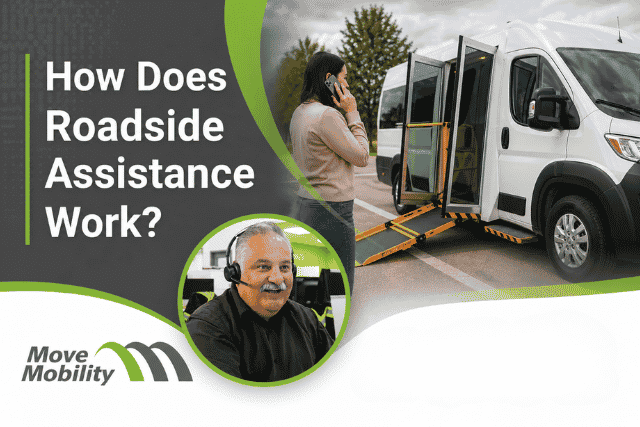
Roadside assistance sounds simple until your van is stuck on the shoulder and your day is full of people counting on you. In Canada, it doesn’t take much. One cold snap can spike demand fast. Imagine you’re driving a mobile clinic on a snowy road in rural Saskatchewan. The engine stops, and your patients are stuck waiting. This gap between your mission and a broken van feels scary. You care about the people you serve and want to give them dignity. We know how it feels to have a goal and hit a wall like that.
MoveMobility has been an industry leader for over 20 years. In the last three years alone, we’ve built 480 wheelchair vans and 180 medical units. We hold Ford Pro Upfitter and Stellantis QPro certifications and also have the National Safety Mark on every vehicle. We’ve helped organizations like yours and Liard First Nation overcome barriers to healthcare and transportation. We know other manufacturers are building these vehicles, too, so we keep all our information transparent and educational.
After reading this article, you’ll have a much better idea about how Ford Canada roadside assistance and Stellantis roadside assistance work. Watch the video below if you prefer to learn by watching.
How does Ford roadside assistance work?
When your wheelchair van or mobile medical van goes down, it results in cancelled appointments, delayed outreach, and people left waiting. Ford roadside assistance Canada exists to reduce that disruption and help your program recover quickly when something unexpected happens on the road.
This service is included with new Ford Transit–based vehicles and runs alongside your powertrain coverage. It’s designed to support organizations that rely on their vehicles daily, including community transport, mobile clinics, outreach teams, and healthcare programs operating across Canada.
It’s not a repair warranty. Instead, it focuses on getting your vehicle unstuck, restarted, or safely to a dealer, so your team can regroup and continue delivering services.
Key program fundamentals:
- Available 24 hours a day, 365 days a year
- Valid across Canada
- Covers the driver of the registered vehicle, not just the original purchaser
- Transfers to future owners at no cost during the coverage period
This matters for organizations with rotating staff, shared fleets, or program expansions into new regions.
How long does Ford roadside assistance coverage last?

The coverage period is tied to the Ford powertrain timeline, which applies to Transit vans used for mobility and healthcare services.
- Gas-powered Ford Transit vans: 5 years or 100,000 km, whichever comes first.
- Diesel Ford Transit vans: 5 years or 160,000 km, whichever comes first.
Coverage begins on the vehicle’s original in-service date. The program is complimentary during this period and may be cancelled by Ford with written notice. There is no refund if that occurs.
Who do you contact when you need Ford emergency roadside assistance?
When your van is disabled, time matters. Ford keeps access simple and centralized.
Primary contact options:
- Phone: 1-800-665-2006
- Website: https://www.roadsideaid.com
- Mobile app: Sykes4Ford Roadside Assistance
- Email: roadsideinfo@sykes.com
Roadside services are delivered by Assistance Services Group on behalf of Ford Motor Company of Canada.
Have this information ready before you call:
- Current odometer reading
- Exact vehicle location or nearest intersection
- Confirmation that the vehicle is in a safe location and whether the driver will remain with the vehicle and has access to the keys
- Licence plate number
Having these details prepared can significantly reduce delays, especially when your team is supporting clients on-site.
What does Ford roadside assistance cover?
Ford roadside assistance covers several things:
Road service and towing support
Towing is one of the most important elements of Ford Canada roadside assistance for organizations.
What’s included?
- One tow per disablement
- Towing to the nearest Ford dealership
- If your selling dealer is within 25 km, towing may go there instead
- If you arrange towing outside Ford roadside assistance service areas, reimbursement is available up to $75 per disablement
Towing applies only on publicly maintained roads where a tow truck can safely access the vehicle. Ice roads, logging roads, seasonal roads, and other non-maintained routes may result in additional charges or service limitations, depending on access and safety conditions.
Battery boost services
Medical and mobility vans often run with added electronics and may sit parked between shifts.
Battery support includes:
- No-charge battery boost
- If the vehicle cannot be started after boosting, towing is covered
This is especially relevant for mobile clinics operating intermittently or seasonally.
Fuel delivery when you’re stranded
If your wheelchair van or medical van runs completely out of fuel:
- Ford provides up to 10 litres of fuel at no charge
- Maximum of two fuel deliveries per calendar year
- Vehicles stranded at fuel stations or dealerships are excluded
This service applies only when the vehicle is fully out of fuel and not running.
Flat tire assistance
Getting a flat tire can bring a full day of service to a halt.
Flat tire support includes:
- Spare tire mounting at no charge
- If more than one tire is flat and the van cannot be driven, towing is provided
Tire repairs themselves are not included. The service focuses on restoring mobility or getting the vehicle to a service facility.
Winching from snow or mud
Canadian winters make this service especially relevant for outreach programs.
Winching coverage:
- Available when the vehicle is stuck in snow or mud on or near paved roads
- Winching is covered up to 100 feet from the roadway
Recovery beyond that distance, or from non-public roads, is not included.
Emergency lock-out assistance
Locked keys inside the van during a busy service day?
- Ford roadside assistance will unlock the vehicle
- Key replacement or recovery is not included
- If you use a non-Ford provider, reimbursement is available up to $75
Trailer considerations for mobile programs
Some mobile medical programs tow trailers with supplies or equipment.
Trailer support is limited:
- Coverage up to $100
- Applies only if the Ford van itself is disabled
- If the trailer is disabled but the van is operational, trailer service is not covered
What Ford roadside assistance does not cover
Understanding the limitations of Ford roadside assistance helps prevent surprises.
Excluded items include:
- Parts and mechanical repairs
- Tire repairs
- Storage fees
- Rental of towing equipment
- Impound towing not handled by licensed providers
- Assistance from private individuals
Roadside providers are independent contractors. Any damage or loss during service must be reported within 24 hours to the provider and your insurance company.
What happens during extreme weather events?
In severe weather, response times may be delayed due to safety or access issues.
If Ford advises you to arrange service yourself:
- Reimbursement may be available up to $75 per disablement
- Claims are submitted after the incident
This situation can occur during blizzards, ice storms, or in remote locations where road access is limited. On winter roads, coverage typically applies only to towing the vehicle to a dock or rail terminal, and from the terminal to a Ford dealership. Rail or water transport itself is not covered upfront, though limited reimbursement may be available afterward with receipts.
Emergency travel expense reimbursement for organizations
If your van becomes disabled far from home, Ford’s emergency roadside assistance helps reduce the operational impact.
Eligibility requirements:
- Mechanical breakdown
- The vehicle is more than 160 km from your residence address
Reimbursement up to $500 total may cover:
- Lodging and meals (excluding alcohol and tips)
- Rental vehicles
- Commercial transportation
Coverage applies for up to three days, or until the vehicle is repaired. Claims must be submitted within 20 days of the incident.
How do reimbursement claims work?
If you pay for services out of pocket:
1. Submit your claim at www.roadsideclaims.ca
2. Include a written explanation of events
3. Attach all paid receipts
4. Retain copies for your records
Processing typically takes 4 to 6 weeks.
Ford roadside assistance is there to help organizations recover quickly when a wheelchair van or mobile medical van can’t operate as planned. It focuses on mobility, safety, and minimizing disruption so your team can get back to serving people as soon as possible.
How does Stellantis’ roadside assistance work?

This program is provided by FCA Canada Inc., now part of Stellantis, and it applies to eligible Ram ProMaster vans registered and normally operated in Canada.
Stellantis roadside assistance is a 24-hour emergency support program, not a warranty. It runs alongside your Basic and Powertrain warranties and focuses on roadside help and towing when your van can’t be driven due to a mechanical issue.
Here’s how it applies to organizations:
- Service is available to the owner or driver of an eligible vehicle
- Coverage applies even if staff rotate or vehicles are reassigned
- Assistance is available anywhere in Canada
- The vehicle must be properly licensed, insured, and be using publicly maintained roadways to qualify for roadside assistance services.
This structure works well for mobility programs, mobile clinics, and outreach teams that rely on predictable support when things go sideways.
How long does Stellantis’ roadside assistance coverage last?
Coverage length depends on how the vehicle is classified and used.
Standard coverage for eligible vehicles:
- 5 years or 100,000 kilometres, whichever comes first
Important for healthcare and transport programs: If your van is classified as being used for ambulance, police, taxi, limousine, postal, or ride-sharing service, roadside assistance coverage is reduced to:
- 3 years or 60,000 kilometres, whichever comes first
Coverage starts from the vehicle’s original in-service date.
Who do you contact when you need Stellantis roadside assistance?
If your Ram ProMaster–based van needs roadside help, there’s one number to know.
- 1-800-363-4869 (24-hour roadside assistance phone number)
This number works anywhere in Canada and connects you to the roadside dispatch network. It does not ring directly to FCA Canada offices.
Be ready to share the following information. Having this all ready speeds things up:
- Vehicle Identification Number (VIN)
- Licence plate number
- Odometer reading in kilometres
- Exact location of the vehicle and whether the vehicle is in a safe, accessible area
- Phone number you can be reached at
- Type of service needed, such as towing or a battery boost
- Confirmation that the driver is with the vehicle and has access to the keys
You’ll need to personally authorize the service once the provider arrives. In some cases, a dealership may contact roadside assistance on your behalf, though this is not the preferred approach, as roadside dispatch may need information the dealer can’t always provide.
What does Stellantis roadside assistance cover?
Like Ford, Stellantis’ roadside assistance covers a range of services.
Towing support when your van can’t be driven
If your van is disabled due to a mechanical breakdown:
- It will be towed to the nearest authorized FCA Retailer that services Ram vehicles
- You may choose another FCA Retailer within 35 kilometres of the breakdown location
Towing related to accidents is not covered under the roadside assistance program.
Battery boost services
If your battery is dead:
- A jump-start service will be dispatched
- If the van still won’t start, towing is provided under the same distance rules
This is especially relevant for mobile medical vans that sit between deployments or run auxiliary equipment.
Flat tire assistance
If you get a flat tire during service hours:
- The service provider will remove the flat tire and install your spare
- The spare must be properly inflated and in safe operating condition
What’s not included?
- Tire repairs
- Replacement tires
The goal is to restore mobility or enable safe towing.
Emergency lock-out help
If keys are locked inside the van or the locks are frozen:
- Help will be sent to provide access to the seating area only
- Key replacement costs are not covered
This can save valuable time during a packed service day.
Fuel delivery when you run out
If your van runs out of fuel:
- A small amount of gasoline may be delivered where regulations allow
- For alternate fuels or restricted areas, the van will be towed to the nearest refuelling centre
Fuel costs are always your responsibility.
Winching from snow or ditches
If your van is stuck:
- Winching is provided only if the van is on or adjacent to a public roadway
- The vehicle must appear undamaged
- The service brings the van back to the nearest road surface
Important limitation: If the van can’t proceed under its own power after winching and needs to be towed, you are responsible for both the winch and tow costs.
Key limitations you should know upfront
There are a few limitations of this roadside assistance you should know about.
Roadside assistance does not cover:
- Off-road use, logging roads, seasonal roads, beaches, or construction sites
- Vehicles stuck while plowing snow
- Repeat calls for the same avoidable issue
- Towing from one retailer to another
- Parts, labour, repairs, tires, or vehicle storage
- Towing related to accidents
Service providers are independent contractors, not FCA Canada employees.
What happens in remote or northern locations?
If your van breaks down far from an FCA Retailer:
- FCA may authorize repairs at a nearby non-FCA service facility to reduce delays
- If road transport isn’t possible, the program covers towing to a dock or rail terminal, and from the terminal to an FCA Retailer at the end of the trip.
Important: On winter roads, coverage generally applies only to the dock or rail terminal and from the terminal to the dealership. Rail or water transport itself is not covered upfront, but FCA may reimburse up to $300 per incident for special transportation costs when receipts are submitted.
Keep in mind: You must arrange and pay for transport by rail or water first. FCA may reimburse up to $300 per incident for those transportation costs .
Reimbursement rules if you pay out of pocket
If you pay for a service that’s normally covered:
To qualify for reimbursement:
- You must have called the toll-free number first
- Claims must include original, detailed receipts
- Reimbursement is limited to local contractor rates, up to $100 per incident, unless otherwise stated
- Claims must be submitted within 30 days
Mail claims to:
- FCA Canada Roadside Assistance
- 248 Pall Mall, P.O. Box 5845
- London, Ontario N6A 4T4
Stellantis roadside assistance is built to help your wheelchair van or mobile medical van recover from mechanical breakdowns on public roads. It’s structured, predictable, and clear about its limits. When you understand how it works before you need it, you’re better equipped to keep services moving and people supported.
Got any questions about roadside assistance?
You came here because you’ve felt the risk already. A breakdown cancels care, delays rides, and puts pressure on people who rely on you to show up. Ford roadside assistance matters when reliability isn’t optional, and downtime has real consequences.
Here’s what you now know:
- How Ford and Stellantis roadside assistance works in Canada, including who to call, what’s covered, and where limits apply.
- What to prepare before you ever need help, so your team can respond fast and stay focused on people, not logistics.
At MoveMobility, we’ve spent over two decades working alongside organizations that can’t afford to rely on guesswork when it comes to mobility. We design, build, and support wheelchair vans and mobile medical vans that operate in real Canadian conditions, from dense urban cores to remote regions. Our role goes beyond the build.
We help you plan for the moments that test your operations, including service, roadside support, and long-term reliability. If you have questions about how roadside assistance fits into your program, click the button below to talk to a mobility expert who understands what you’re going through.
If you’re not ready to talk to a mobility expert yet, we have a few other resources you should check out to learn more.
What should you read next?
- How to get wheelchair van service and repairs in Canada: Learn how ongoing service works after delivery and what support looks like.
- Do wheelchair van conversions void the manufacturer’s warranty? Understand how conversions interact with OEM warranties.
- Wheelchair van maintenance practices you need to know: See how proactive maintenance reduces breakdowns and keeps programs running smoothly.

 English
  French