(VIDEO) Wheelchair Van Lift FAQs

If you are exploring wheelchair van lifts, you likely have questions about how they work, how much weight they can handle, and whether they are the right fit for your organization. In this article, we answer the most common wheelchair lift FAQs so you can better understand safety, maintenance, and what to consider before choosing one.

Play

Key Moments in this Video

1
What Is a Wheelchair Lift?
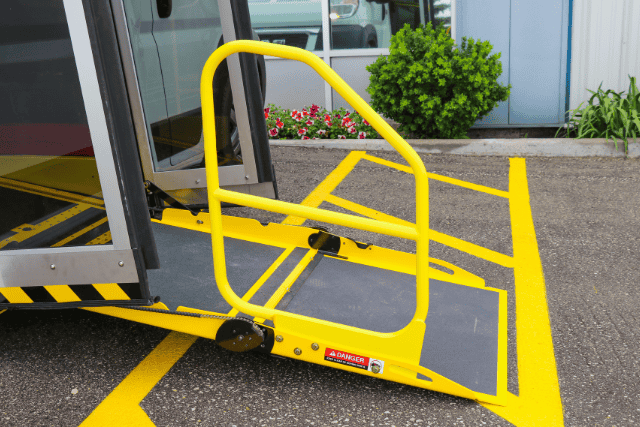
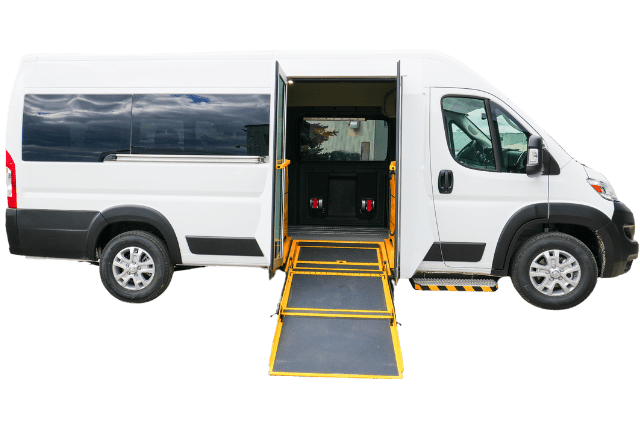
A wheelchair lift is a hydraulic platform attached to a van, either at the rear or the side, that raises and lowers to help a wheelchair user move between ground level and the van floor.

Think of it like a small elevator. The platform comes down to meet the person where they are, they roll on, and the lift brings them up to the van floor. There is no incline and no need to push up a slope. It is a flat, level surface that does the work for you.

For organizations transporting wheelchair users regularly, that difference matters. A lift changes the boarding experience from something physically demanding into something much more controlled and consistent.
43
How Does a Wheelchair Lift Work?
Using a wheelchair lift is a straightforward process. First, the van is parked and the parking brake is engaged. Then the lift is deployed using the control panel. The platform lowers flat to the ground, the wheelchair user rolls onto it, and the operator presses the button to raise the platform smoothly to the van floor. From there, the wheelchair rolls directly into the vehicle.

To unload, the same steps happen in reverse. The lift lowers the passenger back down on a level platform rather than asking someone to manage an incline.

It does take a little longer than a ramp, but that tradeoff often makes sense when reducing physical effort is a priority. For teams moving passengers throughout the day, especially those using heavier mobility devices, that extra support can make a meaningful difference.
93
What Is the Weight Capacity?
Weight capacity depends on the lift and where it is installed. In MoveMobility vehicles, rear-entry lifts have a weight capacity of 1,000 pounds, while side-entry lifts have a weight capacity of 800 pounds. That number includes the passenger, their mobility device, and any additional cargo.

That may sound like plenty, but the total can add up faster than people expect. Some powered wheelchairs are already quite heavy on their own, and once personal equipment or medical items are added, the margin can shrink quickly.

It is also important to think beyond weight alone. Platform size matters too. Standard lift platforms are 34 inches wide by 54 inches long, which works well for many manual and powered wheelchairs. For larger devices, a wider 37-inch platform may be a better fit. Before ordering a wheelchair accessible vehicle, it is worth confirming both the lift capacity and the platform dimensions based on the people and equipment you need to transport.
165
Is a Lift Right for Your Organization?
A wheelchair lift tends to be the right fit when you are transporting passengers in heavier wheelchairs and want to reduce the amount of physical strain placed on staff. Instead of pushing a person and chair up an incline, the lift handles the elevation and your team operates the controls.

That can be especially helpful for organizations making frequent trips or supporting passengers with mobility devices that are harder to manage manually.

At the same time, a lift is not automatically the best choice for every situation. If most passengers use walkers or canes rather than wheelchairs, a lift may feel less comfortable because it raises them off the ground. In those cases, a ramp can offer a gentler experience. And for organizations where speed is the highest priority, lifts are generally slower to use than powered ramps.

The key is not deciding that one option is always better. The real goal is choosing the right tool for the people you serve and the way your organization operates.
225
Is a Lift Safe?
Yes, a wheelchair lift is designed with multiple built-in safety features.

One of the most important is the interlock system. The lift will not operate unless the engine is running, the van is in park, and the parking brake is engaged. That creates a hard stop if something has been missed before use.

The platform also includes a restraint belt to help prevent the wheelchair from rolling too far back during operation. Raised side barriers help keep the chair from shifting sideways while the platform is moving. These features work together to create a more stable experience for the passenger.

Safe operation also depends on using the lift in the right conditions. The platform is designed to be deployed on level ground. On a significant slope, it can tilt, which affects comfort and stability. There is also a manual backup system, so if there is an electrical issue, staff can still raise or lower the platform without power.

These are standard parts of lift operation and safety, not extra add-ons.
298
How Do You Maintain a Wheelchair Lift?
Lift maintenance is not especially complicated, but it does need to be done consistently. One of the most important habits is simply operating the lift at least once a week, even if no one is riding it. Hydraulic systems and moving parts need regular use, and a lift that sits too long can develop issues that might otherwise have been avoided.

Beyond that, routine care includes lubricating the mechanical parts on schedule, keeping the platform clear of snow and ice, and arranging periodic safety inspections based on the manufacturer’s recommendations.

A hydraulic lift does ask for more maintenance attention than a manual ramp. That is important to say plainly. But in many cases, the problems that come up are not because the lift is unreliable by design. They happen because regular upkeep was skipped.
348
What If My Lift Breaks Down?
Even a well-maintained lift can eventually run into a problem, whether that is a hydraulic issue, a cold-weather freeze, or an electrical fault. When that happens, the first step is not to force it.

Many lift issues can be diagnosed over the phone by a service team. In some cases, the problem can be identified and resolved without a major repair. If the vehicle does need service, support locations and authorized service centres can help get the lift back into working order.

It is also important to remember that the lift includes a manual backup system. If the powered system is not working, the platform can still be operated manually while next steps are arranged. That helps ensure the passenger is not left stranded and gives your team a safe way to respond in the moment.
Aleck Jones
Man smiling for photo in a office
Aleck

Frequently Asked Questions:

1. Are wheelchair lifts better than ramps?

It depends on who you are transporting. Wheelchair lifts are often a better fit for heavier mobility devices and for organizations that want to reduce physical strain on staff, while ramps may feel easier and more comfortable for people using walkers or canes.

2. How much weight can a wheelchair lift hold?

That depends on the lift and where it is installed. In MoveMobility vehicles, rear-entry lifts can handle up to 1,000 pounds, while side-entry lifts can handle up to 800 pounds, including the passenger, mobility device, and cargo.

3. Can a wheelchair lift be used on uneven ground?

A wheelchair lift should be used on level ground whenever possible. On a significant slope, the platform can tilt, which can make the experience less stable and less comfortable.

4. How often should a wheelchair lift be used and maintained?

A wheelchair lift should be operated at least once a week, even if no one is riding it. Regular use, lubrication, clearing snow and ice, and periodic safety inspections can help prevent common problems.

5. What should you do if a wheelchair lift stops working?

Do not force it. Most problems can be diagnosed by a service team, and many can be resolved over the phone. If needed, the lift also has a manual backup system so the platform can still be operated while repairs are arranged.

MoveMobility logo with green and grey curves and text

Connect with one of our Mobility Experts

What happens if you submit the form?

We understand that you don’t want to receive multiple phone calls, emails or spam. You just want to speak to a commercial mobility specialist who can answer your questions about accessible and mobile medical vans.

If you submit the form or request more information from us, here’s what will happen:

  • Within one business day, you’ll receive a phone call from one of our commercial mobility specialists at the phone number you provide. Click here to Meet the Team.
  • If we miss you on the phone, you’ll receive a voice message to call us back. You’ll also get an email to let you know we tried to connect but missed you.
  • Once we’ve connected, your commercial mobility specialist will have a few questions for you to understand what type of vehicle you’re looking for help with.
 
If at any point during the process you feel we’re just not the right fit for your community or organization, just let us know. 


MoveMobility logo

Request More Information

Let us know what you’re looking for help with and we’ll be in touch.

Play