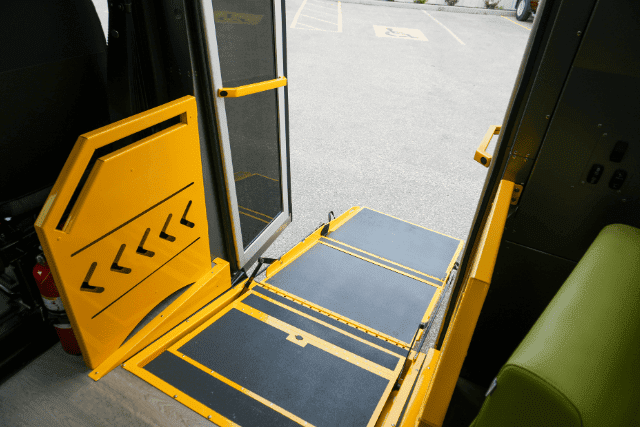
Have you noticed that powered ramp conversions in wheelchair vans often cost more than hydraulic lifts? If you’re an organization in Canada trying to decide between the two, this can be confusing. Both options provide safe and reliable access, but the price difference might raise a few questions.
You might wonder what’s driving the cost, if the higher price means something important, or how this affects your program’s budget. These are real concerns, and understanding the “why” behind the numbers helps you make a confident choice.
At MoveMobility, we’ve been building wheelchair vans in Canada for over 20 years. We’ve partnered with groups like Transdev and Loft, along with many healthcare networks, governments, and non-profits across the country. Our work is all about reducing barriers to care and transportation, while supporting the dignity of the people you serve. We also know we’re not the only manufacturer in the market, so we aim to give you clear, unbiased information you can trust.
In this article, you’ll learn why powered ramps often carry a higher price tag than hydraulic lifts:
- Why are powered ramp conversions more costly?
- The factors that drive their pricing
- The big picture of what the costs mean for your program
Powered ramp conversions vs. hydraulic lifts: Why are ramps more costly?
When we talk with organizations across Canada, one question comes up again and again:
“Aren’t hydraulic lifts more expensive than ramps?”
It feels like they should be. A hydraulic wheelchair lift for vans looks bigger, heavier, and runs on a full hydraulic system. In reality, though, powered ramp conversions in wheelchair vans are usually the pricier option.
So why is that? The main reason is the level of work that goes into a powered ramp conversion compared to van wheelchair lifts. While a lift often mounts onto the van with fewer changes, a powered ramp in a wheelchair van usually involves major reconstruction. That means more labor, more customization, and more hours in the shop. Let’s unpack this step by step.
Powered ramp installation requires much more labour
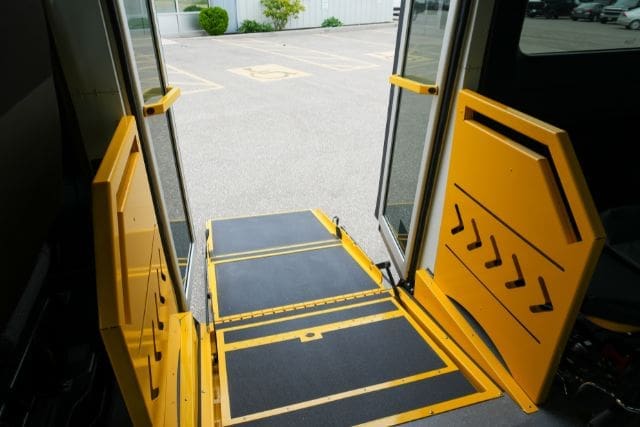
A powered ramp conversion isn’t a quick bolt-on job. It’s a complete rebuild in certain areas of the van so the ramp can fit, operate, and last. That’s where much of the cost comes from.
Removing the vehicle doors
The first step often means removing one or more of the original doors. This isn’t as easy as just taking them off. Doors in modern vans are tied into wiring systems, seals, and even safety sensors. Everything has to be carefully taken out, labelled, and set up for reinstallation later. Compare that with a wheelchair platform lift for van models, which usually work with the factory doors left in place.
Cutting into the floor
Powered ramp conversions in wheelchair vans almost always need the floor lowered or cut out. This makes sure the ramp sits flat and creates the right slope for safe entry. In places like Winnipeg or Edmonton, where winter ice can make surfaces slippery, the right angle matters for safety. Cutting into the van floor is precision work. Every cut must line up with the van’s frame to stay strong. In contrast, a van wheelchair lift installation often mounts directly onto existing frame points, saving time and labor.
Rebuilding and customizing doors
Once the floor is lowered, the doors usually need rebuilding. Sometimes they’re widened, reshaped, or fitted with new mechanical parts so they work with an automatic wheelchair ramp for van setups. This is time-intensive.
For example, in a rear ramp wheelchair van conversion, the back hatch may need reinforcement to hold the new ramp system. In a side-entry wheelchair ramp for van builds, doors often need to be reworked entirely. That’s a very different level of labour compared to installing a hydraulic wheelchair lift for van use.
More customization overall
Every ramp for van wheelchair conversions is custom-fit to that vehicle. That means reworking wiring, electronics, flooring, and sometimes even the undercarriage. Vans with a wheelchair ramp often end up with unique changes that go far beyond “standard” installation. Lifts, while still technical, are more modular. Wheelchair lifts for vans usually come as ready-to-mount units that take less re-engineering.
Time equals money
Every hour spent modifying a van adds to the final cost. Powered ramp conversions typically require:
- More technician hours in the shop.
- More engineering work to reconfigure the floor and doors.
- More testing time to make sure the ramp works smoothly and safely.
All of these factors contribute to the higher cost of installing a powered wheelchair ramp than a wheelchair lift.
Use-case considerations: Choosing between a ramp and a lift
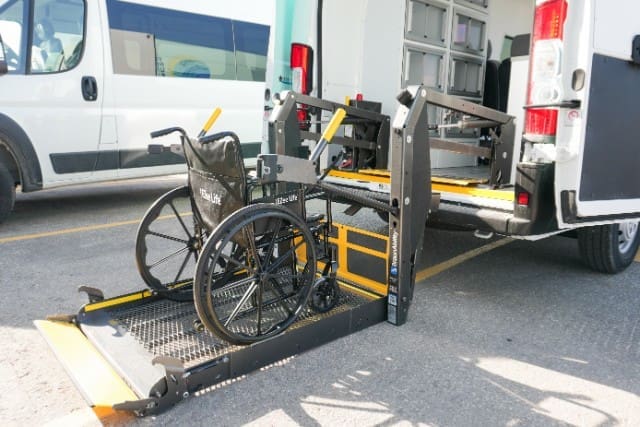
When weighing a powered ramp conversion against a hydraulic wheelchair lift for a van, the real answer comes down to use. Neither option is “better.” They’re simply built for different needs. Let’s look at some situations that can help you think through which choice might work best for your team and the people you serve.
When does a hydraulic lift make more sense?
- Less effort for drivers: A hydraulic wheelchair lift for a van is operated with a button. This makes it easier for older drivers or staff who may not have the level of mobility required to navigate a wheelchair up a ramp multiple times a day.
- Consistent performance in different settings: A lift raises and lowers the passenger straight up and down, so it doesn’t need extra clearance on the side or rear of the van. This can help when parking spaces are tight, sidewalks are narrow, or curbs make ramp use difficult.
- High passenger turnover: If you’re moving several riders on and off the vehicle many times a day, the quick up-and-down motion of a lift can sometimes save time.
When does a powered ramp conversion make more sense?
- Smoother passenger experience: Riders roll directly up or down the ramp. For some, it feels a bit safer and less intimidating than being lifted several feet into the air.
- Lower maintenance over time: Powered ramps are simpler machines. They don’t rely on hydraulic parts, which can mean fewer breakdowns in the long run.
- Faster boarding for some groups: With one motion, a ramp drops down and passengers are on their way. This can keep trips moving quickly in certain settings.
4 other factors to keep in mind
- Cost upfront and over time: The cost to install a wheelchair ramp in a van can be higher than putting in a lift, since ramps require door removal and custom rebuilds. Lifts, on the other hand, may need more upkeep as parts wear out.
- Number of riders per trip: A small group using lighter wheelchairs may find ramps more efficient. A larger group with heavy chairs may find a lift more practical.
- Type of vehicle: Not all vans are suited for both. Some models are easier to cut into and rebuild for ramps, while others are already set up and good to go for a lift installation.
- Staff training: Think about how much training your team will need. Lifts require learning to secure riders safely while the platform raises and lowers. Ramps may involve guiding chairs up the slope.
The takeaway
A van with a wheelchair lift and a van wheelchair ramp both provide safe, dignified access. It’s not about being better but about what fits your situation. If your organization values smooth passenger comfort and lower maintenance, powered ramp conversions might check the box. If your focus is on handling heavier chairs with less driver effort, hydraulic wheelchair lifts for vans may be the way to go.
The goal is to match the tool to the job. When you think through your team’s daily routine, the type of riders you serve, and the spaces where your van will park, the right choice often becomes clear.
Got any questions about powered ramp conversions or hydraulic lifts?
You likely landed on this article while trying to figure out whether to go with a powered ramp conversion or a hydraulic lift for your wheelchair van. If you’ve made it this far, you now know that powered wheelchair van ramp conversions are more expensive than hydraulic lifts and why.
Our team at MoveMobility is all about helping you find the right solution to reduce barriers to transportation and healthcare. It puts a smile on our face when we see organizations like yours using vehicles that help people with more dignified transportation all over Canada.
If you have any questions about powered ramp conversions, wheelchair van lifts, or anything else related to wheelchair accessible transportation, click the button at the end of this article to talk to a mobility expert.
If you’re not ready to reach out yet, that’s fine. We have a few other resources for you to look at to continue learning.
- How much does a wheelchair van cost? Reading this will help steer you on the right course with your budget.
- What’s the weight capacity of a wheelchair lift? You’ll learn if a wheelchair lift can support the wheelchairs you plan to transport.
- Manual vs. powered ramp: This comparison-based article discusses the differences between manual and powered wheelchair van ramps.

 English
  French