On any given night, more than 60,000 people face homelessness in Canada. That number reflects the people in your own community without safe places to sleep. As an organization, you see the gap between what people need and what’s available. Without action, the cycle of homelessness keeps going, leaving staff, shelters, and health services stretched thin. The goal is simple: Safe spaces, dignity, and a real path out of homelessness. The hard part is finding the funding to make it happen.
At MoveMobility, we understand that challenge. For over 20 years, we’ve helped health teams, governments, and non-profits across Canada reduce barriers to care. We’ve built more than 150 mobile medical units with Ford QVM, Stellantis QPro, and Canada’s National Safety Mark certifications. Organizations like Keewatinohk Inniniw Minoayawin have trusted us because we listen first and design around real needs. And while we’re proud of our experience, we know we’re not the only manufacturer, which is why we share funding guidance openly.
In this article, you’ll learn where your organization can find funding to support homelessness in Canada.
We’ll cover:
- Federal programs you can apply to
- Provincial funds in regions like BC and Ontario
- Community grants from non-profits
- Capital incentives to help with mobile units
What federal programs support homelessness in Canada?
The federal government is a good place to start if you’re looking for ways to help tackle homelessness in Canada. Federal programs give money to local groups, health teams, and non-profits that are working to support people without safe housing. Some of these programs can help with capital costs, like buying a mobile outreach unit. Others can cover staff, supplies, or outreach work that go hand in hand with a vehicle.
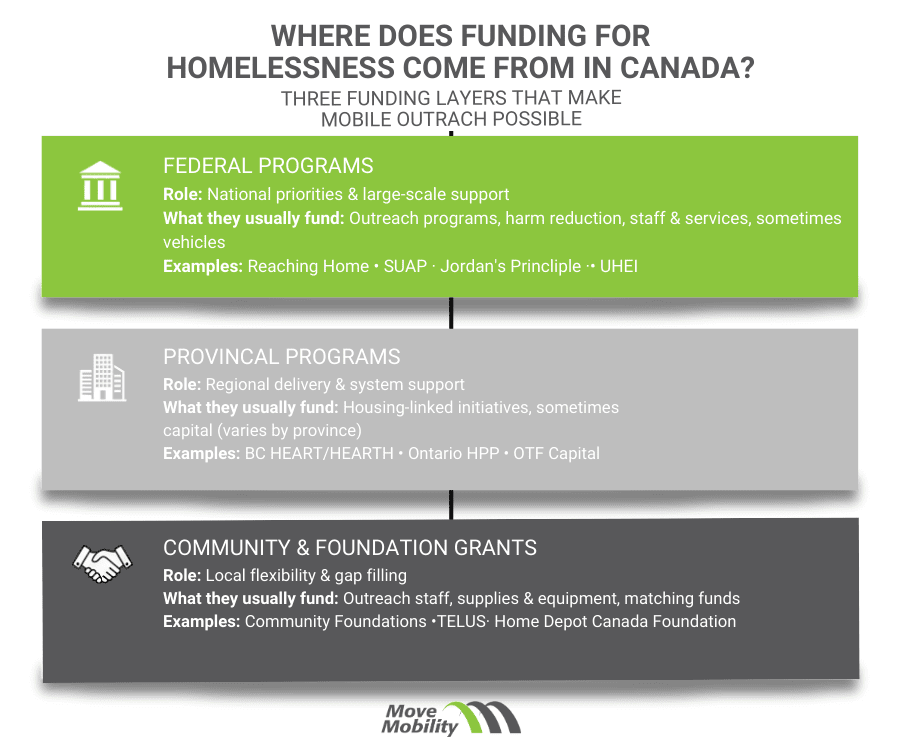
Let’s break down a few of the main options you should know about.
Reaching Home: Canada’s homelessness strategy
Reaching Home is the biggest federal program focused on homelessness. It gives money to local organizations, which then pass it on to community projects. The main goal is to reduce chronic homelessness and ensure that local services work better together.
- What it covers: Outreach work, housing supports, system planning, and sometimes smaller capital items like renovations or program tools.
- How it helps you: Reaching Home is not usually used for buying vans, but it can fund the people and programs that keep a van running. For example, it could pay for outreach staff or case workers who use the vehicle every day.
Think of Reaching Home as the engine that helps run the program, even if it doesn’t pay for the vehicle itself.
Substance Use and Addictions Program (SUAP)
SUAP is run by Health Canada. It has a strong history of funding harm reduction projects, including mobile health vans. This makes it one of the most direct options if your outreach plan involves a vehicle.
- What it covers: Harm reduction supplies, outreach staff, treatment supports, and sometimes capital like vans.
- How it helps you: If your work connects homelessness with substance use or addictions, SUAP can support both the mobile unit and the people who work in it.
This program is often one of the best fits for funding a mobile outreach unit.
Jordan’s Principle (Indigenous Services Canada)
Jordan’s Principle makes sure First Nations children have equal access to services. Unlike many other programs, this one clearly says it can cover capital assets, including vehicles.
- What it covers: Services for First Nations children, plus the tools needed to deliver them.
- How it helps you: If your outreach work supports Indigenous children, you could apply to get a mobile outreach unit paid for through this program.
This is one of the clearest paths for direct funding of a vehicle purchase.
Emergency Treatment Fund
This program works through agreements between provinces and the federal government. In past projects, it has helped buy outreach and clinical vans to serve communities.
- What it covers: Addiction treatment, urgent outreach services, and sometimes vehicles or other capital items.
- How it helps you: If your province is part of an agreement, this fund could help pay for a mobile unit or for the staff who deliver services in it.
Unsheltered Homelessness and Encampments Initiative (UHEI)
This program was launched in 2024 with $250 million spread over two years. It helps communities respond to encampments and unsheltered homelessness through Community Encampment Response Plans.
- What it covers: More shelter beds, transitional homes, outreach, and case management.
- How it helps you: The focus is on moving people from encampments into safer housing. While the funding hasn’t clearly stated that it can be used to pay for vehicles, you could make a case for a mobile outreach unit if it’s tied directly to encampment response in your community.
Provincial funds that support homelessness in Canada
Each province in Canada has its own approach to funding homelessness programs. Some focus on housing, while others also put money into outreach, health, and emergency support.. Even when a fund doesn’t cover the vehicle itself, it may support the staff and programs that make the vehicle work. Let’s look at what’s happening with homelessness funding across the country. Click on the program name below for more information.
British Columbia
BC has taken some of the biggest steps in responding to homelessness in Canada.
- HEART & HEARTH programs: These were created to respond to encampments and move people into safer housing. The province announced $44 million in capital funding to expand temporary supportive housing and outreach services. While it doesn’t clearly say “vehicles,” the focus on capital shows BC is open to projects tied to outreach and safety.
- Homelessness Community Action Grant (SPARC BC): This grant helps with planning and community-led innovation. But here’s the catch: it does not fund capital items like vehicles. Instead, it’s more about testing new ideas, covering program costs, and building partnerships.
Ontario
Ontario runs one of the largest provincial homelessness funds.
- Homelessness Prevention Program (HPP): This program gives money to regional service managers, who then fund local projects. It can support capital investments in transitional and supportive housing. While most projects are about buildings, there’s potential to connect a vehicle purchase if it directly supports housing outcomes.
- Ontario Trillium Foundation – Capital Grants: OTF’s Capital stream pays for both fixed and non-fixed equipment. A mobile outreach unit can often fall under non-fixed equipment. If you can show how the vehicle supports community impact, this can be a strong option.
Quebec
Quebec has two main funds that matter here.
- Emergency Homelessness Assistance Fund: This fund, often managed with Centraide, provides money to agencies to improve outreach, expand staff, and increase services. It doesn’t buy vehicles directly, but it can pay for the people and programs tied to mobile outreach.
- Funding program to prevent and reduce homelessness: This supports local solutions to homelessness, from prevention to direct services. Again, it’s more program-based, but if your project includes a mobile outreach unit, the grant could help cover the staffing and service delivery side.
Alberta
Alberta offers several streams through its affordable housing and homelessness supports.
- Indigenous Housing Capital Program: This program funds Indigenous-led housing projects and has a strong capital focus. While mainly for buildings, it’s possible to argue for mobile outreach as part of community infrastructure.
- Other homelessness supports: The province also funds shelters, navigation centres, and outreach services. These funds typically cover staff and program costs. If you have the vehicle from another source, Alberta’s programs can help pay for the work that happens inside it.
Bonus: Homelessness Reduction Innovation Fund (HRIF)
HRIF supports one-time, data-driven projects that reduce homelessness.
- What it covers: Outreach, staffing, and system improvements. Smaller capital items, such as renovations, may be allowed.
- How it helps you: HRIF won’t usually buy you a van, but it can pay for the programs, staff, or supports that make a mobile outreach unit effective.
Key takeaway
Across Canada, provincial programs vary in how much they focus on capital versus program costs. Here’s the simple breakdown:
- BC and Ontario: Most likely to support capital, sometimes including vehicles.
- Quebec and Alberta: Stronger on staff and services, with some chances for capital if tied to housing or Indigenous projects.
The best approach is to mix and match. Use provincial funds for the staff and services, and pair them with federal programs or local grants for the vehicle itself. This way, your mobile outreach unit has both the wheels and the people it needs to make a real impact.
Community grants from non-profits that support homelessness in Canada
Not every funding option has to come from the government. Across Canada, non-profits and foundations also offer grants that can support your work on homelessness in Canada. These grants may not always cover the cost of buying a mobile outreach unit, but they often fund the staff, supplies, or programs that keep it running. In some cases, they can also be used for equipment or capital if you show how it helps your community.
Here are a few community grants that may help your organization in.
Catherine Donnelly Foundation
The Catherine Donnelly Foundation funds projects that focus on housing, civic engagement, and social change. In 2025 alone, it awarded over $500,000 to groups across Canada working on housing and homelessness.
- What it funds: Housing initiatives, outreach programs, and community-led projects.
- How it helps you: While not always aimed at vehicles, this grant can support the outreach and staffing around a mobile unit. If you show how a van improves housing outcomes, you may strengthen your case.
TELUS Friendly Future Foundation
Through its local Community Boards, TELUS provides grants to grassroots charities across Canada. The focus is often on health, education, and support for vulnerable youth.
- What it funds: Health programs, youth supports, outreach, and equipment needed for these services.
- How it helps you: If your mobile unit includes health or youth programs, this grant can help cover program costs or supplies.
- Grant size: Up to $20,000, depending on the region.
Victoria Foundation community grants
Based in Victoria, BC, this foundation gives out community grants every year. Over the past year, the focus has been on housing, equity, and health.
- What it funds: Community-led housing and outreach projects, staff, and wellness programs.
- How it helps you: This could support outreach workers, supplies, or community partnerships tied to your mobile unit.
Vancouver Homelessness Services Grants
The City of Vancouver partners with non-profits through its Homelessness Services Grants. These grants fund direct services for people experiencing homelessness.
- What it funds: Programs run by non-profits to support shelters, outreach, and housing.
- How it helps you: If your mobile unit is central to outreach in Vancouver, this grant can help cover the services or staff that work from it.
Community Foundations of Canada
There are over 200 community foundations across Canada. Each offers grants tailored to local needs, often including housing and homelessness.
- What they fund: Local outreach, pilot projects, partnerships, and sometimes equipment.
- How it helps you: Many foundations are flexible. If you can show how a mobile outreach unit supports your community, you may be able to get support for the project or the staffing behind it.
Home Depot Canada Foundation Grants
The Home Depot Canada Foundation offers grants to charities working to end youth homelessness.
- What it funds: Programs that prevent and end youth homelessness, often by supporting outreach or community partnerships.
- How it helps you: If your mobile outreach unit includes services for youth, this grant can help fund the program costs tied to it.
Canadian Red Cross
The Canadian Red Cross has run community grants to help non-profits expand services, especially during health and housing emergencies.
- What it funds: Outreach programs, emergency shelter, and recovery projects.
- How it helps you: These funds can support the services that operate out of a mobile unit, such as outreach, harm reduction, or case management.
Why are community grants worth considering?
Community grants may not always pay for the vehicle itself, but they often give you the extra support to make the vehicle effective.
They can:
- Cover outreach staff who work in the van.
- Pay for supplies and health kits you hand out.
- Provide matching money that helps you apply for bigger federal or provincial grants.
Because they’re community-driven, these grants are often easier to apply for and quicker to roll out. They also give you the chance to connect with local partners who share your mission. When paired with bigger government programs, they give your mobile outreach unit both the wheels and the fuel it needs.
What vehicles work well for helping homelessness in Canada?
Many organizations across Canada find that two vehicles work very well for reducing homelessness in Canada.
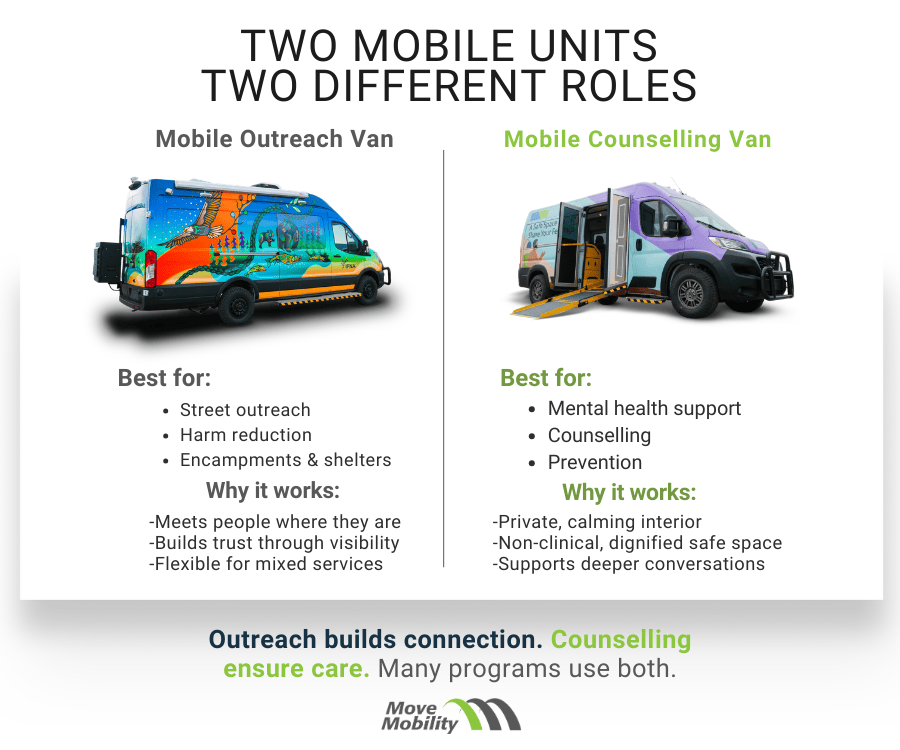
Let’s take a closer look at each.
Mobile Outreach Van
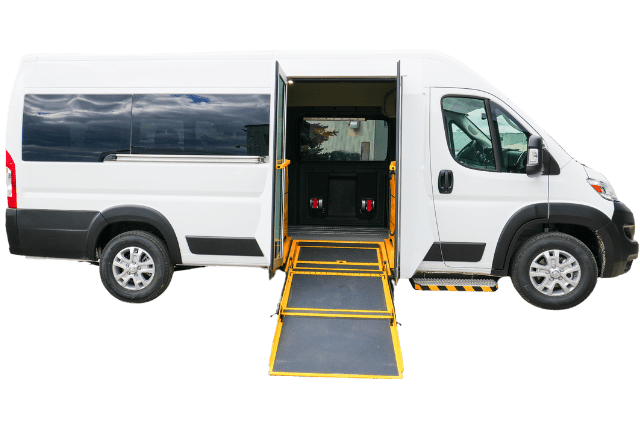
A Mobile Outreach Van gets services out of buildings and into streets, shelters, and encampments. If your outreach or mobile health program works with people facing homelessness, addiction, mental health issues, or housing instability, this van is built for that gap. It meets people where they are.
Here’s how it makes a difference:
- Meeting people who can’t travel: Some folks feel judged or unsafe going into clinics. The van goes to them.
- Trust building: Being a familiar presence near shelters or community hubs helps reduce fear or stigma.
- Versatility: It gives you both transport & clinic space. You can deliver naloxone kits, health checks, outreach, addiction, or mental health care.
This van works best if your program does one or more of these:
- Harm reduction or addiction care
- Mental health outreach or counselling
- Mobile health or preventive services
- Serving rural or Indigenous communities where clinic access is limited
If you choose this van, you’ll need a reliable base: Trained staff, supplies, a schedule, and community trust. When done right, this van can be a bridge that brings health, dignity, and hope to people who’ve been left behind.
Mobile Counselling Van
A Mobile Counselling Van turns your mobile unit into a private, welcoming space for mental health and counselling work. It helps your team go to people who can’t or don’t want to come into an office. If you do mental health, wellness, substance abuse counselling, or prevention, this van could be a powerful tool.
What does the Mobile Counselling Van offer?
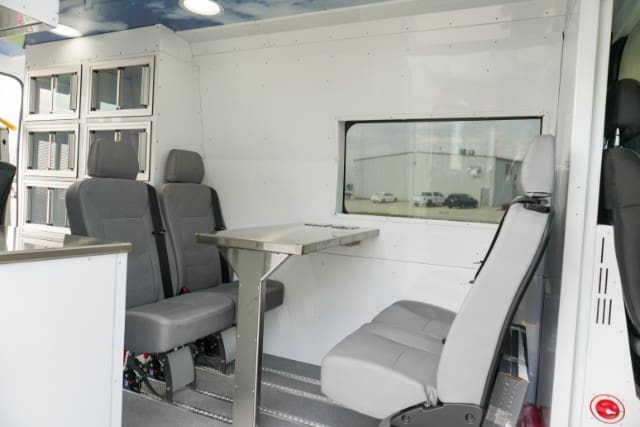
- Comforting interior: Couches, table, calming decor, natural light, and a feeling like a safe room. It helps people open up.
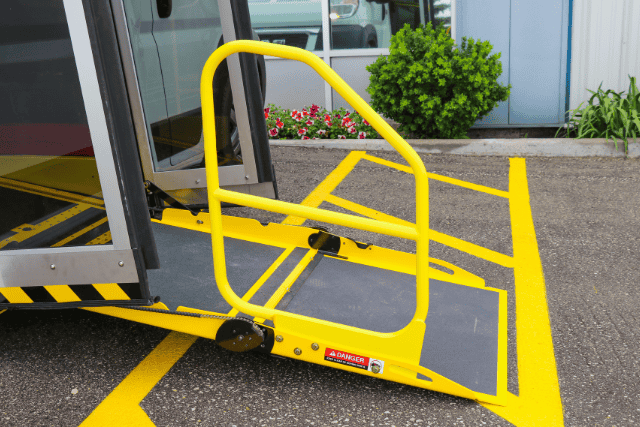
- Privacy & accessibility: Ramps, quiet insulation, tinted windows, secure design for sessions that need confidentiality.
- Flexible layout: Seats that can be removed so the van can carry more supplies, a work table for counsellors, and storage for mental health or wellness tools.
It’s a good fit for organizations that:
- Do preventive mental health or counselling in remote/rural settings
- Want to reduce barriers to accessing help for people who feel unsafe or overwhelmed in traditional care settings
- Need to bring wellness directly to communities rather than asking people to travel
This van is about creating connection and safety. When someone sees a counselling space come to them and where they feel seen, respected, and heard, it can change outcomes. It means more people get help earlier.
Find funding that makes mobile outreach units possible in Canada
You came here because you’re facing the same challenge many organizations do: you see homelessness in Canada growing, but you don’t always see the funding paths that make real solutions, like mobile outreach units, possible.
What you’ve learned in this article:
- Federal, provincial, and community programs that can cover capital or staff costs.
- Community grants and incentives that support outreach units and the people who run them.
At MoveMobility, we’ve spent more than two decades building vehicles that change lives. We’ve helped health teams and non-profits nationwide launch mobile units that bring care to people who can’t always come to it. Our team works with you to understand your community’s challenges and design around them. That’s why organizations from Saint Thomas Health Centre to Liard First Nation trust us as partners. We believe leadership is about people, dignity, and impact. If you have questions, click the button below to connect with a mobility expert.
If you’re not ready to talk to a mobility expert yet, we’ve got more funding-related resources to guide your next step:
- How do you fundraise for a mobile medical van? Practical tips to build funding support once you’ve mapped out your grant options.
- How to apply for funding for mobile medical vehicles: A guide to taking your funding research into a real application.
 English
  French