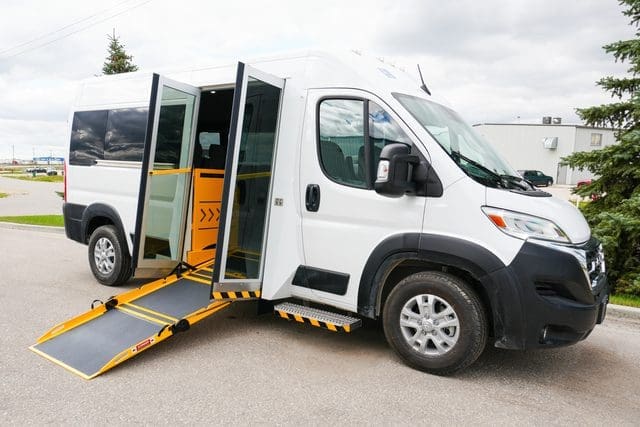
Picture this: You finally found a wheelchair van at a dealership in Toronto. The price looks fair, the paint shines, and the salesperson assures you it’s “accessible.” But weeks later, you realize the ramp is too steep, your clients can’t ride comfortably, and repairs keep popping up. Now your program is stuck with a van that doesn’t actually meet your community’s needs.
When the vehicle doesn’t work the way it should, people miss transportation to medical care, families lose independence, and your team feels the pressure. What you want seems simple: A safe, reliable wheelchair van that supports dignity, keeps people moving, and reduces stress for everyone involved.
At MoveMobility, we’ve spent over 20 years helping organizations across Canada solve this exact problem. We’re certified by the Ford Pro Upfitter program and Stellantis QPro, and every van carries the National Safety Mark to meet strict standards. Groups like the Yellowknife Women’s Society trust us to design vehicles that fit their unique needs, not cookie-cutter models. We also know we’re not the only manufacturer out there, so we want to help you make the best decision for your situation.
In this article, you’ll learn:
- What you might find from a wheelchair van dealership
- Alternatives to consider
What might your wheelchair van dealership experience look like?
When you walk into a regular dealership that also sells wheelchair vans, the process can feel familiar. You’ll see shiny vehicles lined up, a salesperson ready to greet you, and plenty of brochures. In this section, we’ll explore four things you might expect from that experience so you know how it compares to other options.
1. Lack of customization at a wheelchair van dealership
When you visit a wheelchair van dealership, you’ll usually see a few models with similar features. They might look nice and work for some, but if your program has specific needs, that’s where the gap shows up. Dealerships aren’t manufacturers, so they can’t change the design to match your community’s unique challenges.
Think of it like walking into a Chinese restaurant and asking for pizza. Sure, you might get something with dough and toppings, but it won’t taste like the real deal. The same goes for vans.
Dealerships can sell what they have on the lot, but they can’t always build around things like:
- Unique seating layouts: For clients who need space for medical equipment.
- Special ramps or lifts: Adjusted to fit your riders, not just the “standard.”
- Interior design: To support both comfort and function during long trips.
If your community program serves seniors in Thunder Bay or a health team in rural Alberta, a one-size-fits-all van might cause problems. Riders may feel uncomfortable, and staff may struggle to use the vehicle effectively. Over time, those little frustrations can build into big barriers.
Customization matters because it’s about making sure the people you serve feel safe, respected, and supported every time they ride.
2. Limited knowledge of accessibility needs at a wheelchair van dealership
At a regular dealership, the salesperson probably knows a lot about vehicles in general. They can tell you the horsepower, color options, and how the Bluetooth works. But when it comes to accessibility needs, things can get a little shaky. That’s because most dealership staff aren’t specialists in wheelchair transportation.
It’s kind of like asking a plumber to fix your Wi-Fi. They’re skilled in their trade, but it’s not the right fit for the problem you’re facing.
The same thing happens when you need advice on:
- Proper ramp angles: A ramp that is too steep can make things unsafe.
- Seating positions: So riders stay comfortable and secure.
- Storage for medical gear: Because a walker or oxygen tank won’t magically fit in any corner.
If your program runs out of Regina, serving seniors or people with mobility challenges, these details matter a lot. Without expert guidance, you may end up with a wheelchair van that technically “works” but creates more stress than relief.
When your clients rely on safe, dependable transportation, gaps in knowledge can lead to real-world consequences. And that’s a headache no organization wants.
3. Standard financing options at a wheelchair van dealership
One thing you’ll almost always find at a wheelchair van dealership is a standard financing plan. Dealerships are great at setting up monthly payments, leasing terms, and all the usual paperwork. For personal buyers, that can be convenient. But for organizations, the picture often looks different.
Here’s the gap: most community programs, health teams, or non-profits in places like Winnipeg or Halifax don’t buy vans the same way individuals do. You might be working with grants, government funding, or donations. A dealership’s off-the-shelf financing plan doesn’t always match the way your funding flows.
Think of it like trying to wear shoes two sizes too small. Technically, they fit, but you won’t be comfortable walking very far. The same happens when your program’s budget and the dealership’s payment options don’t line up.
- Grants: May have strict rules about how funds can be spent.
- Donations: Can arrive in chunks, not in predictable monthly payments.
- Government programs: Often require specific reporting tied to how money is used.
Without flexible options, you may end up stuck juggling payments or delaying the van purchase altogether. And when the people you serve are waiting for better transportation, that’s a tough spot to be in.
4. After-sales support at a wheelchair van dealership
When you drive a wheelchair van off a dealership lot, the follow-up usually looks the same as it does for any other vehicle: a reminder about oil changes, a call for regular maintenance, and maybe a survey about your buying experience. For everyday drivers, that works fine. But for an organization running programs in places like Saskatoon or St. John’s, after-sales support often needs to go deeper.
Here’s where the gap shows up. Dealerships don’t usually provide in-depth training for your staff on how to safely use ramps or secure wheelchairs. They also may not have quick answers when you’re troubleshooting accessibility features. It’s like buying a fancy coffee machine without the manual. Sure, it brews coffee, but good luck figuring out all the buttons when you’re half-awake.
Common needs that may fall through the cracks include:
- Staff training: On loading, securing, and transporting clients safely.
- Repairs: For ramps, lifts, or specialized equipment.
- Ongoing support: When your program grows and your needs change.
Without that extra layer of support, your team may feel left on their own. And when people’s health, dignity, and independence depend on reliable transportation, being “on your own” isn’t good enough.
What’s the alternative to buying from a wheelchair van dealership?

If you’re thinking about a wheelchair van, a regular dealership isn’t your only option. There are other ways to get a vehicle that truly fits your program’s needs, budget, and community.
Working directly with a wheelchair van manufacturer
One of the clearest alternatives to a dealership is working directly with a manufacturer. When you do this, you’re not picking from a limited lot; you’re designing a vehicle built around your program, your clients, and your staff. Manufacturers understand the challenges you face every day, from safely loading riders to storing medical equipment securely.
Think of it like ordering a custom-made jacket instead of grabbing one off the rack. The fit is better, the features match your needs, and it’s built to last. With a manufacturer, you can adjust layouts, ramps, lifts, and interiors to match your unique workflow.
Here are a few advantages of working with a manufacturer:
1. They truly understand your needs
When you work with a wheelchair van manufacturer, you’re dealing with experts who focus only on accessible vehicles. Unlike a regular dealership juggling 25 different types of cars and trucks, a manufacturer lives and breathes wheelchair vans. That means they know the details that matter to your program, like ramp angles, seating layouts, and storage for medical equipment.
It’s like going to a bakery that only makes bread versus one that sells everything under the sun. The specialist knows how to get it right every time. With a manufacturer, you can expect advice and solutions that actually match your needs.
- Deep expertise: Every question about accessibility, safety, and efficiency can be answered.
- Tailored recommendations: Layouts and features that suit your riders and staff workflow.
- Problem-solving mindset: They’ve seen the challenges other programs face and know how to address them.
This focus ensures your van truly supports your mission and the people you serve.
2. Customization that fits your program
Another major advantage of working with a wheelchair van manufacturer is the ability to customize every aspect of the vehicle, as we mentioned earlier. From seating layouts to ramp designs, lift placements, and storage solutions, manufacturers can build a van that matches your program’s exact needs.
- Layouts that work: Space for medical equipment, walkers, and multiple passengers.
- Interior features: Comfort and accessibility for riders of all abilities.
- Program-specific adjustments: Options that support staff workflow and operational efficiency.
With this level of customization, your wheelchair van becomes a tool that makes transportation safer, easier, and more dignified for the people you serve.
3. Ongoing support and partnership
Working with a wheelchair van manufacturer means you’re gaining a partner. Many manufacturers offer ongoing support for maintenance, troubleshooting, and staff training. They understand that your program evolves, and your van may need updates or adjustments over time.
It’s similar to having a coach who sticks with you after the game, not just a referee handing out a score. This continuous support keeps your operations smooth and helps your team feel confident every time the van hits the road.
- Staff training: Guidance on safely loading and securing clients.
- Maintenance advice: Tips and service recommendations specific to your van.
- Adaptability: Support if your program grows or your routes change.
For organizations from Calgary to Halifax, this partnership ensures your wheelchair van continues to meet your needs, helping you focus on what matters most: safely transporting the people who rely on you every day.
4. Expertise in safety and compliance
Another advantage of working directly with a wheelchair van manufacturer is their deep knowledge of safety standards and regulatory compliance. They design and build vehicles to meet strict Canadian regulations, including the National Safety Mark, so you don’t have to guess if your van is truly safe for riders.
Think of it like hiring a lifeguard for a pool instead of hoping everyone swims safely on their own. The manufacturer knows all the rules, testing requirements, and safety features to keep your passengers secure.
- Regulatory compliance: Vehicles meet Canadian accessibility and safety standards.
- Quality assurance: Built with rigorous testing and certifications.
- Peace of mind: Your team can focus on transportation, not worrying about safety gaps.
5. Faster problem-solving and repairs
Working with a manufacturer also helps when your van has a problem. Since they built the vans, they know every part inside and out. That means fixing issues is faster and easier than going to a regular dealership.
Would you feel more confident calling the chef who made your meal if something tastes off, or asking the waiter who didn’t cook it? You get answers that actually fix the problem.
- Quick help: Technicians know how your accessibility features work.
- Right parts: They have the parts made for your van.
- Less downtime: Your van is back on the road faster.
For programs in small towns or rural areas across Canada, this kind of help keeps your service running smoothly for the people who rely on you every day.
What’s next?
You came to this article because you wanted to know if buying a wheelchair van from a regular dealership is the right choice for your organization. You might have been worried about customization, support, or how the van would truly fit your program.
Here’s a quick recap of what you learned:
- Dealership experience: Standard options, limited flexibility, and possible service gaps.
- Manufacturer alternative: Direct partnership, tailored designs, and expert guidance.
- Program impact: A van built to your needs keeps clients safe, comfortable, and connected.
At MoveMobility, we get it. You care a lot about the people you help, and so do we. That’s why we’ve invested over two decades into building wheelchair vans that make a real difference. From Liard First Nation to Saint Thomas Health Centre, we’ve worked with groups all over Canada to make vans safe, comfy, and easy to use. Our team listens first, builds second, and stays with you after you get your keys so your program runs smoothly.
Click the button below to talk to a mobility expert today.
If you’re not ready to speak with an expert yet, we have a few other resources that can help you learn more:
- How to buy a wheelchair van:This article walks readers step by step through the buying process, helping them understand what to expect and feel confident in making a decision.
- How long does it take to get a wheelchair van? Learn about the lead times on wheelchair accessible vans.
- How to compare wheelchair van quotes: Read this one for advice on comparing different wheelchair van quotes.
FAQ: Buying a wheelchair van from a dealership
Q: Can I customize a wheelchair van at a regular dealership?
A: Usually not. Dealerships offer standard options, so you might not get the specific layout, ramps, or storage your program needs.
Q: Are wheelchair vans from dealerships safe and reliable?
A: Yes, they meet basic safety standards, but manufacturers often provide extra testing, certifications, and support tailored for accessibility needs.
Q: How long does it take to get a van from a dealership?
A: It can be quick if they have one in stock, but you might compromise on features or customization. Manufacturers may take longer if there aren’t any in-stock options, but they can build a van that fits your program perfectly.
Q: Do dealerships offer ongoing support for wheelchair vans?
A: Some do, but support can be limited compared to a manufacturer that specializes in accessible vehicles and stays involved after delivery.
Q: Should my organization consider a manufacturer instead?
A: A manufacturer is usually the better choice if you want a van tailored to your program, with expert guidance and long-term support.

 English
  French