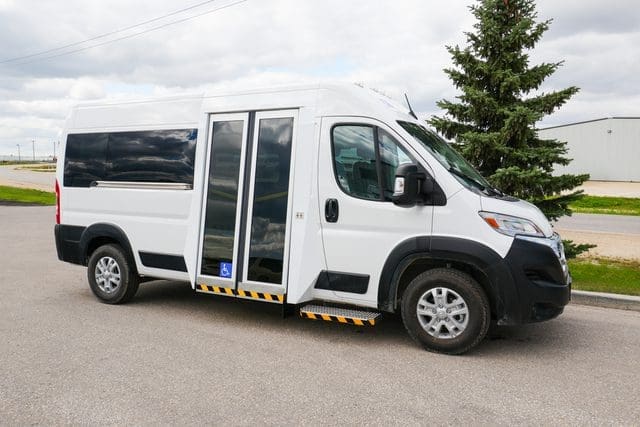
If you’re planning to operate a wheelchair van in Alberta, one question almost always comes up first. What licence does the driver actually need?
When the wheelchair van driver’s licence requirements in Alberta feel unclear, it can slow things down. Vehicles may sit parked while staff try to confirm the rules. Team members may feel unsure about driving. Insurance questions can come up. All of that creates a gap between the support your community needs and the transportation available to provide it. For organizations working hard to help people stay connected and independent, that gap can feel frustrating.
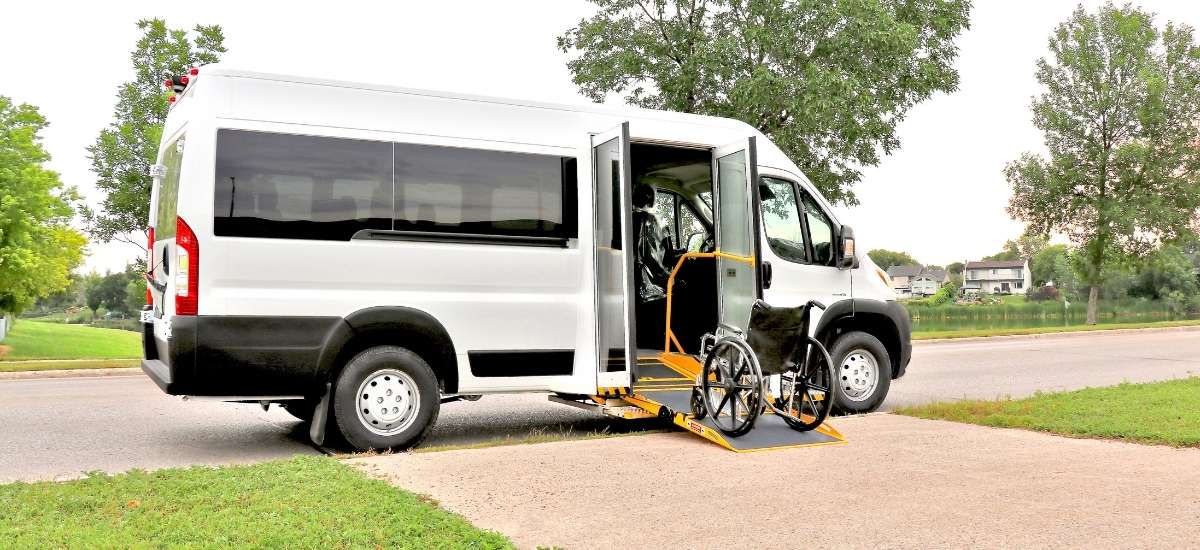
At MoveMobility, we’ve spent more than 20 years helping organizations across Canada remove barriers to transportation and healthcare. Healthcare networks, governments, and nonprofits trust us to build vehicles that help them reach people safely and with dignity.
Our vehicles carry certifications through Ford Pro Upfitter, Stellantis QPro, and the National Safety Mark, which reflects strict Canadian safety standards. There are several manufacturers in this space, and our goal here is simple. We want to share clear information that helps you make the right decision for your program.
In this guide, we’ll walk through the Alberta wheelchair van licence requirements so you know exactly what to expect.
*Keep in mind it’s always a good idea to confirm details directly with Alberta Transportation or your local registry to make sure you have the most up-to-date and accurate nformation for your program.
What are Alberta’s wheelchair van driver’s licence requirements?
If you’re planning to operate a wheelchair van in Alberta, the first question many organizations ask is simple. What driver’s licence do we actually need?
The good news is that the answer is often easier than people expect. In many situations, a standard Class 5 driver’s licence is enough to drive a wheelchair van in Alberta, depending on the vehicle and how it is being used.
That’s the same licence most people already have for driving a regular car, SUV, or pickup truck.
A Class 5 licence allows someone to drive a vehicle that:
- Has two axles
- Has a seating capacity of 15 people or fewer, including the driver
- Is a typical passenger vehicle, such as a car, SUV, or van
Most wheelchair vans used by organizations fit into this category. They’re typically built on vehicles like:
- Toyota Sienna
Adding a wheelchair ramp, lift, or securement system does not by itself require a different driver’s licence class. Many two-axle wheelchair vans with 15 seats or fewer can still be operated with a Class 5 licence, depending on how the vehicle is being used.
For many organizations, this removes a big barrier. You don’t always need special commercial drivers to operate accessible transportation.
Why do most wheelchair vans qualify for a Class 5 licence?
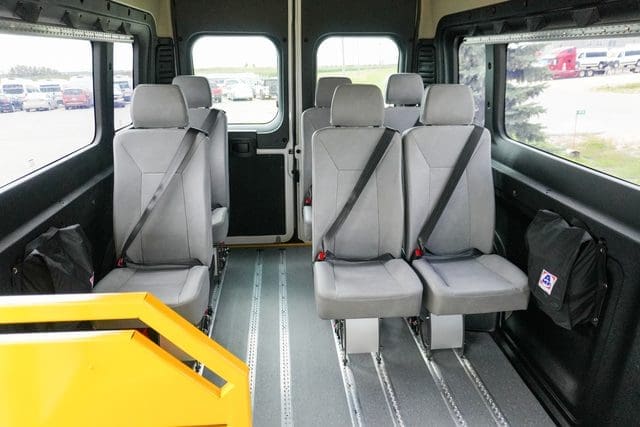
In Alberta, the licence you need depends on both the vehicle itself and how the vehicle is being used.
Three key factors help determine the licence needed:
- Vehicle type and axle count
- Seating capacity
- Whether passengers are being transported for hire
Most wheelchair vans meet the requirements for a Class 5 licence because they are relatively small compared to buses.
Here’s what that usually looks like.
- Passenger capacity: Many wheelchair vans carry 5 to 10 passengers plus the driver, depending on how many wheelchair spaces are installed.
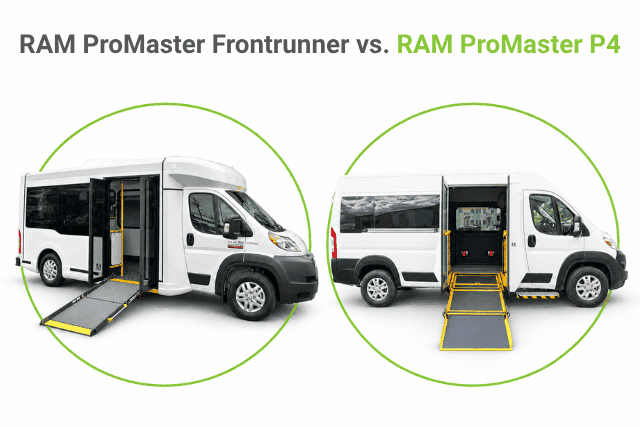
- Vehicle type: Two-axle vehicles like the Ford Transit or RAM ProMaster can generally fall within Class 5 requirements when they meet the applicable seating and usage rules.
- Axles: Most of these vans have two axles, which is another Class 5 requirement.
Because of this, organizations across Alberta regularly operate wheelchair vans using drivers who hold a standard Class 5 licence.
Example 1: Adult day programs in Edmonton
An adult day program may run a wheelchair van to bring seniors to activities and medical appointments. The van might carry six passengers, including two wheelchair positions.
Since the vehicle seats fewer than 15 people and is a standard passenger van, a Class 5 licence is typically sufficient.
Example 2: Community outreach in Red Deer
A nonprofit outreach team might use a wheelchair van to help people reach healthcare appointments or social services.
Staff members take turns driving the vehicle as part of their regular duties. In this situation, the Alberta wheelchair van licence requirements usually fall under Class 5.
Example 3: Rural transportation in northern Alberta
In smaller communities such as Grande Prairie or Fort McMurray, accessible transportation is often run by community organizations or municipalities.
A wheelchair van may help residents reach hospitals, therapy programs, or community events. These vans are still standard passenger vehicles, so drivers with a Class 5 licence can typically operate them.

When would a Class 4 licence be required?
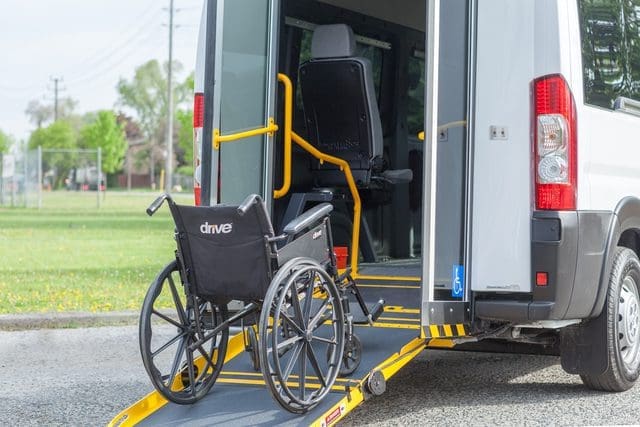
There are situations where a Class 4 licence is required instead of a Class 5, particularly when passengers are being transported for hire.
A Class 4 licence in Alberta is designed for drivers who transport passengers as part of a professional service, such as Uber.
This licence is commonly required for:
- Taxi drivers
- Rideshare drivers
- Ambulance drivers
- Small commercial passenger shuttles
The difference can depend on both the vehicle and how the transportation service is being provided.
For example: Paid accessible transportation in Calgary
If a wheelchair van is being used to transport passengers for hire, a Class 4 licence is generally required. Alberta considers transportation ‘for hire’ when the vehicle owner, driver, or driver’s employer is being paid for the service the vehicle is being used to provide.
To upgrade to a Class 4 licence, drivers must hold a full Class 5 licence, be at least 18 years old, pass the Class 4 knowledge and vision tests, and submit the required medical report.
These requirements exist because the driver is transporting passengers professionally.
What does NOT determine the licence class?
Many people assume certain things automatically require a commercial licence. In Alberta, that’s not always the case.
The licence class is not based on:
- Whether the vehicle has a wheelchair ramp or lift
- Whether passengers use mobility devices
- Whether the organization is a nonprofit or healthcare provider
Instead, the rules focus mainly on the type of vehicle, its seating capacity, and how it is being used to transport passengers.
This is why the wheelchair van driver’s licence requirements in Alberta are often more straightforward than people expect.
Quick summary of Alberta wheelchair van licence requirements
Here is a simple breakdown.
| Situation | Licence typically required |
| Two-axle wheelchair van with 15 seats or fewer, not transporting passengers for hire | Class 5 |
| Wheelchair van transporting passengers for hire | Class 5 |
| Taxi or ambulance | Class 4 |
| Bus seating fewer than 25 people, including the driver | Class 4 |
| Paid passenger transport service | Class 4 |
For organizations thinking about starting accessible transportation, driver licensing can feel like a major hurdle.
In reality, many teams already have staff with the right licence.
That means your organization can focus on what really matters:
- Helping people reach healthcare
- Supporting independence
- Keeping communities connected
A wheelchair van in Alberta often becomes more than transportation. It becomes a bridge that helps people stay active, reach medical care, and maintain dignity in their daily lives.
And once you understand the Alberta wheelchair van licence requirements, that bridge becomes much easier to build.
Why do some organizations think you need a special licence to drive a wheelchair van in Alberta?
A lot of organizations assume that operating a wheelchair van in Alberta requires a special commercial driver’s licence. It’s an easy mistake to make.
When people see a van with a wheelchair ramp, lift, or securement system, it can look more complex than a typical passenger vehicle. Staff may assume that the driver needs the same type of licence used for buses or commercial transport.
In most cases, that’s not true.
As we covered earlier, many wheelchair vans fall under the Class 5 licence category because they are standard passenger vehicles with fewer than 15 seats. The Alberta wheelchair van licence requirements focus on vehicle size and passenger capacity, not the accessibility equipment inside the van.
Still, the confusion around wheelchair van driver’s licence requirements in Alberta happens for a few common reasons.
1. Accessibility equipment can make the vehicle look more complicated
A wheelchair ramp or lift changes how the van operates, but it doesn’t change the driver’s licence category.
Drivers still operate the vehicle the same way they would drive any passenger van. The main difference is learning how to safely load and secure mobility devices.
Example: An adult day program in Calgary might use a Ford Transit wheelchair van with two wheelchair positions. Staff members may worry they need special licensing before driving it.
In many cases, the driver may only need a Class 5 licence, provided the vehicle and its use fall within Class 5 requirements. Wheelchair securement training may also be required by the organization or insurer.
2. People often confuse vans with buses
Another reason the rules feel unclear is that wheelchair vans sometimes get grouped together with accessible buses or paratransit vehicles.
Buses operate under very different rules.
Vehicles with more than 15 seats may fall under different licensing requirements. A Class 4 licence can cover a bus seating fewer than 25 people, including the driver, while larger buses generally require a Class 2 licence.
Wheelchair vans, on the other hand, are much smaller.
Most accessible vans used by nonprofits or healthcare organizations carry between:
- 5 and 10 passengers
- 1 to 3 wheelchair positions
Because of this smaller size, they usually fall within the wheelchair van driver’s licence requirements in Alberta for a Class 5 licence.
3. Insurance and organizational policies can add confusion
Some organizations require extra training or screening for drivers.
For example, a nonprofit may ask drivers to complete:
- A driver abstract check
- Defensive driving courses
These requirements are common and helpful. They promote safe transportation for passengers who rely on mobility devices.
However, these requirements may come from the organization, insurer, or transportation program and are separate from the Alberta driver’s licence classification itself.
That distinction matters when understanding the Alberta wheelchair van licence requirements.
Ready to launch your wheelchair van in Alberta with confidence?
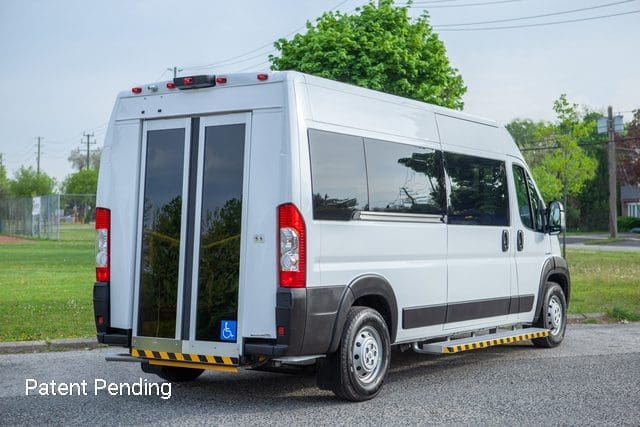
There’s a good chance you landed on this article because you were trying to understand the licence rules for operating a wheelchair van in Alberta. Many organizations worry they may need special commercial drivers before starting a transportation program. That uncertainty can delay programs that help people reach healthcare, community services, and daily support.
After reading this article, you now have a clearer picture of the wheelchair van driver’s licence requirements in Alberta and how they apply to your organization.
At MoveMobility, we’ve spent over two decades working alongside organizations across Canada that are solving transportation and healthcare challenges in their communities. Our team collaborates with transit providers, healthcare networks, nonprofits, and Indigenous communities to design vehicles that match real-world needs.
Every project begins with a conversation about the people you serve and the barriers they face. That approach has helped organizations launch accessible transportation programs that restore independence, improve healthcare access, and strengthen community connections. If you’d like help exploring your options, click the button below to talk with a mobility expert who can walk through your goals and next steps.
If you’re not ready to talk to a mobility expert yet, we have a few other resources you should check out to learn more.
Recommended next reads
- How to choose a wheelchair van (11 steps): A practical guide that walks you through the key decisions organizations face when selecting the right accessible vehicle.
- Wheelchair van vs. bus: Everything you need to know! A helpful comparison if you’re deciding between a wheelchair van and a larger accessible bus for your program.
- How much does a wheelchair van cost? A transparent breakdown of pricing, budgeting considerations, and what organizations should expect when planning a purchase.


 English
  French