

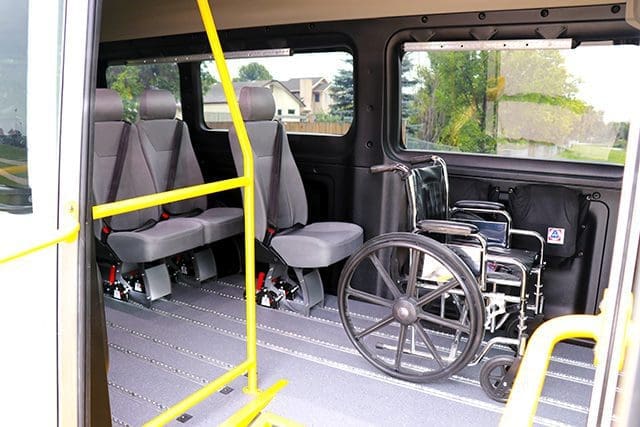
Have you ever looked at a RAM ProMaster wheelchair van and thought, “Why can’t we fit just one more person?” It seems like a small ask, but for many adult day programs, healthcare teams, and non-profits across Canada, that single seat can mean the difference between helping everyone or leaving someone behind. The passenger limit in the ProMaster van can feel confusing and even frustrating when your goal is simple: Help people get where they need to go safely and comfortably.
You want to serve more clients, reduce wait times, and make every trip count. But when regulations seem to stand in the way, it’s hard to know what’s required and what’s possible. Understanding this limit could be the key to moving more people and avoiding roadblocks down the line.
At MoveMobility, we understand those challenges because we’ve spent over 20 years helping organizations like Transdev deliver safe, accessible transportation across Canada. Our vehicles carry Ford QVM and Stellantis QPro certifications and the National Safety Mark, meeting strict Canadian safety standards. We listen first and build second, so you get vehicles that fit your real-world needs. And while we know we’re not the only manufacturer out there, we’re proud to be trusted by healthcare networks and community programs from coast to coast.
In this article, you’ll learn why the capacity limits in the ProMaster van are limited to 10 passengers.
*Please keep in mind that transportation rules can change at any time, so you should always check with your local regulating body for the most up-to-date information and not treat this article as your final regulatory authority.
Why does the 10-passenger limit in the ProMaster van exist?
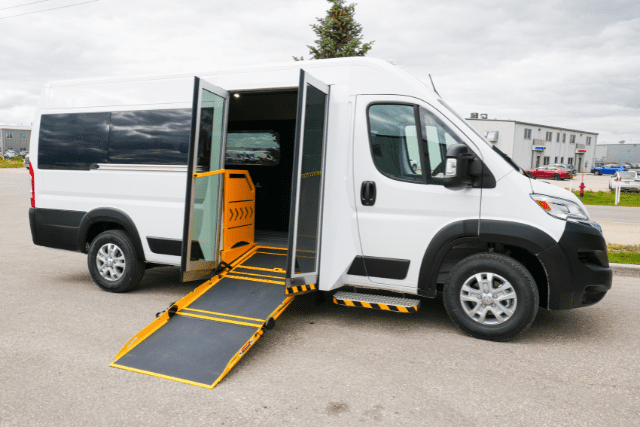
When you buy a RAM ProMaster wheelchair van, you’re investing in freedom and connection for the people you serve. So when you find out there’s a 10-passenger limit in the ProMaster van, it can be confusing. You might think, “If it fits, why can’t we add one more seat?” The truth is, this rule exists for safety, weight, and licensing reasons that protect both your drivers and your passengers. Let’s take a closer look at what’s really behind the 10-passenger limit and what it means for your organization in Canada.
1. The licence changes once you go over 10 passengers
In many parts of Canada, once a van carries 10 or more people, it is no longer seen as a regular van. It often becomes a bus under provincial laws. Because every province and territory has its own specific rules, it is very important to check with your local transportation ministry to see what they require.
For example, in Ontario, you generally need a Class F licence to drive a van with 10 or more passengers. Over in Quebec, drivers usually need a Class 4B licence for minibuses that carry between 9 and 24 people.
That means your driver might need to hold a special type of licence. These often require extra training, testing, and medical checks. For many healthcare teams, non-profits, and adult day programs, it can be time-consuming and expensive. Keeping your ProMaster van at 10 seats or fewer often allows your staff and volunteers to drive it using a regular licence, which keeps your daily operations much simpler and safer.
2. More than 10 passengers means more inspection rules
Once a vehicle is classified as a bus, it must follow stricter commercial vehicle rules almost everywhere in Canada. In Ontario, for example, that means semi-annual safety inspections, more maintenance paperwork, and sometimes CVOR registration for carriers. Other provinces like Alberta and B.C. also require these six-month inspections for vehicles with more than 10 seats.
Those extra rules exist to protect passengers, but they also take time and money to manage. For many small organizations, those costs can take away from funds that would otherwise go toward client care and community programs. That is why most accessible van builders keep the seating at 10 or fewer.
Check out the list below for some of the other provinces that have inspection criteria:
- Ontario: The Ministry of Transportation requires a semi-annual inspection for any passenger vehicle with 10 or more seats, like large vans or buses.
- Manitoba: Manitoba Public Insurance (MPI) notes that mandatory safety inspections are required every six months for common carrier buses and regulated passenger vehicles.
- Saskatchewan: SGI (Saskatchewan Government Insurance) explains that while some vehicles are annual, those operated outside the province or under specific commercial classes often require inspections every six months.
3. Vehicle weight and safety standards
Adding more seats isn’t as simple as it sounds. Every seat adds weight from the seat itself, plus the weight of a passenger and any gear or wheelchairs they bring. The RAM ProMaster has a specific Gross Vehicle Weight Rating (GVWR) that limits how much total weight it can safely carry. If a van goes over that weight, it can affect handling, braking, and tire pressure.
Vehicle builders must also follow the Canadian Motor Vehicle Safety Standards (CMVSS), which cover everything from seat belts to crash safety. Adding more than 10 seats can push a van past its safe weight limits, especially when you include ramps, lifts, and equipment. That’s why upfitters stop at 10 passengers to keep the vehicle safe and compliant.
4. Space and accessibility are real concerns
Even before weight becomes an issue, there’s the challenge of space. In a RAM ProMaster wheelchair van, you need enough room for:
- Wheelchair lifts or ramps
- Securement systems
- Safe aisle width and exit space
- Comfortable seating for all passengers
Trying to fit more than 10 seats can reduce space for accessibility and make it harder to assist passengers safely. It can also shift too much weight to the rear of the van, which affects handling and braking. Keeping the van at 10 passengers helps balance comfort, accessibility, and safety for everyone on board.
Understanding the reason behind the 10-passenger limit in the ProMaster van helps you make better decisions. It’s not about restricting you; it’s about keeping your staff and passengers safe while avoiding unexpected costs.
Check out the video below that compares full size wheelchair vans with minivans.
What happens if you exceed the 10-passenger limit in the ProMaster van?
It’s tempting to think adding one or two more seats wouldn’t make a big difference. You see the need every day: More clients, more rides, more people counting on you. But going over the 10-passenger limit in the ProMaster van can cause bigger problems than it solves. In Canada, this limit isn’t just a suggestion. It’s part of how the law and Transport Canada keep everyone safe.
Insurance and liability problems
Your insurance is based on how the van was built and certified. When you add more passengers than it’s rated for, the insurance company can see that as a big risk. If there’s an accident, your coverage could be denied because the van wasn’t within its approved setup. That means your organization could be held responsible for repair costs, injuries, or even legal fees.
In short:
- Going over capacity can void your insurance.
- Any claims or injuries could become your organization’s financial burden.
- It’s always safer to stick with the certified setup.
Licence and legal issues
As we mentioned earlier, many provinces change how they classify a van once it carries 10 or more people. In several jurisdictions, this moves the vehicle into a stricter category that requires a commercial or specialized licence.
If a driver does not have the specific licence required by their province, both the driver and your organization could face significant fines. Beyond just a ticket, an incident involving an improperly licensed driver could lead to a government review or investigation. Since every province has its own unique rules, it is vital to research your local regulations to see where the line is drawn. Sticking to a 10-passenger limit is often the easiest way to remove that layer of stress and keep your team’s focus on the mission.
Safety and performance concerns
Adding more people adds more weight. That extra weight can push the van past its safe weight rating. When that happens, tires wear out faster, brakes take longer to stop, and the van can feel less stable, especially when you already have ramps, lifts, and securement systems on board.
Safety is something we take very seriously at MoveMobility. Every one of our wheelchair vans meets Transport Canada standards and carries the National Safety Mark, proving it was built to meet strict federal rules. We never modify vans in a way that risks your passengers’ safety or your organization’s compliance.
Warranty and inspection headaches
Once a van is over its rated passenger limit, it may lose its factory warranty or National Safety Mark certification. That’s because it no longer meets the standards it was approved under. It could also require more frequent safety inspections or even CVOR registration.
What started as “just one more seat” can quickly turn into:
- Extra inspection costs every six months.
- More paperwork and downtime.
- Unexpected repair bills if the warranty is voided.
The bottom line: The 10-passenger limit isn’t a random rule. It’s there to protect you, your drivers, and your passengers. At MoveMobility, we always follow Transport Canada’s regulations so your vehicles are safe, reliable, and fully certified. Our job is to help you move people, not add risks.
Got any questions about the 10-passenger limit in the ProMaster wheelchair van?
You likely came to this article wondering why the passenger limit in the ProMaster van is set at 10 and how that affects your ability to serve your community. Maybe you’re trying to help more people get to programs or appointments and want to know what’s holding you back.
Now that you’ve read through the facts, you know that the rule exists to keep your passengers, drivers, and organization safe.
Here’s what you’ve learned:
- Why Canada limits the ProMaster van to 10 passengers
- How safety, licensing, and weight rules protect your drivers and clients
- What happens if you exceed the limit, and what your options are
At MoveMobility, we build more than vehicles; we build trust. For over two decades, we’ve partnered with healthcare providers, non-profits, and community leaders across Canada to create accessible transportation that meets real needs. Our team listens first and builds second, designing vehicles that help you move people safely, with dignity and confidence. If you’d like to talk about your next step, click the button below to connect with a mobility expert.
If you’re not ready to talk to a mobility expert yet, here are a few resources to explore next:
- What kind of licence do you need to drive a wheelchair van in Canada? Learn which licence applies to your drivers.
- Full size wheelchair vans in 2025: Everything you need to know! Discover larger vehicle options for your program.
- Buying an accessible vehicle: Your process with MoveMobility: See what your purchase journey looks like from start to finish.


 English
  French