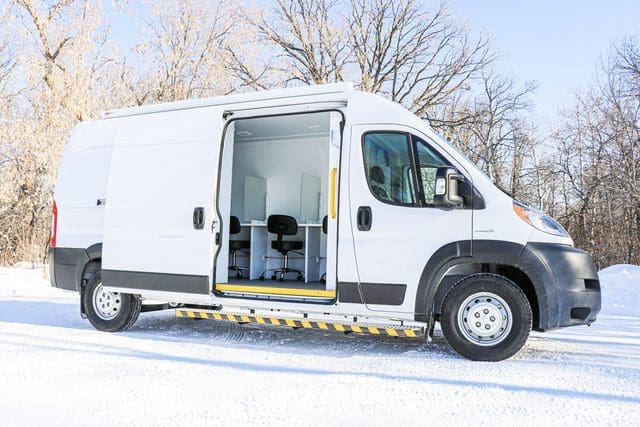
Are you hearing more about supervised consumption sites in council meetings, board discussions, or health planning conversations, but still feel unsure what they involve or how they compare?
Across Canada, the toxic drug crisis continues to affect individuals, families, and communities. According to Health Canada’s opioid crisis data, Canada has recorded more than 50,000 opioid-related deaths since 2016, and an average of 20 lives were lost each day in 2024.
Municipalities, health organizations, First Nations communities, law enforcement agencies, and service providers continue to consider different ways to respond. These may include prevention, treatment, recovery programs, mental health services, housing, outreach, emergency response, enforcement, harm reduction, and public education.
Fixed and mobile supervised consumption sites are two service-delivery models that some communities consider as part of this broader response. Other communities may place greater emphasis on treatment, recovery, prevention, housing, mental health care, enforcement, or a combination of approaches.
You want to make informed decisions that reflect the needs, priorities, laws, available evidence, and values of your community. Neither fixed nor mobile supervised consumption sites are suitable for every situation. Each model comes with operational, financial, social, legal, and policy considerations.
This article does not determine whether your community should introduce supervised consumption services. It compares the two delivery models for organizations that are evaluating this type of service as one possible part of a wider strategy.
At MoveMobility, we help Canadian organizations remove barriers to care through practical, purpose-built vehicles. Our team supports healthcare and transportation access across Canada, and we build mobile units designed for real-world community use. We hold the National Safety Mark and are certified through the Ford Pro Upfitter program and Stellantis QPro.
In this article, you’ll learn:
- What supervised consumption sites are
- How mobile supervised consumption sites compare to fixed locations
- What available evidence says about their intended outcomes and limitations
- Which operational model may align with your geography, goals, and community needs
What are mobile supervised consumption sites?
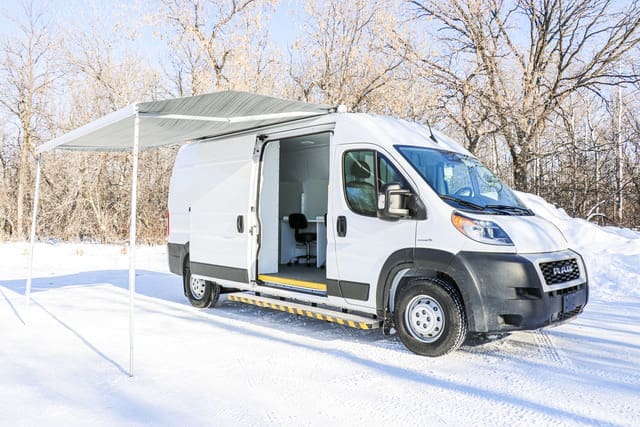
Mobile supervised consumption sites are flexible, designated settings where people can use pre-obtained drugs under the supervision of trained staff. As Health Canada explains, these sites are intended to provide a controlled environment where staff can respond to accidental overdoses and help reduce certain health risks associated with drug use.
Supervised consumption sites are generally designed around three objectives:
- Respond to overdoses that happen on site
- Reduce certain health risks associated with drug use
- Offer connections to additional health or social services
For some participants, a supervised consumption site may provide contact with healthcare or community services. Whether that contact leads to treatment, recovery support, housing, mental health care, or other services depends on the individual, the programs available, and how the site is connected to the broader care system.
These services remain part of an ongoing public discussion. Supporters often point to on-site overdose response and connections to care. Critics may raise concerns about neighbourhood impacts, public drug use, operating costs, long-term treatment outcomes, community safety, and whether resources should be directed toward other approaches.
How do fixed supervised consumption sites work?
A fixed supervised consumption site operates from one permanent location. That could be a clinic, storefront, or health facility in a neighbourhood identified as having a high level of need.
In a fixed site, people travel to one address to access the service. Inside, the space may include:
- Supervised consumption booths or stations
- Trained nurses, peer workers, and outreach staff
- Overdose response supplies
- Space for referrals to housing, treatment, primary care, or mental health services
A fixed site provides partner agencies with one known referral location. A permanent building may also offer enough space to provide several services under one roof.
Its effectiveness and suitability can depend on location, transportation, operating hours, staffing, community support, neighbourhood concerns, funding, and whether people are willing to visit the site.
What are some common operational characteristics of fixed supervised consumption sites?
- Stable location: People and referral agencies know where the service is located.
- More space: A building may have room for counselling, storage, assessments, wound care, or other services.
- Central service point: It can provide one visible location for communities using a centralized model.
- Permanent presence: The site may be easier to find, but it may also face concerns related to visibility, zoning, neighbourhood impact, and public acceptance.
- Higher infrastructure commitment: A permanent building may involve longer leases, renovations, maintenance, and ongoing operating costs.
For some communities, that structure may align with their service plan. For others, a permanent location may create access, cost, privacy, approval, or community acceptance challenges.
How do mobile supervised consumption sites work?
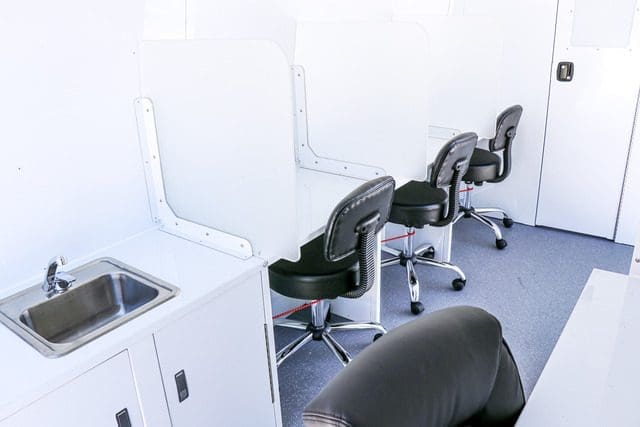
Mobile supervised consumption sites provide similar core services in a vehicle-based setting. Instead of operating from one permanent building, the service can travel to scheduled locations.
A mobile supervised consumption site can:
- Park near shelters or supportive housing
- Rotate between neighbourhoods
- Visit encampments or changing service areas
- Serve smaller communities with limited local services
- Support First Nations communities or remote areas where travel distances affect access
Like a fixed site, a mobile site is generally intended to respond to overdoses on location, provide a supervised environment, and offer connections to other services. Its main operational difference is the ability to change locations.
That flexibility may be useful in some service areas. It may also create challenges involving:
- Limited interior space
- Fewer service stations
- Parking restrictions
- Vehicle maintenance and downtime
- Staffing and scheduling
- Waste handling
- Privacy
- Neighbourhood concerns
- Weather conditions
- The number of people who can be served at one time
Mobile supervised consumption sites vs. fixed sites: What is the biggest difference?
The biggest difference is straightforward: fixed sites stay in one permanent location, while mobile supervised consumption sites operate from a vehicle that can travel between service points.
That difference can affect access, visibility, privacy, capacity, staffing, operating costs, and daily service delivery.
A fixed supervised consumption site requires people to travel to one address.
A mobile supervised consumption site allows a team to provide services at several approved and scheduled locations.
If a community has a dense urban core with strong transit access, a fixed location may be practical.
If potential users are spread across several neighbourhoods, smaller towns, or hard-to-reach areas, a mobile model may be considered.
Neither option addresses the wider causes or effects of the drug crisis on its own. They are service-delivery models that may be used alongside treatment, recovery services, prevention, housing, mental health care, outreach, emergency response, enforcement, and public education.
How does geography affect supervised consumption sites in Canada?
Geography can have a major effect on how people access health and social services.
In a fixed model, the service area is connected to the location of the building. If the site is in one part of town while demand is spread across other areas, some people may face difficulty reaching it.
That challenge can become more significant in Canadian communities that experience:
- Long driving distances
- Limited public transit
- Harsh winter conditions
- Rural and northern service gaps
A mobile supervised consumption site changes how the service is delivered by allowing it to visit different locations.
Organizations considering this approach still need to determine:
- Where the unit can legally and safely operate
- How often each location will be served
- Whether a predictable schedule can be maintained
- How parking and neighbourhood concerns will be handled
- How people will learn where and when the service is available
- Whether the service can connect participants with treatment and other supports
A mobile unit can:
- Serve several neighbourhoods on a schedule
- Adjust routes as local conditions change
- Test different service points before committing to permanent infrastructure
- Offer services in areas that are farther from a fixed location
Mobility may change geographic access, but it does not remove every barrier. Use of the service can still depend on operating hours, public awareness, trust, community acceptance, staffing, privacy, and connections with other programs.
How does stigma affect access?
Stigma can be one reason people avoid healthcare, treatment, harm reduction, recovery, and social services.
A fixed supervised consumption site may have a recognizable location, visible entrance, or lineup during busy periods. Some people may be comfortable using a known site, while others may have concerns about privacy or being identified.
A mobile supervised consumption site may offer a different level of visibility depending on where and how it operates.
Because it operates from a vehicle, it may be able to:
- Offer a smaller entry point
- Park in locations selected with privacy in mind
- Relocate if a service point becomes unsuitable
- Operate without creating a permanent service address
However, a branded or regularly parked vehicle may also attract attention. Mobile services are not automatically discreet or free from stigma.
Organizations need to consider:
- Parking locations
- Exterior graphics
- Waiting areas
- Neighbourhood visibility
- Client confidentiality
- Public concerns
- How the service will be identified by potential users
What does the evidence say about supervised consumption sites?
The evidence depends on the outcome being measured.
Available Canadian data indicates that supervised consumption sites have responded to overdoses occurring on site. According to the Health Infobase supervised consumption sites dashboard, sites in Canada have responded to more than 41,000 overdoses, with zero fatal overdoses reported on site.
This data describes events that occurred inside supervised consumption sites. It does not, by itself, settle broader questions about:
- Community-wide overdose rates
- Long-term recovery outcomes
- Participation in treatment
- Public drug use
- Neighbourhood conditions
- Crime and public safety
- Operating costs
- Community acceptance
- Whether funding would produce different outcomes if used elsewhere
The broader results may vary based on factors such as:
- The number and location of sites
- Hours of operation
- Participation levels
- Local drug supply
- Access to treatment and recovery programs
- Housing availability
- Mental health services
- Outreach and prevention programs
- Law enforcement practices
- Community and neighbourhood conditions
Health Canada materials describe supervised consumption sites as one part of a broader response. Communities may use them alongside treatment, prevention, recovery services, housing, outreach, mental health care, emergency response, enforcement, and other health or social programs.
For that reason, the question is not simply whether supervised consumption sites work.
Organizations may also need to ask:
- What outcomes are we trying to achieve?
- What evidence will we use to measure those outcomes?
- How would this service fit within the broader community response?
- What are the possible benefits, limitations, costs, and community impacts?
- What other approaches should be considered?
The choice between a fixed and mobile model is only one part of that larger discussion.
How do fixed and mobile supervised consumption sites compare operationally?
Both models are designed to provide supervised services, but they operate differently and come with different benefits, limits, and requirements.
Fixed supervised consumption sites may be considered when an organization needs:
- A larger footprint
- Room for several services in one place
- A clear referral destination
- A central staffing base
- A permanent location with consistent hours
Mobile supervised consumption sites may be considered when an organization needs:
- Service delivery at several locations
- Route-based operations
- A vehicle-based pilot
- Access to smaller or changing service areas
- The ability to relocate the service
| Question | Fixed supervised consumption site | Mobile supervised consumption site |
| How do people access it? | They travel to one address | The service travels to scheduled stops |
| How flexible is the location? | Limited once established | Can operate at different approved locations |
| How visible is it? | Permanent and publicly identifiable | Visibility depends on the vehicle and parking location |
| How much interior space is available? | More room may be available for added services | Smaller, focused layout |
| What service need may it address? | Creates a central service location | Extends a service beyond one permanent location |
| What are some possible limitations? | Permanent cost, location barriers, zoning, and neighbourhood concerns | Limited capacity, scheduling, parking, maintenance, and vehicle downtime |
Neither model is automatically preferable. The appropriate option depends on geography, operating requirements, local policy, available funding, community input, and the organization’s wider strategy.
Communities may also decide that neither model is appropriate for their current needs.
When might a fixed supervised consumption site be considered?
A fixed site may be considered if:
- Overdose activity or service demand is concentrated in one area
- Public transit is reasonably strong
- The community is evaluating one central service location
- The organization plans to provide several related services in one place
- Funding and community support are available for a permanent location
For example, if demand is concentrated around a downtown service district, a fixed site may provide one location with room for referrals, wound care, assessments, and other health supports.
That decision should still be considered alongside:
- Community consultation
- Treatment and recovery capacity
- Operating costs
- Neighbourhood impacts
- Public safety concerns
- Privacy
- Zoning
- Legal requirements
- Other available responses
When might mobile supervised consumption sites be considered?
Mobile supervised consumption sites may be considered if:
- Need is spread across several neighbourhoods
- The service area includes rural, northern, or remote locations
- Encampments or service areas shift over time
- People face transportation barriers
- The organization wants to test a vehicle-based model before investing in a building
A mobile model can place a service at selected locations. However, organizations must also consider:
- Vehicle capacity
- Scheduling
- Parking
- Security
- Waste handling
- Staffing
- Weather
- Maintenance
- Community response
- Local approval requirements
- What happens when the vehicle is unavailable
A mobile supervised consumption site does not replace treatment, prevention, housing, recovery support, emergency services, mental health care, or enforcement. It is one possible service-delivery tool within a broader plan.
What about First Nations communities?
For First Nations communities, service planning may need to consider geography, privacy, trust, access, governance, and cultural safety.
A fixed site may be suitable in locations with one central population hub and local support. In other cases, a mobile supervised consumption site may be evaluated as another way to deliver services across a larger area.
A mobile model may be considered where:
- People travel long distances for care
- Multiple communities are served across a large region
- Privacy is a major concern
- The community prefers to test a service before making long-term infrastructure decisions
According to the First Nations Health Authority, 427 First Nations people in British Columbia died from toxic drug poisonings in 2024, and First Nations people died at 6.7 times the rate of other B.C. residents.
Those figures do not point to one standard response for every First Nation. Each community may have different priorities, cultural practices, resources, concerns, and views on treatment, prevention, recovery, enforcement, outreach, and harm reduction.
Any approach should be directed by the community and designed around local circumstances.
How do you decide which option is right for your organization?
Before comparing fixed and mobile supervised consumption sites, begin by reviewing your broader objectives and the full range of responses available to your organization.
These questions can help guide the discussion:
1. What outcomes are you trying to achieve?
Are you focused on preventing overdoses, increasing treatment participation, supporting recovery, reducing public drug use, improving access to healthcare, improving public safety, or addressing several priorities at once?
2. What approaches are available?
Consider prevention, education, treatment, detoxification, recovery programs, housing, mental health care, primary care, street outreach, emergency response, enforcement, and harm reduction.
3. Where are overdoses and service needs occurring?
Are they concentrated in one area or spread across several locations?
4. How easy is it for people to travel?
Do people have reliable transit, private vehicles, or safe access to one central site?
5. What services are already available?
Look at the capacity and availability of:
- Treatment
- Detoxification
- Recovery programs
- Housing
- Mental health care
- Primary care
- Outreach
- Emergency response
- Policing
- Prevention
- Community education
6. What gaps remain in the current response?
Is the main issue a lack of treatment beds, transportation, outreach, housing, emergency response, healthcare access, public safety resources, or another service?
7. What type of service is being considered?
Would the organization need a focused overdose response service, a larger health and social service hub, or another type of program?
8. How visible can the service be?
Would a permanent building or regularly parked vehicle face public concerns, approval challenges, or privacy issues?
9. Does your organization want to test the model first?
A mobile unit may provide a way to test different service locations. A pilot still requires:
- Clear goals
- Community consultation
- Defined measurements
- Appropriate approvals
- A funding plan
- A plan for what happens after the pilot
10. How will success be measured?
Measurements may include:
- On-site overdose responses
- Referrals
- Treatment connections
- Repeat visits
- Recovery outcomes
- Public drug use
- Neighbourhood conditions
- Public safety data
- Operating costs
- Community feedback
- Other locally selected outcomes
11. What are the opportunity costs?
Organizations should consider what other programs could be funded with the same resources and how those alternatives may affect community outcomes.
These questions can help determine whether a supervised consumption site should be part of the organization’s strategy and, if so, which operating model may be appropriate.
If geographic access is a primary concern, a mobile model may be evaluated.
If the priority is creating one central location with room for several services, a fixed model may be evaluated.
In some cases, an organization may use both. A fixed site can operate as a central service location while a mobile unit visits areas beyond its immediate reach.
In other cases, the organization may decide to direct its resources toward treatment, recovery services, prevention, housing, mental health care, outreach, emergency response, enforcement, or other community priorities instead.
Final thoughts on mobile supervised consumption sites in Canada
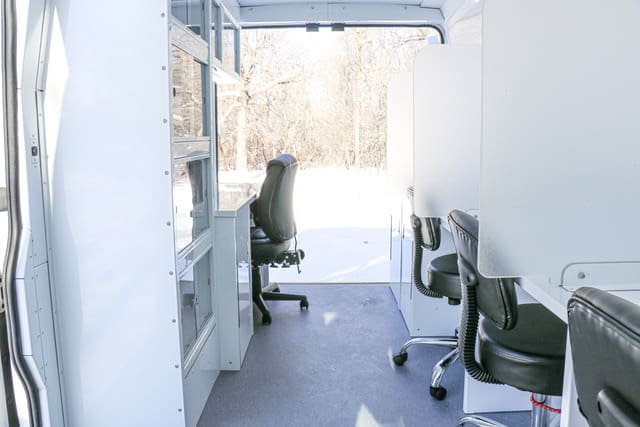
Choosing between fixed and mobile supervised consumption sites requires more than comparing a building with a vehicle.
First, organizations need to decide whether supervised consumption services align with:
- Their objectives
- Available evidence
- Community priorities
- Legal responsibilities
- Public safety considerations
- Available funding
- Existing treatment and recovery services
- Their wider drug crisis strategy
If a community is evaluating one stable location with room for several supports, a fixed site may be one option.
If a community is evaluating a service that can operate at several approved locations, a mobile supervised consumption site may be one option.
Each model has possible benefits, limitations, costs, and community impacts. Neither should be viewed as a complete response to the drug crisis.
Fixed and mobile supervised consumption sites are two of several approaches communities may consider alongside:
- Prevention and education
- Treatment and detoxification
- Recovery and rehabilitation services
- Mental health care
- Supportive housing
- Primary healthcare
- Street outreach
- Emergency response
- Community safety and enforcement strategies
The weight given to each approach will depend on local evidence, laws, available resources, service gaps, community input, and public priorities.
At MoveMobility, we work with Canadian organizations addressing access challenges in healthcare and community services. A vehicle is not the strategy itself. It is one tool that may support a strategy when mobile service delivery aligns with the organization’s goals.
If your team is considering a mobile supervised consumption site, begin by reviewing your geography, service gaps, community feedback, available evidence, legal requirements, treatment capacity, public safety concerns, and the other responses already operating in your area.
A clear understanding of the problem should come before deciding whether a building, vehicle, or another approach is the appropriate next step.
What should you read next?
- What is an Overdose Prevention Van? This article explains what a mobile overdose prevention vehicle may look like and the operational factors organizations need to consider.
- Overdose prevention in Indigenous communities: This article discusses how different overdose prevention strategies may be adapted for First Nations communities, particularly in rural and remote areas.

 English
  French