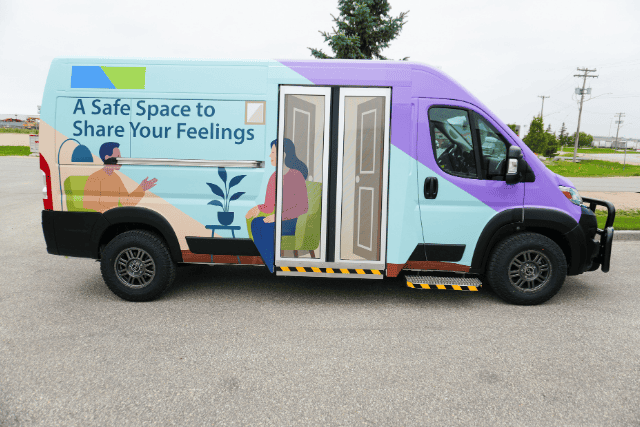
Did you know that 1.2 million children and youth in Canada live with mental health challenges? It’s a huge number that shows a big gap in care. Many of these kids feel scared to walk into a big, cold clinic. They worry about prying eyes in a busy waiting room. This fear often makes them stop talking to adults. If your team can’t reach them, these kids might stay stuck in a dark place alone. We know you want to help, but old ways might be leaving them behind. You’ll need a new way to build a bridge back to them.
Mobile youth outreach vehicles help you meet kids on their own terms. At MoveMobility, we’ve spent over 20 years building these life-changing tools. We’ve made more than 150 mobile units to help organizations like the Yellowknife Women’s Society save lives. Our team has top safety certifications from Ford and Stellantis, too. We know we’re not the only ones making vans, but we focus on the people inside them. We listen first so your vehicle fits your unique community.
In this article, you’ll learn:
- Why youth lose trust in traditional clinics
- How mobile youth outreach vehicles bridge youth trust gaps
Why do youth lose trust in traditional clinics?
Building trust with young people is the first step toward better youth mental health. Many kids stop talking because they feel like the system doesn’t see them as real people. When a young person in a place like downtown Toronto or a small town in Alberta feels overwhelmed, they need a safe space.
Sadly, a traditional clinic often feels like the opposite of safe. It feels like a spotlight. If we want to help, we have to understand the barriers that keep them from walking through those front doors. Mobile youth outreach vehicles change the game by removing these scary hurdles.
Let’s look at four reasons why youth lose trust in traditional mental health clinics.
1. The heavy weight of stigma
Stigma is one of the biggest reasons kids stay away from seeking help. Many youth feel like it’s a sign of weakness to be seen at a mental health clinic. They worry that if a classmate or a neighbour sees them walking into a building labelled for “mental health,” they’ll be judged forever. This fear is very real and can be totally paralyzing.
- Public exposure: Waiting rooms are often glass-walled or in busy areas where anyone could walk by.
- Labelled buildings: Signs on the front of buildings can feel like a giant neon arrow pointing at a kid’s private struggles.
- Social pressure: Youth often value their reputation above all else, and a clinic visit feels like a risk to their social standing.
When kids feel this way, they simply won’t show up. They would rather suffer in silence than face the perceived shame of a public clinic. CAMH shows that stigma prevents 40% of people from seeking care.
2. The fear of clinical environments
Let’s be honest, traditional clinics can feel pretty cold and robotic. For a teenager, walking into a place with white walls, bright buzzing lights, and uncomfortable plastic chairs is intimidating. It feels more like being sent to the principal’s office than going to a place of healing. This medical feeling can make kids shut down before they even see a counsellor.
- Power imbalance: Sitting behind a big desk makes a doctor seem like an authority figure rather than a friend.
- Sensory overload: The smells and sounds of a hospital can trigger anxiety for many young people.
- Lack of comfort: Hard chairs and tiny rooms don’t exactly make a person want to open up about their deepest feelings.
3. Logistics and the “adult” world gap
Sometimes, trust is lost because the clinic is just too hard to reach. In many parts of Canada, like rural Manitoba or the vast reaches of Northern Ontario, getting to a clinic requires a long bus ride or a parent’s help. Many youth don’t want to ask their parents for a ride because they aren’t ready to talk about their problems at home yet. If the help is twenty kilometres away, it might as well be on the moon.
- Transportation barriers: Many kids don’t have a car or money for the bus.
- Inconvenient hours: Most clinics are only open when kids are in school.
- Prying questions: Asking for a ride often leads to questions from parents that the youth isn’t ready to answer.
4. Past negative experiences and “the system”
Many youth who need help the most have already been let down by “the system.” They might have had a bad experience with a social worker or a school counsellor who didn’t seem to listen. When help feels like a series of forms and checkboxes, kids feel like just another number. They lose faith that anyone actually cares about their specific story.
- Repetitive stories: Having to tell their trauma over and over to different people is exhausting.
- Lack of consistency: Seeing a different person every visit makes it impossible to build a bond.
- Feeling unheard: If a professional seems rushed, the youth will stop trying to connect.
How do mobile youth outreach vehicles build a bridge of trust?
When you look at a mobile youth outreach vehicle, you’re looking at a safe haven on wheels. For a young person who has spent years hiding their feelings, this vehicle is often the first place they feel they can breathe. It is a tool that helps your organization step out of the “system” and into their world. When you change the environment, you change the conversation. These vehicles bridge the gap between youth who need help and the people who can provide it.
1. Meeting youth on their own terms
As we mentioned earlier, a big trust gap is often physical. In cities like Vancouver or Halifax, a downtown clinic can feel like a fortress. It’s far away, it’s busy, and quite intimidating for youth. A mobile youth outreach vehicle eliminates the need for what can feel like a daunting walk through a public lobby. Instead of the youth coming to you, you go to them.
You can park at a local community centre in a small town or near a skate park where youth already hang out. This puts the power back in the hands of the youth. They get to decide to step inside when they feel ready. There is no looming building and no front desk guard. Because the van comes to their neighbourhood, it feels like a guest in their home rather than a place where they are being sent. This simple shift in location tells the youth that you respect their space and their time.
2. Privacy without the prying eyes
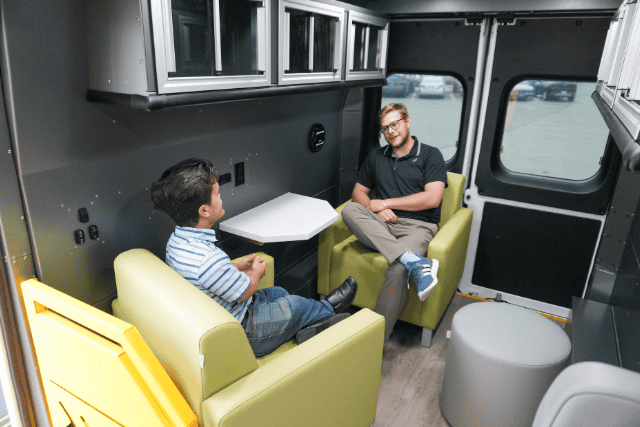
Privacy is a massive deal for youth mental health. Most kids are terrified that a friend, a teacher, or a nosy neighbour will see them seeking help. If they have to walk into a building with “Mental Health Services” written in big letters, they might just keep walking. Mobile youth outreach vehicles solve this with smart, empathetic design.
- Tinted windows: These are a must-have feature. High-quality tinting allows plenty of light to come in, so it doesn’t feel like a cage, but it prevents anyone outside from seeing who is inside.
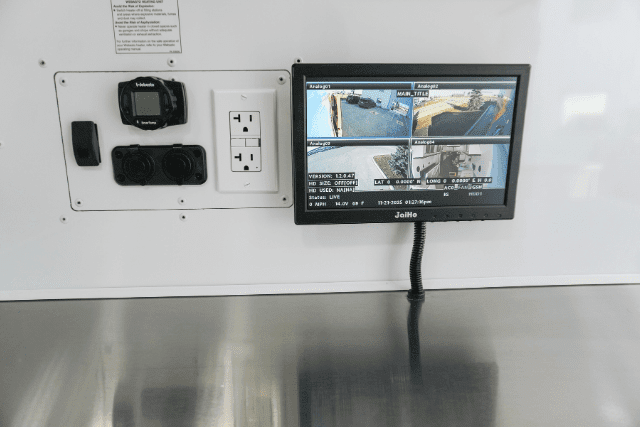
- Security systems: Your team can utilize external cameras to monitor those outside the van. This helps the youth feel safe knowing no one is lurking or waiting for them to come out.
- Decals: While you want people to know you’re there to help, the outside of the van can be designed to look friendly and inviting rather than medical.
When a youth knows that their secrets are safe inside those walls, they stop looking over their shoulder. They can finally focus on what they need to say instead of who might be watching.
3. A living room on wheels
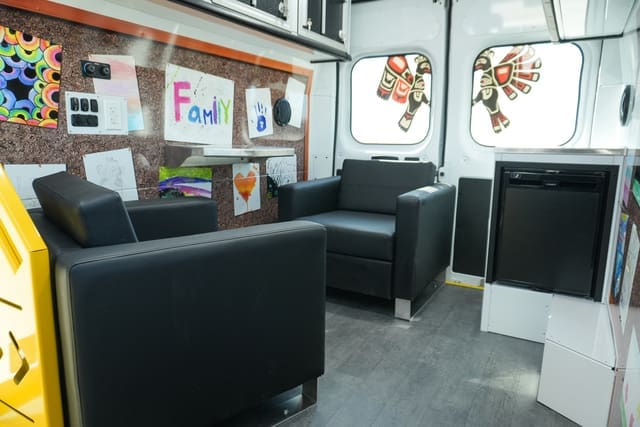
If you want a teenager to talk, you can’t put them in a cold plastic chair. We design these vehicles to be the opposite of a hospital. Imagine a space that feels like a cozy living room hangout or a modern cafe. This comfort is the key to unlocking youth mental health conversations.
- Couches and work tables: Instead of exam tables, we use comfy couches. A work table between the couches gives you some room to take notes or place your coffee.
- Soft lighting and skylights: Sometimes, medical lighting can be enough to cause anxiety. We use soft interior lighting and optional skylights to bring in natural Canadian sunshine. This makes the space feel open and warm.
- Wood grain flooring: It sounds like a small detail, but wood-style floors make the van feel like a home. It removes that “sanitized” hospital feeling that makes kids shut down.
When a youth steps onto that wood floor and sits on a soft couch, their heart rate drops. They aren’t a patient anymore. They’re just a person having a chat in a comfortable room.
4. Technology and connection in remote areas
In many parts of Canada, reaching youth is a physical challenge. If you’re working in Northern Saskatchewan or the interior of BC, the roads can be tough. That is why the Trail Kit upgrade is so important. It allows your mobile youth outreach vehicle to reach kids in remote areas where traditional help never goes.
- WiFi connectivity: Sometimes a youth needs to talk to a specialist who is hundreds of kilometres away. With onboard WiFi, you can host telehealth sessions right from the van.
- Speakers and media: Playing low music or using a screen to display helpful videos can help break the ice. It makes the environment feel modern and relatable.
- Storage and supplies: With plenty of cabinets, your team can keep snacks, clean socks, or hygiene kits on hand. Giving a kid a warm drink or a snack is a huge way to build instant trust.
Why are these features so important for youth mental health outreach?
Every single bolt and cushion in these mobile youth outreach vehicles serves a purpose. Your organization’s goal is to save lives and remove barriers. When you choose a vehicle that’s built for that exact purpose, you’re providing a path back to health and connection.
When a youth sees that you’ve built a space just for them, one that is warm, private, and easy to get to, they feel valued. They feel like they matter. That feeling is the foundation of trust. Once that trust is there, they can finally begin to open up about their problems. You aren’t just providing a ride; you are providing a path back to health and connection.
| Feature | Impact on Trust | Why it works |
| Tinted Windows | High Privacy | Stops friends from seeing inside |
| Comfy Couches | Emotional Safety | Feels like a home, not a clinic |
| WiFi/Telehealth | Better Access | Connects kids to experts anywhere |
| Trail Kit | Inclusion | Reaches kids in remote communities |
| Soft Lighting | Lower Anxiety | Removes the “scary doctor” vibe |
Ready to solve trust gaps with a mobile outreach vehicle?
You likely started reading this because you’ve noticed a gap between the care you offer and the youth who need it. It’s a heavy feeling when you know your team has the heart to help, but the traditional clinic doors just feel too big and scary for a struggling teenager to walk through.
After reading through this article, you now know how to close that gap.
You learned:
- Why stigma and clinical settings cause youth to stop talking and stay away from help.
- How a mobile youth outreach vehicle creates a living room on wheels
At MoveMobility, we believe that every Canadian deserves a safe place to be heard, no matter where they live. Our two decades of experience mean we’ve seen how the right environment can literally save a life by making a connection possible. We’re leaders because we focus on the person sitting on the couch, not just the engine under the hood. If you have any questions at all about how to reach your community, click the button below to talk to a mobility expert.
If you’re not ready to talk to a mobility expert yet, we have a few other resources you should check out to learn more.
What should you read next?
- What is a Mobile Counselling Van? This guide dives into the Mobile Counselling Van and what it’s all about.
- Vancouver’s mental health crisis: How a Mobile Counselling Van can help: Read how mobile counselling units are being used on the front lines to help people in urban areas overcome trauma and find hope.
- How does a mobile crisis unit help people during mental health crises? This article looks at how mobile teams can respond quickly to help people feel safe and supported during their hardest moments.

 English
  French